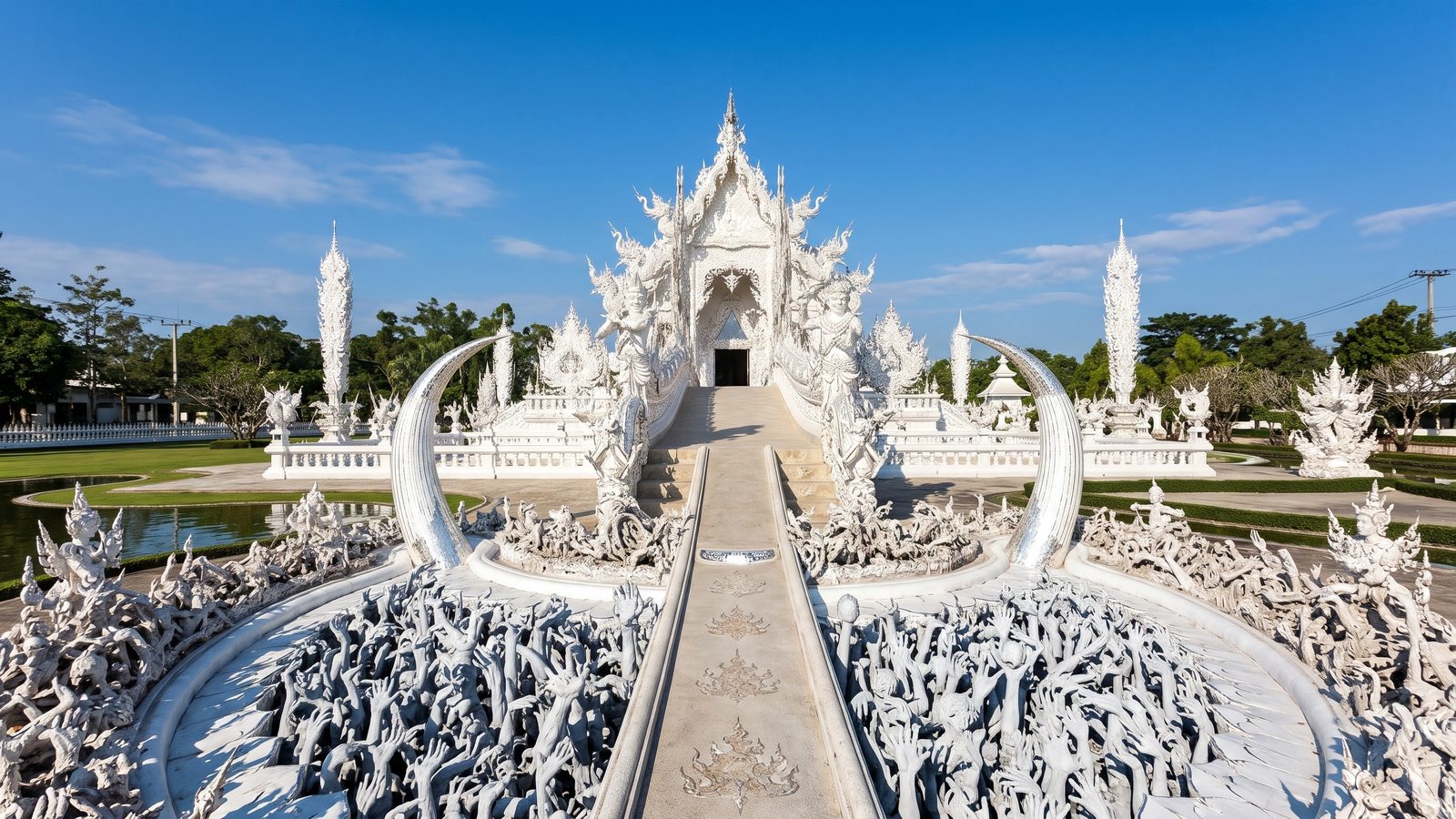
Welcome to Wat Rong Khun, widely known as the White Temple, an extraordinary modern Buddhist sanctuary in Chiang Rai, Thailand. Conceived and constructed by renowned local artist Chalermchai Kositpipat starting in 1997, this architectural marvel breaks away from traditional Thai temple design. Instead of conventional gold, its blinding white stucco and embedded mirrors symbolize the Buddha's absolute purity and wisdom illuminating the world.
As you walk through the grounds, you embark on a symbolic journey from earthly temptation to spiritual enlightenment. Experience a unique fusion of traditional Buddhist philosophy and surprising contemporary pop culture, meticulously crafted to provoke thought and inspire inner peace.
Listen to a sample
The opening of this tour, exactly as AllTours narrates it on site.
What you'll hear on this tour
Stop 1. Bridge of the Cycle of Rebirth
As you step onto the Bridge of the Cycle of Rebirth, you engage in a profound spiritual journey from the suffering of samsara toward the purity of enlightenment. Look down beneath your feet to see a sea of desperate, outstretched hands reaching upward from the underworld. These writhing limbs portray the endless cycle of human craving, karmic burdens, and unfulfilled worldly desires. By crossing over this graphic representation of temptation and hell, you symbolically leave behind earthly attachments. You approach the pristine white sanctuary ahead, where mirrored glass reflects light in every direction, guiding your contemplation away from material illusion toward lasting inner peace.
Stop 2. Pop Culture and Sacred Murals
Step inside the main sanctuary, the Ubosot, where your eyes meet a startling artistic vision. On the interior back wall, artist Chalermchai Kositpipat fuses traditional Buddhist cosmology with icons of modern pop culture, including Superman, Neo, and soaring spaceships alongside depictions of Mara. Far from being irreverent, this bold artistic choice serves as a commentary on contemporary distractions and global crises. The artist uses familiar cultural figures to illustrate how modern materialism pulls humanity away from spiritual truth. Surrounding you, intricate carvings of mythical creatures like Naga serpents and Kinnaree guard the sacred space, reinforcing the timeless struggle between good and evil.
Stop 3. The Mirrored Illusion of Purity
Cast your gaze down toward the tranquil water surrounding the temple complex to discover one of its most breathtaking artistic feats. Here, you witness a meticulously engineered reflection that makes the entire white structure appear to float effortlessly between heaven and earth. Every ornate detail—from the shimmering mirrored glass and delicate stucco lacework to the bridge itself—doubles in the clear water below. This striking visual mirror amplifies the temple's monochromatic purity, symbolizing a clear mind unburdened by worldly attachments. As you take in this dizzying depth, the boundless reflection invites you to ponder the boundary between illusion and reality.
Stop 4. Architectural Sentinels and Shimmering Glass
As you move closer to the main Ubosot, examine the meticulous architectural craftsmanship around you. Countless tiny pieces of mirrored glass are embedded directly into the plaster, causing the entire temple to shimmer brightly under the sun to symbolize divine wisdom. Before entering heaven's gate, you pass two colossal, imposing figures representing Rahu and Death. These architectural sentinels mark the definitive boundary between the earthly realm and sacred space. Above, multi-tiered roofs and delicate chofah finials adhere to traditional Thai forms, while lace-like gable carvings depict celestial beings that draw your gaze upward toward the sky.
Stop 5. Living Commentary on Modern Faith
Observe how Wat Rong Khun functions as a living, evolving canvas that reinterprets ancient Buddhist philosophy for a global modern audience. Chalermchai Kositpipat designed this complex not simply as a monument, but as an accessible cultural dialogue. By contrasting the fiery passions of hell beneath the bridge with the serene white sanctuary, the temple urges personal introspection on your own life path. The artistic choices throughout the grounds show Thai Buddhist culture constantly evolving, finding innovative ways to communicate core spiritual truths. Here, age-old wisdom meets contemporary art to help visitors from all backgrounds understand the journey toward nirvana.
Stop 6. The Ubosot and Golden Counterpoint
Stand before the pristine Ubosot and admire its ethereal white facade, designed to contrast sharply with traditional golden temples. Multi-headed Naga serpents guard the entrance platform, their sculpted forms protecting the sacred interior where a golden Buddha image anchors the space. Outside the main sanctuary, notice how golden structures serve as a deliberate artistic counterpoint within the complex. This intentional contrast between shimmering gold and unblemished white emphasizes the separation between worldly riches and true spiritual purity. As you explore the grounds, this living masterpiece constantly reminds you to seek inner tranquility amidst the chaos of the material world.
Planning your visit
- Best time to go
- Early morning right at opening (8:00 AM) to avoid peak tourist crowds and harsh midday heat, or late afternoon for soft golden light.
- Approximate duration
- about 1.5 to 2 hours
- Where to start
- Begin at the main entrance plaza facing the front bridge of Wat Rong Khun.
Access and conditions change seasonally — check the official site before you go.
Frequently asked questions
Is Wat Rong Khun worth visiting?
Yes, Wat Rong Khun is widely considered one of Thailand's most unique and visually striking attractions. Designed by artist Chalermchai Kositpipat, its blend of white architectural splendor, intricate glasswork, and thought-provoking modern art offers an unforgettable experience.
How long do you need at Wat Rong Khun?
Most visitors spend between 1.5 and 2 hours exploring the main Ubosot, walking across the bridge, viewing the interior murals, and walking around the surrounding gardens and golden auxiliary buildings.
When was Wat Rong Khun built and who designed it?
Construction of Wat Rong Khun began in 1997 under the design and funding of famous Thai master artist Chalermchai Kositpipat. It is an ongoing project designed to continue evolving over several decades.
Keep exploring
Header image is an AI-generated illustration of Wat Rong Khun. AllTours.ai is an AI audio tour guide — point your camera at any landmark and hear its story.