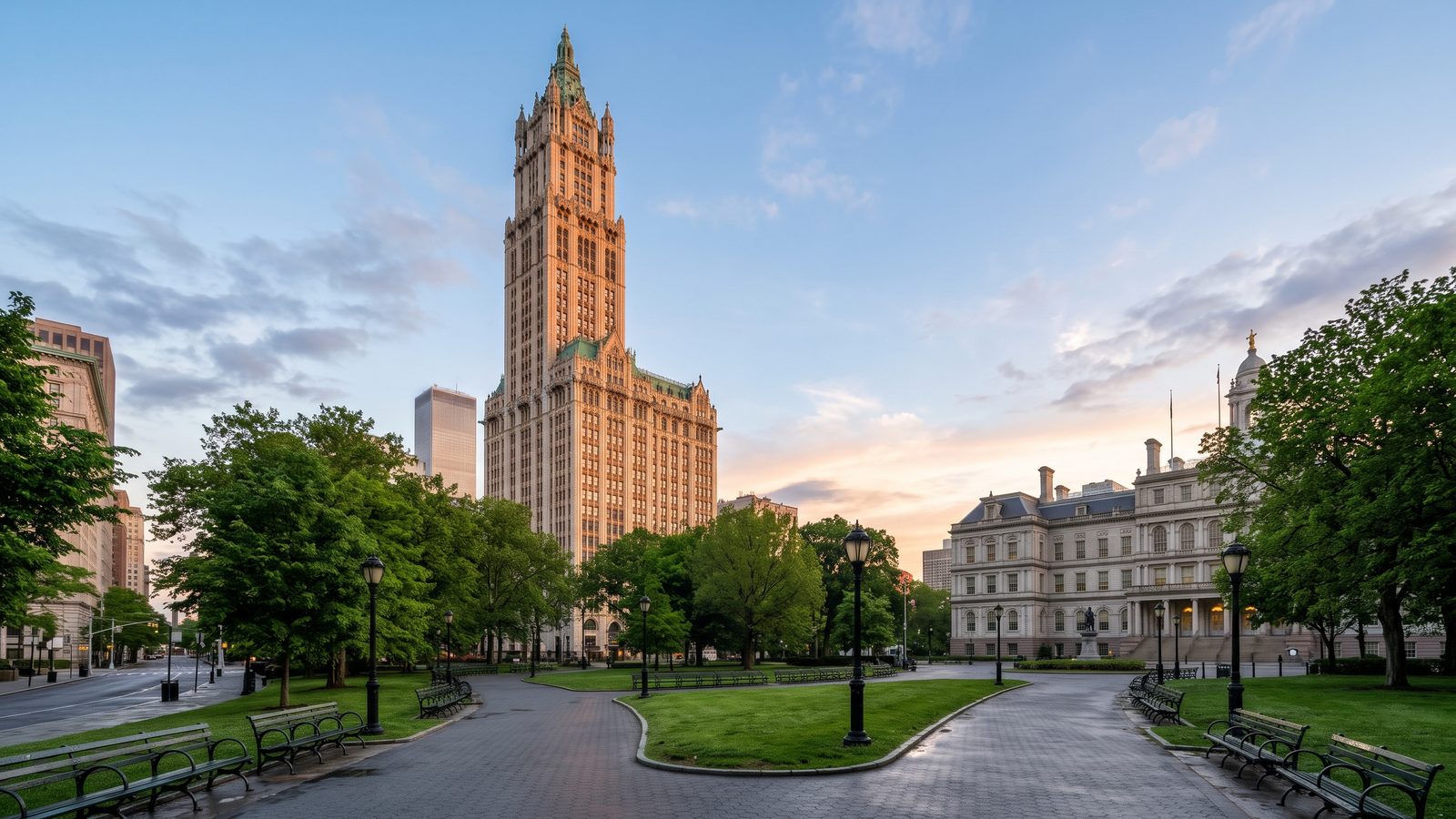
As you stand before the Woolworth Building in Lower Manhattan, you are looking at one of New York City's defining architectural marvels. Commissioned in 1910 by five-and-dime magnate Frank W. Woolworth and designed by Cass Gilbert, this steel-frame skyscraper soared to record-breaking heights when it opened in 1913. Renowned as the Cathedral of Commerce, it seamlessly fuses medieval Gothic ornamentation with modern commercial ambition.
This audio tour guides you through the building's striking exterior and iconic lobby features. You will discover intricate terra cotta craftsmanship, shimmering gold-leaf mosaics, playful caricatures of its creators, and the history of how this National Historic Landmark forever transformed the downtown skyline.
What you'll hear on this tour
Stop 1. Cathedral of Commerce and Caricatures
As you step inside, you immediately grasp why this designated National Historic Landmark feels like a sacred sanctuary. You stand beneath soaring, vaulted lobby ceilings encrusted with glittering mosaics depicting allegorical figures of Commerce and Labor. Surrounding you, exquisite marble walls and bronze details showcase exceptional early 20th-century craftsmanship. If you examine the lobby's ornate architectural brackets carefully, you discover playful, whimsical caricatures hidden among the decorations. You can spot Frank Woolworth himself meticulously counting his pennies, along with architect Cass Gilbert cradling a tiny scale model of the building. These humorous, personal touches humanize the structure's monumental scale, offering you a captivating glimpse into the minds behind this historic masterpiece.
Stop 2. Gothic Craftsmanship in Steel and Clay
You are looking at the pinnacle of Neo-Gothic skyscraper design, where Cass Gilbert adapted cathedral traditions to modern commercial architecture. Behind its soaring lines lies a revolutionary steel skeleton, clad in over 16 million glazed terra cotta tiles. This lightweight ceramic shell allowed Gilbert to sculpt pointed arches, delicate tracery, and dramatic vertical lines without the crush of heavy stone. As your gaze travels upward past deeply recessed windows toward the copper-clad pinnacles of the crown, look closely at the upper floors. Above the 25th story, playful gargoyles decorate the facade, including grotesques depicting Gilbert clutching his building design and Woolworth counting dimes, bringing artistic wit to this lofty monument.
Stop 3. Mosaics, Gold Leaf, and Sacred Motifs
Inside the lobby, your eyes rise to vaulted ceilings transformed into a radiant artistic canvas. You see intricate mosaics crafted from vibrant tesserae that shimmer with spiritual light, illustrating the spirit of labor and commerce that built this financial empire. Golden leaf and painted patterns highlight every curve of the sweeping arches. Notice the bronze elevator doors, intricately decorated with stylized eagles and symbolic figures that showcase extraordinary attention to detail. Above the main entrances, subtle stained-glass panels filter incoming light into jewel-toned hues, softening the grand stone interior. You are experiencing a commercial space elevated into a work of sacred artistry that inspires quiet wonder.
Stop 4. The Cash-Funded Record Breaker
Transport yourself back to the turn of the 20th century, an era of unprecedented ambition in New York City. Frank W. Woolworth envisioned a towering statement of American capitalism to house his five-and-dime empire. In 1910, he commissioned Cass Gilbert to build the world's tallest skyscraper. Proving his absolute conviction, Woolworth funded the entire 13.5 million dollar construction cost in cash. When the building opened on April 24, 1913, Reverend S. Parkes Cadman famously dubbed it the Cathedral of Commerce. For 17 years, this soaring structure held the title of tallest building in the world, standing as a proud physical declaration of American technological power and optimism.
Stop 5. A New Anchor for Downtown
Consider how this towering landmark reoriented New York's skyline. Before its completion, Lower Manhattan lacked a single, commanding vertical anchor. When the Woolworth Building rose, it established a dramatic focal point visible across the harbor, the outer boroughs, and surrounding streets. Imagine arriving in New York by ship and witnessing this colossal, ornate spire soaring high above the low-built city fabric. Strategically positioned to dominate views from City Hall Park and the financial district, the tower asserted its symbolic power over the street grid below. You can feel how its presence permanently reshaped the visual experience of navigating downtown Manhattan's historic urban core.
Stop 6. Lunch Counters and Urban Dining
As you explore this historic site, reflect on how Frank Woolworth helped revolutionize American dining culture. While this skyscraper was built for offices rather than fine dining, Woolworth's five-and-dime retail empire introduced the lunch counter, democratizing quick and affordable meals for everyday urban workers. Inside this building, employee cafeterias and private dining rooms provided hearty fare to fuel the thousands of clerks and executives working here every day. Today, the surrounding street food vendors and fast-casual lunch spots in Lower Manhattan continue that tradition. You are standing at the heart of an era that transformed how city dwellers eat, work, and refuel on the go.
Planning your visit
- Best time to go
- Morning on a clear day for optimal natural light on the facade and around City Hall Park.
- Approximate duration
- About 45 minutes
- Where to start
- In front of the main entrance on Broadway, facing City Hall Park in Lower Manhattan.
Access and conditions change seasonally — check the official site before you go.
Frequently asked questions
Is Woolworth Building worth visiting?
Yes, the Woolworth Building is one of New York City's most historic landmarks. Designated a National Historic Landmark, it features pioneering Neo-Gothic skyscraper architecture, stunning lobby mosaics, and playful caricatures of its creators.
How long do you need at Woolworth Building?
You need about 45 minutes to view the building's exterior, appreciate its soaring Neo-Gothic facade from City Hall Park, and take in the magnificent details of its grand lobby.
Why was the Woolworth Building called the Cathedral of Commerce?
Reverend S. Parkes Cadman christened it the 'Cathedral of Commerce' upon its opening on April 24, 1913, because of its striking Gothic Revival design, soaring vaulted ceilings, and grand scale dedicated to business.
Keep exploring
Header image is an AI-generated illustration of Woolworth Building. AllTours.ai is an AI audio tour guide — point your camera at any landmark and hear its story.