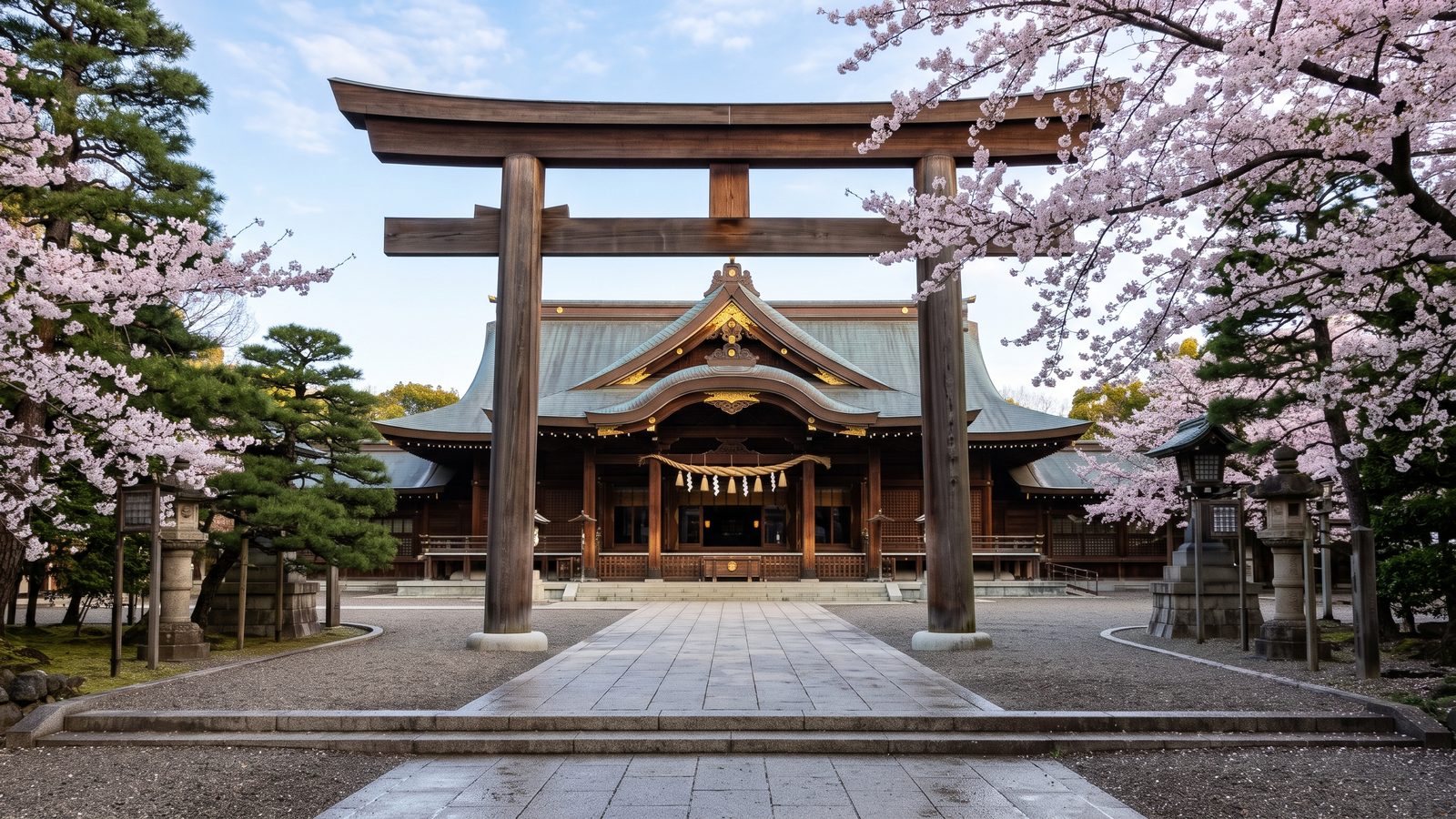
Welcome to Yasukuni Shrine, a landmark in Tokyo that stands as a center of profound history, national memory, and ongoing reflection. Established in 1869 by Emperor Meiji, this Shinto site honors more than 2.4 million individuals who died in service to Japan. As you walk past grand torii gates toward the traditional architecture, you encounter a space where spiritual traditions intersect with complex modern debates.
With this self-guided audio tour, you navigate the shrine's solemn halls, quiet Japanese gardens, and lesser-known memorials at your own pace. Discover the centuries-old Shinto rituals, unique nagare-zukuri architectural styles, and universal messages of peace preserved within these historical grounds.
Listen to a sample
The opening of this tour, exactly as AllTours narrates it on site.
What you'll hear on this tour
Stop 1. Architectural Grandeur of the Main Hall
As you step closer to the main hall, you observe its distinctive nagare-zukuri architectural style, defined by an elegant, asymmetrical gable roof that sweeps gracefully outward. This intricate structure cradles the sacred inner sanctum where the spirits of Japan's war dead are enshrined as kami. You stand directly before the haiden, or worship hall, which serves as a dedicated space for profound reverence. Here, visitors bow, offer quiet prayers, and connect directly with the enshrined spirits. As you take in the wooden details, you experience the timeless traditions of Shinto design and the quiet solemnity that defines this central place of worship.
Stop 2. Honoring Millions of Sacred Spirits
Here at the memorial, you encounter the true spiritual core of Yasukuni Shrine, dedicated to those who perished in service to Japan. As you stand before this sanctuary, you feel the weight of history held within the enshrined kami. These are not physical human remains, but rather the collective spiritual essence of over 2.4 million individuals. This unique form of Shinto remembrance honors these souls together under a single overarching narrative of national sacrifice and civic duty. As you contemplate the enduring legacy of those remembered here, you gain a deeper understanding of how Japan honors its fallen soldiers across generations.
Stop 3. A Quiet Sanctuary for Universal Peace
Moving beyond the main worship area, you discover the Chinreisha, known as the Shrine for the Pacification of Souls. This profound and frequently overlooked sanctuary is dedicated to every person who perished in war, regardless of their nationality, background, or military allegiance. Standing before it, you witness a silent yet powerful plea for universal peace that acknowledges human suffering on every side of conflict. The Chinreisha embodies a broader hope for global reconciliation where every lost life is remembered with equal dignity. It invites you to step back from political debates and reflect deeply on the shared cost of war.
Stop 4. Serenity Within the Shinike-en Garden
Stepping into the Shinike-en, you immediately feel a calming contrast to the solemn atmosphere of the main shrine grounds. This traditional Japanese garden is meticulously designed around the expansive Shinike pond, where peaceful waters mirror the surrounding sculpted pine trees and colorful seasonal maples. Tucked among the lush greenery, you can spot the delicate Chōshintei tea house, which offers a vivid glimpse into historic Edo-period aesthetic values. As you stroll along the scenic winding pathways, this peaceful landscape provides a tranquil space for quiet contemplation and a gentle respite from the heavy historical themes of the surrounding site.
Stop 5. Living Shinto Traditions and Practices
Around you, you witness the vibrant, living essence of Shinto traditions practiced every day. You can observe visitors performing precise purification rituals at the temizuya water pavilion before approaching the worship area to offer respectful prayers. Throughout the year, the shrine grounds host lively seasonal festivals, including cherished spring cherry blossom viewing events that draw crowds under the blooming trees. As you look around, you will also notice countless wooden ema plaques hanging on racks, each displaying personal written wishes and prayers. These ongoing customs reflect an enduring cultural practice of seeking divine intercession and honoring ancient spiritual customs.
Stop 6. The Contested History of Yasukuni
You stand on historic ground where Emperor Meiji established Shokonsha in 1869 to honor those who fell for the imperial cause during the Boshin War. Renamed Yasukuni Jinja in 1879, the shrine became central to State Shinto, commemorating dead soldiers from the Sino-Japanese, Russo-Japanese, and World Wars. However, its post-World War II decision to enshrine Class A war criminals sparked international controversy that continues today. As you walk these grounds, you perceive how national memory, historical interpretation, and sacred tradition remain intensely debated, shaping Yasukuni into a deeply complex symbol within modern East Asian history.
Planning your visit
- Best time to go
- Spring during cherry blossom season or autumn for fall foliage; early morning visits offer the most contemplative environment.
- Approximate duration
- about 1 to 1.5 hours
- Where to start
- At the main entrance approach near the towering bronze Torii gate.
Access and conditions change seasonally — check the official site before you go.
Frequently asked questions
Is Yasukuni Shrine worth visiting?
Yes, Yasukuni Shrine is worth visiting for anyone interested in Japanese history, Shinto culture, and modern international relations. It offers beautiful traditional architecture, serene gardens, and deep insights into Japan's complex cultural memory.
How long do you need at Yasukuni Shrine?
Most visitors spend between 1 and 1.5 hours strolling through the shrine grounds, worship hall area, and Shinike-en garden.
Why is Yasukuni Shrine historically controversial?
Originally founded in 1869 to honor war dead, the shrine became a source of ongoing international debate after post-WWII Class A war criminals were enshrined alongside over 2.4 million other souls.
Keep exploring
Header image is an AI-generated illustration of Yasukuni Shrine. AllTours.ai is an AI audio tour guide — point your camera at any landmark and hear its story.