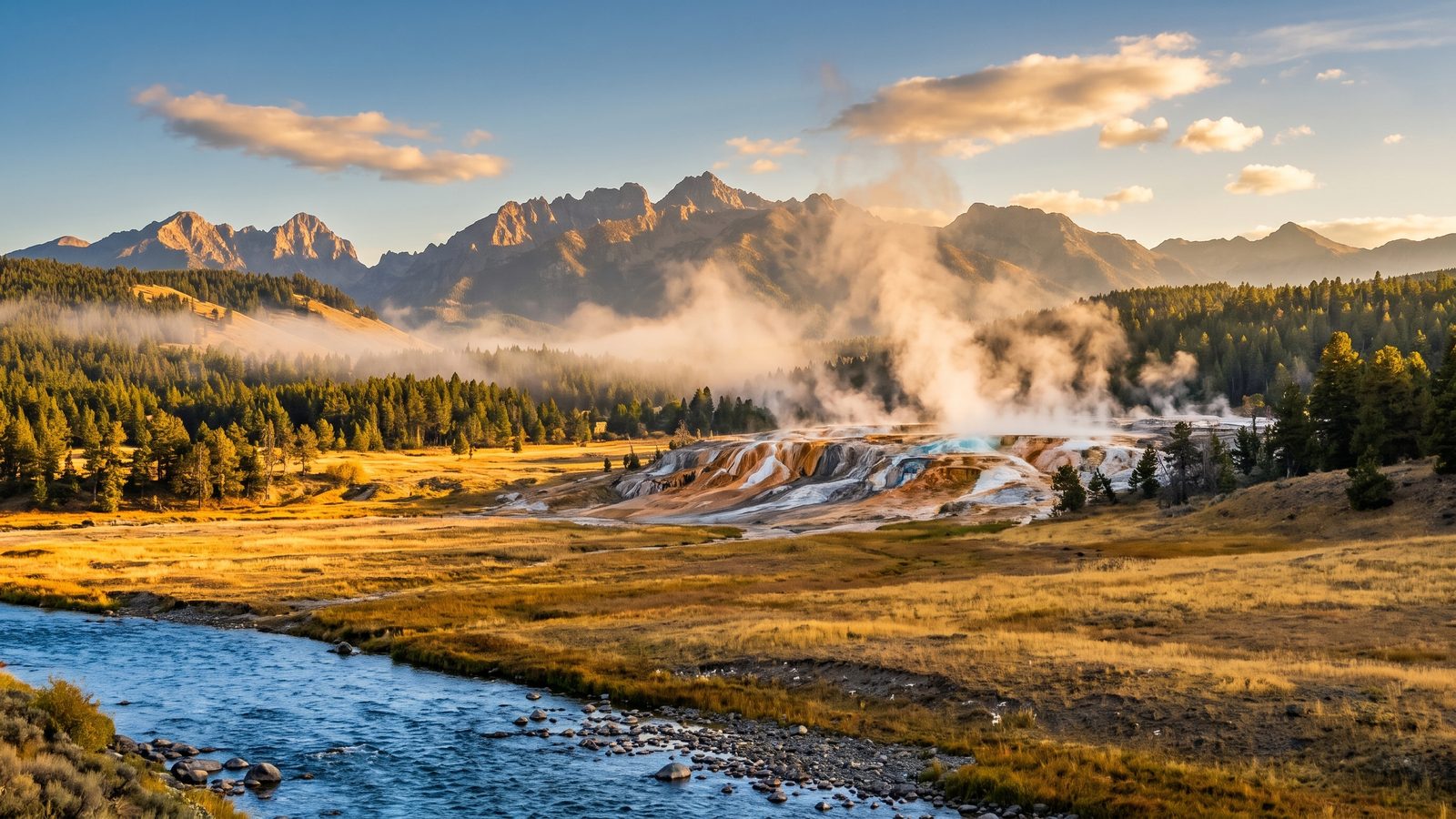
Welcome to Yellowstone National Park, the world's first national park established in 1872. Spanning over 3,500 square miles across a volcanic hotspot, this vast wilderness features dramatic canyons, lush forests, and astounding geothermal wonders. As you explore, you enter the home of America's largest concentration of wildlife in the lower forty-eight states, where grizzly bears, wolves, and wild herds roam free across an unyielding landscape.
This self-guided audio tour reveals the deep natural forces and human history shaping Yellowstone. From ancient indigenous connections and early conservation battles to towering geyser eruptions and serene river valleys, immerse yourself in an unforgettable journey through a living, breathing ecosystem.
Listen to a sample
The opening of this tour, exactly as AllTours narrates it on site.
What you'll hear on this tour
Stop 1. The Earth's Fiery Heart
You stand beside steaming vents where immense subterranean forces churn far beneath your feet. Here, magma superheats underground water until it erupts dramatically through the crust. Notice the white sinter terraces formed by silica-rich deposits left behind by these natural pressure cookers. As you watch Old Faithful, consider its complex plumbing system stretching nearly one thousand feet down. Nearby, Beehive Geyser channels eruptions over two hundred feet high through its narrow cone. Geothermal heat creates a unique sanctuary for microbial life and draws native wildlife to the thermal warmth, offering you a rare glimpse into a dynamic, thriving landscape powered by volcanic heat.
Stop 2. Sacred Earth and Stewardship
Step back into a storied past where indigenous peoples, including the Shoshone and Bannock, honor these sacred thermal features for over eleven thousand years. In 1872, early expeditions led by geologist Ferdinand Hayden inspire a radical decision to establish the world's first national park, protecting these lands from commercial exploitation. As you walk, picture the early twentieth century when the United States Army patrols these trails to stop poaching before the National Park Service takes over in 1916. Through New Deal conservation projects and modern environmental stewardship, you witness a lasting legacy that continues to safeguard this untamed sanctuary for future generations.
Stop 3. Lifeblood of the Canyon
You look out over the mighty Yellowstone River, the longest undammed river in the continental United States. Over thousands of years, geological upheaval and relentless erosion carve deep, dramatic canyons and fertile floodplains into the landscape. Below you, cold and clean waters provide crucial habitat for cutthroat trout, a vital keystone species supporting everything from soaring bald eagles to hunting grizzly bears. Imagine ancient indigenous communities relying on these flowing waters for daily sustenance and spiritual connection. Every gentle ripple tells a story of ancient glacial movements, carrying a living history through the heart of the park's vibrant, interconnected ecosystem.
Stop 4. Pathways to High Solitude
You lace up your boots and step onto Yellowstone's expansive trail network. Along the Mystic Falls Trail, thermal steam rises beside your path, blending geothermal heat with the forest cool. On the Beaver Ponds Loop, crunch pine needles underfoot while lodgepole pine scents fill the crisp air, watching for elusive moose grazing in quiet clearings. If you brave the strenuous ascent up Mount Washburn, sweeping panoramas reward your exertion as subalpine landscapes unfold around you. These trails lead you deep into tranquil solitude, where the simple rustle of leaves or the distant call of a crane connects you profoundly to the surrounding wild expanse.
Stop 5. Nights Beneath the Pines
You set up camp surrounded by towering lodgepole pines, their crisp scent recalling the landscape's remarkable recovery after the fires of 1988. Following Leave No Trace practices, you preserve this fragile ecosystem for all who follow. As twilight deepens, look upward as the night sky transforms into a brilliant celestial theater far removed from urban lights. Listen closely to the evening sounds echoing across the wilderness, from the soft hoot of an owl to the distant howl of a wolf pack. When morning arrives, sip your hot coffee in the crisp air while gentle steam rises from distant geysers across the meadow.
Stop 6. Framing Light and Mist
You raise your camera to capture Yellowstone's shifting light from dawn to dusk. Geothermal mist acts as a natural diffuser, softening sunlight to create ethereal photographs across steam-filled basins. When midday arrives, strong sunlight highlights the vivid hues of mineral-rich pools, making brilliant colors pop on sensor and film. Using a powerful telephoto lens, you safely frame intimate wildlife moments while respecting animal behavior in their natural element. At twilight, experiment with long exposure settings to capture dramatic geyser plumes surging against a quiet horizon, turning the raw energy of this dynamic environment into your own visual art.
Planning your visit
- Best time to go
- Early morning or late afternoon for active wildlife, softer lighting, and smaller crowds near main features.
- Approximate duration
- about 3 to 5 hours
- Where to start
- Gardiner, Montana (North Entrance) or any major park entry trailhead.
Access and conditions change seasonally — check the official site before you go.
Frequently asked questions
Is Yellowstone National Park worth visiting?
Yes, Yellowstone National Park offers an unparalleled wilderness experience as the world's first national park. It features world-famous geysers like Old Faithful, sweeping canyons, and the largest concentration of wildlife in the contiguous United States.
How long do you need at Yellowstone National Park?
To fully appreciate the park's vast geothermal basins, hiking trails, and wildlife, plan for 1 to 3 days. A self-guided audio driving tour can highlight key stops in 3 to 5 hours.
When was Yellowstone National Park established?
Yellowstone was established in 1872 as the world's first national park. Championed by conservationists and geologists like Ferdinand Hayden, its creation set a global precedent for protecting natural wonders.
Keep exploring
Header image is an AI-generated illustration of Yellowstone National Park. AllTours.ai is an AI audio tour guide — point your camera at any landmark and hear its story.