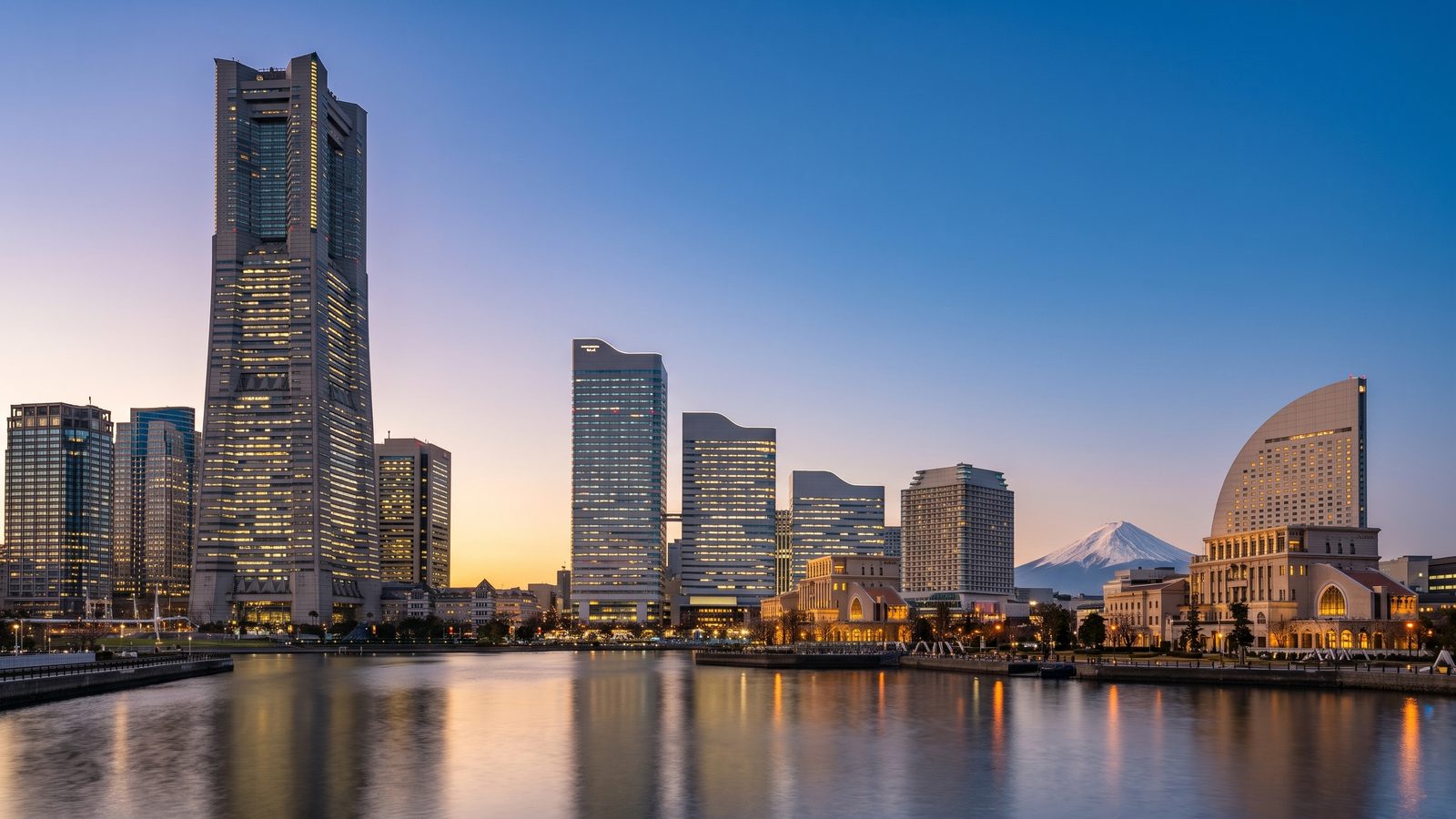
Welcome to Yokohama Landmark Tower, a soaring icon in the vibrant Minato Mirai 21 district. Rising high above the historic port, this structure stands as a monument to Japan's technological optimism and architectural innovation. As you explore, this self-guided audio tour will guide you through its record-breaking engineering, maritime origins, sky-high hospitality, and breathtaking vistas across Tokyo Bay and Mount Fuji.
From rocket-fast elevators to serene observation decks and luxury sky dining, prepare to experience Yokohama from dramatic new heights. Learn how former industrial shipbuilding docks transformed into a cutting-edge urban center, and discover the elegant design details that hold this massive tower stable in the sky.
What you'll hear on this tour
Stop 1. The Panoramic Sky Garden Vista
Step into the 69th-floor Sky Garden observation deck, where an extraordinary 360-degree panorama unfolds beneath your feet. To your left, the futuristic spires of Minato Mirai 21 rise in elegant formation. Looking eastward, watch cargo ships navigate the broad blue expanse of Tokyo Bay. On clear days, cast your eyes west to behold the majestic, snow-capped peak of Mount Fuji floating serenely above the vast urban sprawl. As daylight fades, watch the city below ignite into a brilliant field of twinkling lights. You are witnessing a dynamic living canvas that connects Yokohama's port heritage directly with its futuristic ambitions.
Stop 2. High-Speed Ascent to the Sky
Step inside the high-speed elevator engineered by Mitsubishi Electric, a true marvel of vertical transportation. As the sleek doors glide shut, feel the incredible propulsion carrying you upward at 750 meters per minute—that is 45 kilometers an hour. Watch the floor numbers flash past in a rapid blur while internal pressure equalization technology keeps your ears completely comfortable. In roughly forty seconds, this quiet, smooth machine carries you from the second floor straight up to the 69th-floor Sky Garden observation deck. You experience a seamless rocket-like ascent, effortlessly connecting ground level to the sky.
Stop 3. Postmodern Castle Keep in Glass
Admire the tower's tapering silhouette conceived by Hugh Stubbins and Associates. Notice how its profile subtly evokes a traditional Japanese castle keep, or tenshu, balancing cultural heritage with postmodern engineering. The shimmering glass curtain wall is a system engineered to manage solar gain and reduce energy use while reflecting the sky. At its base, the structure transitions into human-centric plaza spaces. Beneath the exterior, massive active mass damper pendulums absorb seismic energy during tremors. This building stands as a masterclass in structural innovation, blending artistic references with advanced earthquake-resistant technology.
Stop 4. Reclaiming Yokohama's Maritime Past
You are standing in the heart of Minato Mirai 21, built over the former shipbuilding docks of Mitsubishi Heavy Industries. Groundbreaking in 1990 signaled a bold statement of Japan's technological optimism and financial strength during the bubble economy era. Completed in 1993, this structure held the title of Japan's tallest building for twenty-one impressive years. The ambitious project transformed Yokohama from a traditional port city into a forward-looking global metropolis. As you walk through the area, you witness a modern architectural icon built on reclaimed industrial land.
Stop 5. Luxury Living Among the Clouds
Imagine ascending to the upper floors of the tower to enter the Yokohama Royal Park Hotel, which occupies the 49th through 70th levels. In nearly six hundred luxurious accommodations, you stay high among the clouds with private vistas overlooking Tokyo Bay or the urban skyline. Your journey begins in the 70th-floor sky lobby, immersing you in grand hospitality. Exclusive Sky Resort floors provide specialized amenities and personal service. Each room is designed around expansive windows, offering a peaceful personal sanctuary elevated far above the bustling port below.
Stop 6. Sky-High Dining and Culinary Art
Ascend to the upper restaurants where dining becomes a visual and culinary performance. Imagine enjoying an intricate kaiseki dinner where each course mirrors the panoramic window view, or watching teppanyaki chefs sear premium wagyu beef against a backdrop of glowing harbor lights. Here, French and Italian establishments blend classic European techniques with subtle Japanese sensibilities using fresh regional ingredients. Whether sipping a craft cocktail as cargo ships enter the bay or savoring afternoon tea with Mount Fuji framing the horizon, every meal is seamlessly paired with dramatic views.
Planning your visit
- Best time to go
- Late afternoon before sunset to experience clear daytime vistas, Mount Fuji sightings, and the evening light transformation.
- Approximate duration
- About 1 to 2 hours
- Where to start
- The main plaza entrance on the ground floor of Landmark Plaza.
Access and conditions change seasonally — check the official site before you go.
Frequently asked questions
Is Yokohama Landmark Tower worth visiting?
Yes. It offers an incredible 360-degree observation deck on the 69th floor with views of Tokyo Bay and Mount Fuji, ultra-fast elevator rides, fine sky dining, luxury hotel accommodations, and extensive shopping inside Landmark Plaza.
How long do you need at Yokohama Landmark Tower?
Most visitors spend about 1 to 2 hours exploring the Sky Garden observation deck and enjoying the ultra-fast elevator ride. If you plan to dine, shop in Landmark Plaza, or stay at the hotel, allow extra time.
What is the history of Yokohama Landmark Tower?
Groundbreaking began in 1990 on the site of Mitsubishi Heavy Industries' former Yokohama Shipyard docks during Japan's bubble economy era. Completed in 1993, it held the title of Japan's tallest building for 21 years and marked Yokohama's transformation into a futuristic metropolis.
Keep exploring
Header image is an AI-generated illustration of Yokohama Landmark Tower. AllTours.ai is an AI audio tour guide — point your camera at any landmark and hear its story.