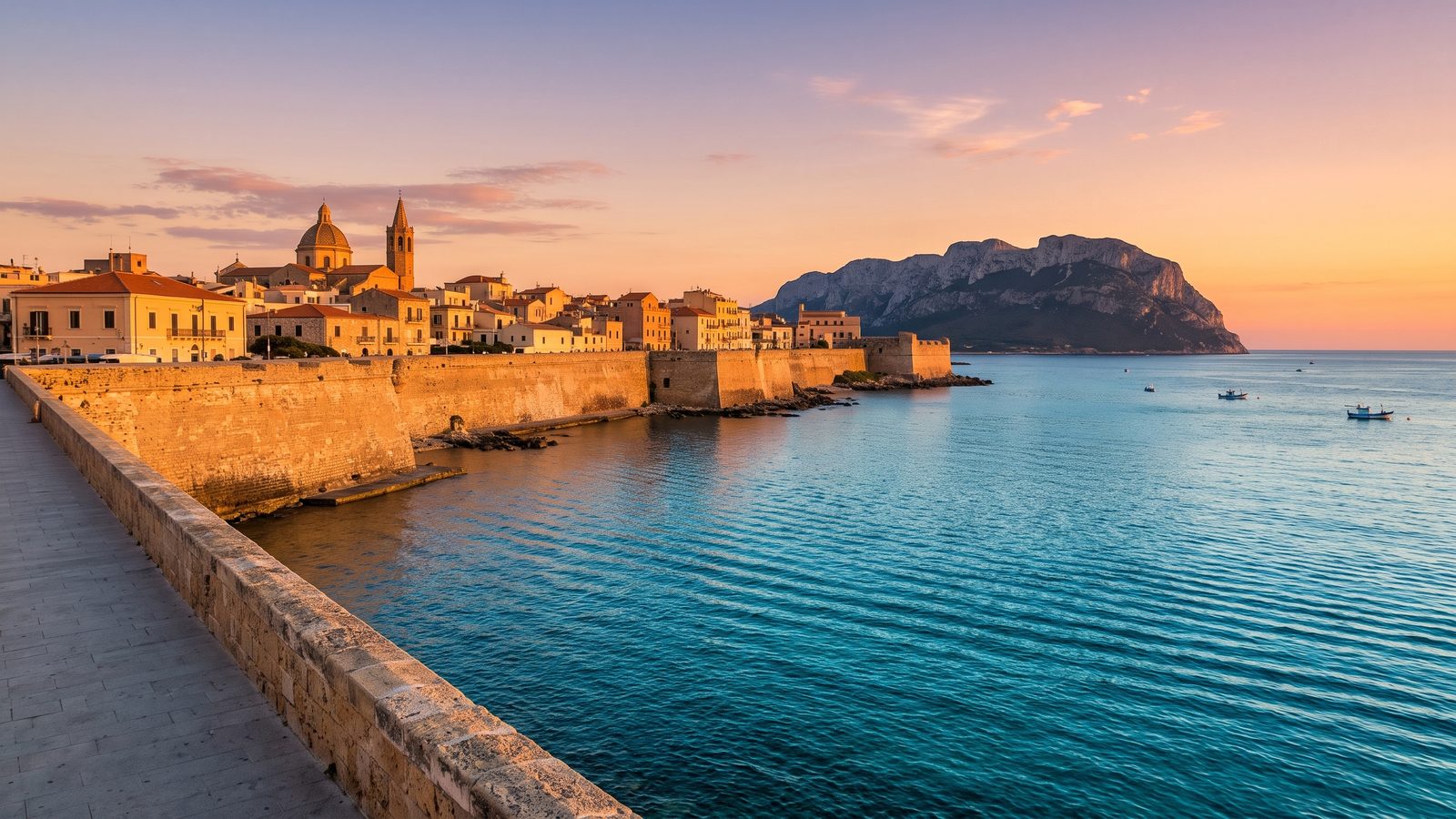
Welcome to Alghero Old Town, a coastal stronghold on Sardinia’s northwestern shore where Catalan heritage meets Mediterranean charm. Founded by the Genoese Doria family and conquered by the Aragonese in the 14th century, this fortified port earned the nickname 'Little Barcelona.' As you stroll along cobblestone streets and honey-colored ramparts, you enter a living history shaped by Gothic-Catalan architecture, ancient dialects, and a unique island culture surviving across centuries.
This audio tour guides you through historic bastions, dramatic sea views, and narrow lanes filled with local artisans and fragrant cuisine. Learn how Aragonese rule transformed the town’s language and traditions, while experiencing the vibrant, enduring spirit that makes Alghero one of Sardinia's most captivating destinations today.
Listen to a sample
The opening of this tour, exactly as AllTours narrates it on site.
What you'll hear on this tour
Stop 1. The Catalan Conquest and Legacy
You trace Alghero's beginnings back to the Doria family's 12th-century Genoese fortress, but the pivotal moment arrives in 1353 with the Aragonese invasion. Led by Peter IV, the conquerors brutally expel the native Sardinian inhabitants and repopulate the city with Catalans. As you walk through these ancient streets, you witness how this dramatic forced migration established a distinct cultural and linguistic heritage that survives to this day. You feel the deep historical divide that isolated Alghero from the rest of Sardinia, forging an Iberian enclave on the island. The unique Catalan identity continues to shape the town's living memory, customs, and spirit centuries later.
Stop 2. Ramparts Over the Turquoise Sea
You stand upon ancient bastions where massive honey-colored stone walls drop directly into the turquoise Mediterranean Sea. These formidable sea walls once defended the strategic port against fierce corsair raids, shaping Alghero's maritime destiny. Looking out over the water, you observe local fishermen casting nets into the gentle waves, maintaining traditions passed down through countless generations. Far across the bay, the dramatic limestone cliffs of Capo Caccia rise majestically against the horizon, serving as a wild sentinel over the gulf. You absorb the breathtaking blend of human military ingenuity and untouched natural coastal beauty that defines this historical Sardinian defense post.
Stop 3. Sandstone Fortress and Catalan Gothic Towers
As you examine the defensive stone perimeter, you notice the warm, honey-colored sandstone that forms Alghero's massive medieval walls. The influence of Catalan-Gothic architecture surrounds you in the delicate details of historical structures like the Palazzo d'Albis, featuring distinctive pointed arches and intricate stone tracery. Nearby, you look up at the Cathedral's impressive octagonal bell tower, a striking landmark that encapsulates the town's architectural evolution from medieval Gothic origins to later Renaissance additions. You sense the heavy Aragonese influence in every carved stone facade and narrow alley, standing as a permanent visual tribute to centuries of Spanish crown rule over the port.
Stop 4. Echoes of the Catalan Language
Walking through the narrow cobblestone lanes, you feel the vibrant heartbeat of a living Catalan enclave. If you listen closely to the conversations around you, you hear the rare Algherese dialect, an archaic form of Catalan still spoken by older residents today. This distinct linguistic heritage influences everything around you, from bilingual street signs to culinary classics like paella algherese and crema catalana. You notice how Iberian musical rhythms and time-honored traditions continue to weave into daily island life. Here, centuries after Aragonese knights arrived, a unique fusion of Catalan heritage and Sardinian soul thrives proudly in every corner of the town.
Stop 5. Flavors of Sea and Tradition
As dusk falls over the harbor, you immerse yourself in a rich culinary tradition rooted in Spanish and Sardinian influences. You taste the famous aragosta alla catalana, a fresh lobster salad showcasing local seafood enriched with Iberian flair. Continuing your food journey, you savor traditional fregola sarda—tiny toasted pasta pearls cooked with fresh clams—or heartier malloreddus pasta served with savory sausage ragù. Paired with a glass of robust local Cannonau red wine, each dish tells a story of cultural blend. You experience firsthand how centuries of maritime trade and Catalan rule have crafted a flavor profile found nowhere else in Italy.
Stop 6. Red Coral and Island Craftsmanship
You step inside artisan workshops tucked along ancient cobblestone passages, discovering a rich tradition of local craftsmanship. Alghero is famous for its exquisite red coral, ethically harvested from deep Mediterranean waters and transformed into delicate, handcrafted jewelry. Known as the heart of the Riviera del Corallo, these shops showcase master jewelers working alongside silversmiths who produce intricate filigree pieces. As you browse, you also find vibrant woven Sardinian textiles and detailed ceramics, each reflecting generations of island art and heritage. You realize that choosing a piece of red coral or handcrafted silver allows you to take home a tangible treasure of Alghero's enduring history.
Planning your visit
- Best time to go
- Late afternoon before sunset, spring through autumn, to enjoy cooler temperatures and golden hour light along the sea walls.
- Approximate duration
- About 1.5 to 2 hours
- Where to start
- Torre di Sulis (Piazza Sulis) at the southern edge of the Old Town ramparts.
Access and conditions change seasonally — check the official site before you go.
Frequently asked questions
Is Alghero Old Town worth visiting?
Yes, Alghero Old Town is well worth visiting for its unique blend of Catalan-Gothic architecture, historic sea walls, rich culinary scene featuring Aragonese-inspired seafood, and vibrant cultural heritage.
How long do you need at Alghero Old Town?
You need about 1.5 to 3 hours to explore the main historical sites, bastions, and narrow lanes, though spending a half-day allows extra time for relaxed dining and browsing local coral artisan shops.
Why is Alghero called Little Barcelona and why is Catalan spoken there?
Alghero earned the nickname 'Little Barcelona' after the Aragonese king Peter IV conquered the city in 1353, expelled the native population, and repopulated it with Catalans, establishing a heritage and dialect that endure to this day.
Keep exploring
Header image is an AI-generated illustration of Alghero Old Town. AllTours.ai is an AI audio tour guide — point your camera at any landmark and hear its story.