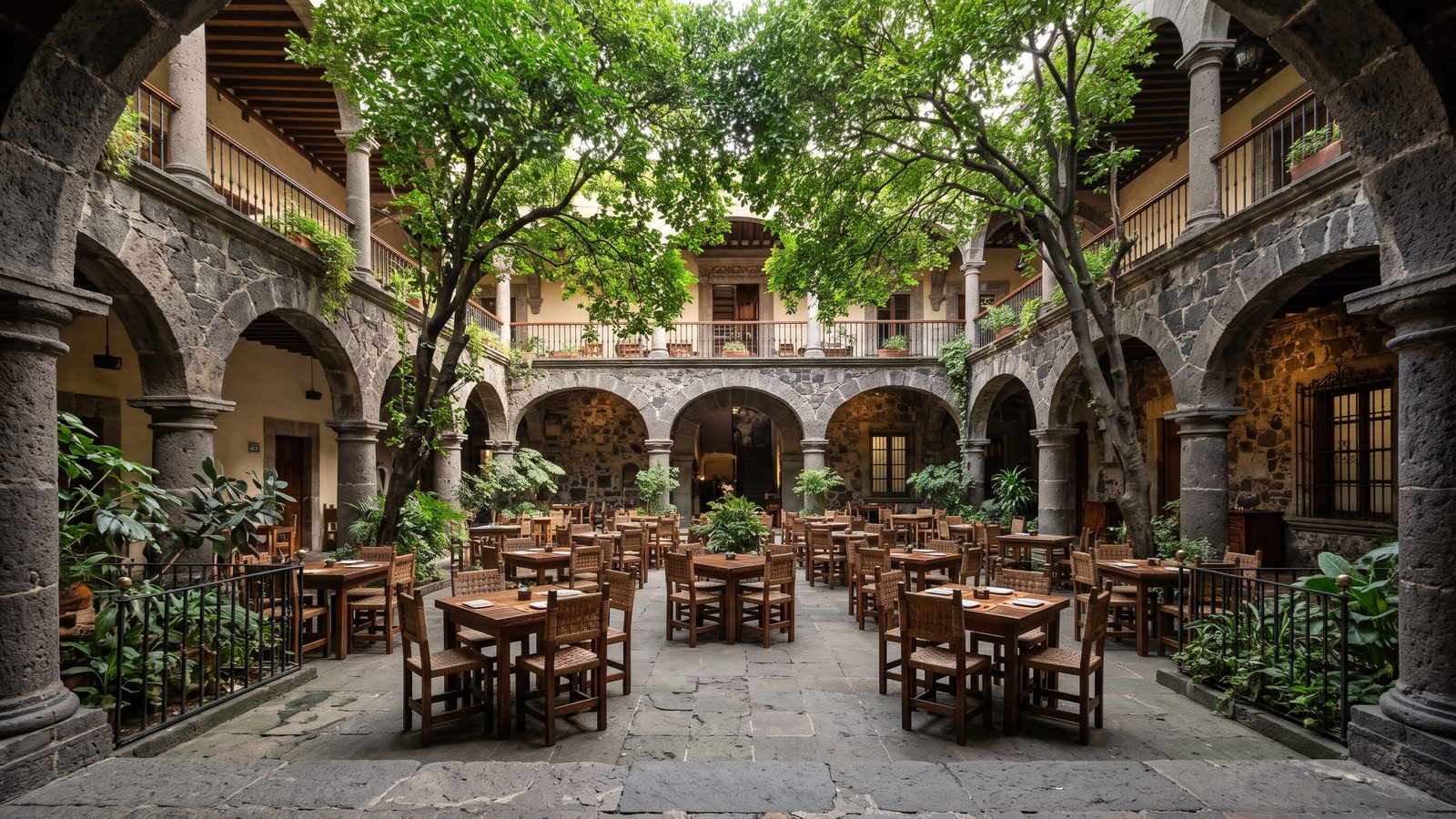
Step into Azul Histórico, a remarkable space situated in the heart of Mexico City. Here, centuries of history unfold around you through vibrant cultural traditions, architectural evolution, and rich culinary heritage. As you walk through its courtyards and halls, you trace a lineage running from ancient traditions and revolutionary moments to global trade hub status. Prepare to explore how every detail—from foundation stones to local flavors—tells an enduring story.
This audio tour guides you through the captivating legacy of this historic precinct. Discover its architectural craftsmanship, timeless cultural rituals, and renowned dining spaces. Immerse your senses in a unique atmosphere where past meets present, offering a deep appreciation for the spirit preserved within these walls.
Listen to a sample
The opening of this tour, exactly as AllTours narrates it on site.
What you'll hear on this tour
Stop 1. Millennia of Sacred and Revolutionary Heritage
You stand on ground steeped in millennia of human endeavor. Long before written records, indigenous Azure Keepers revere this spot, believing vibrant mineral veins beneath your feet hold ancestor spirits and using pigments for sacred cave art. In the 17th century, European explorers establish Fort Blue, sparking conflicts over this strategic crossroads. During the 1776 Indigo Uprising, a ragtag militia uses natural cave labyrinths to repel a larger force, securing a pivotal revolutionary victory. By the 19th-century industrial boom, rare deep-blue mineral dyes transform this place into a global textile center. You experience an enduring tapestry of ancient reverence, revolutionary fervor, and industrial ingenuity.
Stop 2. Craftsmanship and Structural Evolution
You observe the architectural bones of this enduring structure. At your feet, massive, rough-hewn granite blocks form mortarless foundations from an era prioritizing strength. Looking upward, warm terracotta tiles cap lower walls, marking later prosperity and refined aesthetic tastes. Corbelled arches support upper stories, demonstrating clever engineering that expands interior spaces while preserving structural integrity. Master carpenters join timber-framed gables with mortise and tenon craftsmanship, creating functional yet decorative patterns. Notice window variations ranging from narrow defensive slits on the north face to expansive south-facing leaded glass panes. Each structural detail invites you to trace centuries of continuous adaptation and evolving human craftsmanship.
Stop 3. Artistic Traditions and Sacred Rituals
You feel the vibrant cultural pulse of this historic community around you. Tapestries in public spaces display a visual lexicon, each woven pattern narrating ancient legends and ancestral wisdom. During the annual Azure Bloom Festival at the spring equinox, residents wear indigo garments and perform the Dance of the River's Embrace to honor vital waterways. Spontaneous Echo Songs drift through open windows, expressing shared daily experiences and community memories. Even distinct blue pottery crafted from local clay holds spiritual value, meant to invite prosperity and ward off ill fortune. You encounter a living canvas of shared identity reflected in every artistic endeavor and cherished local tradition.
Stop 4. A Living Chronicle of Regional Flavors
You let your senses lead you into a culinary landscape shaped by trade and resourcefulness. Taste the heritage of ancient trade routes in Azure Stew, where local root vegetables combine with exotic cardamom and star anise. You discover subtle smokiness in Skyfish Pie, crafted using open-hearth methods that layer fresh river catches with wild mountain herbs. This daily cooking ritual connects you directly to ancestral rhythms. Sip Whispering Wine pressed from sun-drenched slopes, carrying subtle mineral notes from the earth below. Each flavor offers an authentic taste of history, turning regional dining into a living chronicle of resilience, traditional artistry, and local landscape bounty.
Stop 5. Inside the Historic Azure Hearth
You enter The Azure Hearth, a dining space founded in 1785 to sustain local artisans and thinkers. A cobalt-tiled hearth radiates warmth where generations of chefs perfect Bluebell Stew, a slow-cooked delicacy with a family secret recipe spanning two centuries. Surrounding hand-carved oak paneling once echoed with secret debates, as early preservationists plotted to save the district's historic architecture. Etched glass windows depict local herbs once used in traditional remedies, reflecting a deep connection to nature. As you look around this living archive, you realize history here is not merely displayed for visitors—it is actively savored with every bite in a historic environment.
Stop 6. Echoes of the Grand Refectory
You walk into the historic Grand Refectory, surrounded by echoes of centuries of communal banquets. A massive preserved hearth once dictated daily menus of slow-roasted game and savory root vegetables. Imagine pewter clattering against oak tables during Harvest Feasts, where families shared produce in community celebrations. Spiced wine warmed merchants debating trade, while scholars discussed philosophy at evening repasts. Meticulously documented table arrangements reflect the strict social hierarchy governing meals, stretching from the lord's high table down to commoners' benches. You experience how dining here served as both vital sustenance and a profound social statement, shaping regional culinary artistry over generations of continuous history.
Planning your visit
- Best time to go
- Morning or late afternoon for comfortable walking and optimal natural light in the central courtyard.
- Approximate duration
- About 45 minutes to 1 hour
- Where to start
- Begin at the main entrance courtyard of Azul Histórico.
Access and conditions change seasonally — check the official site before you go.
Frequently asked questions
Is Azul Histórico worth visiting?
Yes, Azul Histórico is widely acclaimed for its historic colonial courtyard setting, vibrant atmosphere, and traditional Mexican culinary offerings in Downtown Mexico City.
How long do you need at Azul Histórico?
Visitors typically spend between 45 minutes and 1.5 hours taking in the architecture and enjoying food or drink.
What is the history of Azul Histórico's setting?
The restaurant is located within the Palace of the Count of Miravalle, a historic colonial building featuring a majestic tree-filled central courtyard.
Keep exploring
Header image is an AI-generated illustration of Azul Histórico. AllTours.ai is an AI audio tour guide — point your camera at any landmark and hear its story.