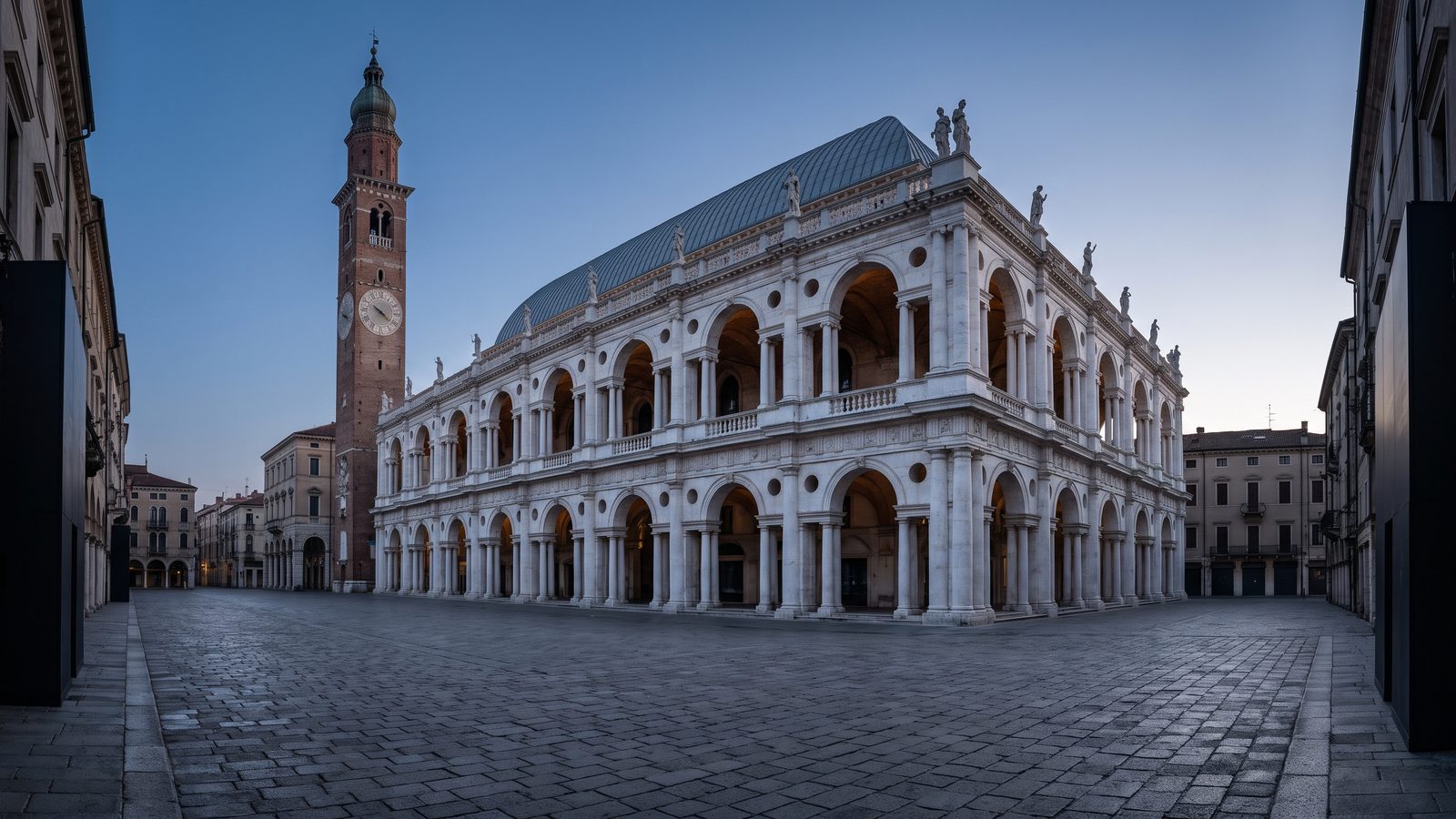
Welcome to Vicenza and the breathtaking Basilica Palladiana, a UNESCO World Heritage site that reshaped Western architecture. Originally a medieval civic palace known as the Palazzo della Ragione, this structure was radically transformed in the mid-16th century by a young Andrea Palladio. By encasing the crumbling medieval core inside glowing white marble loggias, Palladio created a timeless symbol of classical harmony and civic pride in the heart of the Veneto region.
As you walk through these elevated arcades and look down upon Piazza dei Signori, you experience a living testament to Renaissance genius. This self-guided audio tour leads you step-by-step through the building's dramatic history, revolutionary design, and breathtaking urban panoramas.
Listen to a sample
The opening of this tour, exactly as AllTours narrates it on site.
What you'll hear on this tour
Stop 1. The Genius of the Serliana
Look closely at the double-tiered white loggia framing the older Gothic hall. You are observing Andrea Palladio's brilliant solution to a complex structural puzzle: the original medieval building had irregular bay widths. To create visual symmetry, you see him repeat the famous 'Palladian window,' or Serliana, featuring a central round arch flanked by two rectangular openings. As your eyes move upward, notice how Palladio transitions from the sturdy Doric columns on the ground floor to the graceful, slender Ionic order on the level above. This harmonious classical rhythm effortlessly blends medieval remnants with revolutionary Renaissance urban design.
Stop 2. Rising from Medieval Ruins
You stand before a monument born out of disaster. In the 15th century, this core functioned as Vicenza's Gothic public palace, the Palazzo della Ragione. However, a catastrophic roof collapse in 1496 left the city hall damaged and unstable. For over fifty years, renowned architects struggled and failed to offer a permanent fix. That changes in 1549 when a young Andrea Palladio presents his daring proposal. Instead of demolishing the medieval ruin, you learn how he envisioned encasing the medieval stone inside double-tiered Renaissance arcades, initiating an ambitious construction project that spans generations and permanently transforms the city's identity.
Stop 3. Panoramas Over Piazza dei Signori
Step out onto the elevated upper loggia and gaze across the surrounding landscape. Below you lies Piazza dei Signori, its charming irregular outline recalling Vicenza's medieval origins, contrasting sharply with the subtle ancient Roman grid hidden in neighboring streets. Trace the subtle curve of Corso Palladio, aligning with the ancient Roman decumanus, lined with majestic Renaissance facades. Looking past the city center, you see a sea of terracotta rooftops extending toward the gentle slopes of the Berici Hills, punctuated by soaring bell towers. From this vantage point, the architectural tapestry of Vicenza unfolds before your eyes in breathtaking detail.
Stop 4. The Inverted Keel Roof
Cast your gaze upward to appreciate the luminous white marble exterior wrapping the original Gothic walls. Andrea Palladio’s design relies on repeating Serliana arches across both upper and lower levels, creating a mesmerizing rhythm that draws your eyes along the building's massive length. High above this grand loggia, you notice the towering copper roof, engineered in the shape of a massive inverted ship's keel. This distinctive architectural cap conceals structural cleverness while highlighting the absolute brilliance of Renaissance innovation. Palladio transforms an awkward medieval hall into an airy, light-filled masterpiece that stands as Vicenza’s most recognizable architectural icon.
Stop 5. The Civic Heart of Vicenza
Here at the Basilica Palladiana, you stand inside the very soul of Vicenza. This landmark represents far more than clever engineering; it embodies the civic pride, wealth, and refined taste of the Renaissance era. By crafting this revolutionary design, Palladio established a global architectural language that spread across Europe and inspired grand public buildings for centuries. As you walk through these halls, you walk through a historical crucible where art, commerce, and community life seamlessly converged. The building continues to serve as Vicenza's vibrant cultural center, preserving the creative spirit that continues to define the region today.
Stop 6. A Global Renaissance Legacy
As you complete your journey through this monument, consider its global legacy as a UNESCO World Heritage site. This prestigious recognition celebrates Palladio's profound influence on international architecture, inspiring builders from Europe to the Americas. By carefully preserving these Renaissance ideals, Vicenza safeguards an irreplaceable masterwork of classical design. You are walking through a living testament to balance, light, and proportion that continues to serve as an architectural blueprint worldwide. The harmony you experience here remains just as powerful and inspiring today as when the stone loggias were first carved centuries ago.
Planning your visit
- Best time to go
- Late afternoon during warmer months, when warm sunlight hits the white marble loggias and Piazza dei Signori fills with vibrant outdoor life.
- Approximate duration
- about 1 hour
- Where to start
- Piazza dei Signori, standing in front of the main entrance looking up at the lower loggia.
Access and conditions change seasonally — check the official site before you go.
Frequently asked questions
Is Basilica Palladiana worth visiting?
Yes, the Basilica Palladiana is an essential stop in Vicenza. As Palladio's signature Renaissance work and a UNESCO World Heritage landmark, it offers groundbreaking architectural history and exceptional views of the surrounding piazza.
How long do you need at Basilica Palladiana?
Most visitors spend around 45 to 60 minutes exploring the upper and lower loggias, taking photos, and listening to the audio commentary.
What is the history of Basilica Palladiana?
Originally constructed in the 15th century as the Gothic Palazzo della Ragione, its roof collapsed in 1496. Andrea Palladio was chosen in 1549 to redesign the structure, encasing the older medieval building in iconic Renaissance white marble loggias.
Keep exploring
Header image is an AI-generated illustration of Basilica Palladiana. AllTours.ai is an AI audio tour guide — point your camera at any landmark and hear its story.