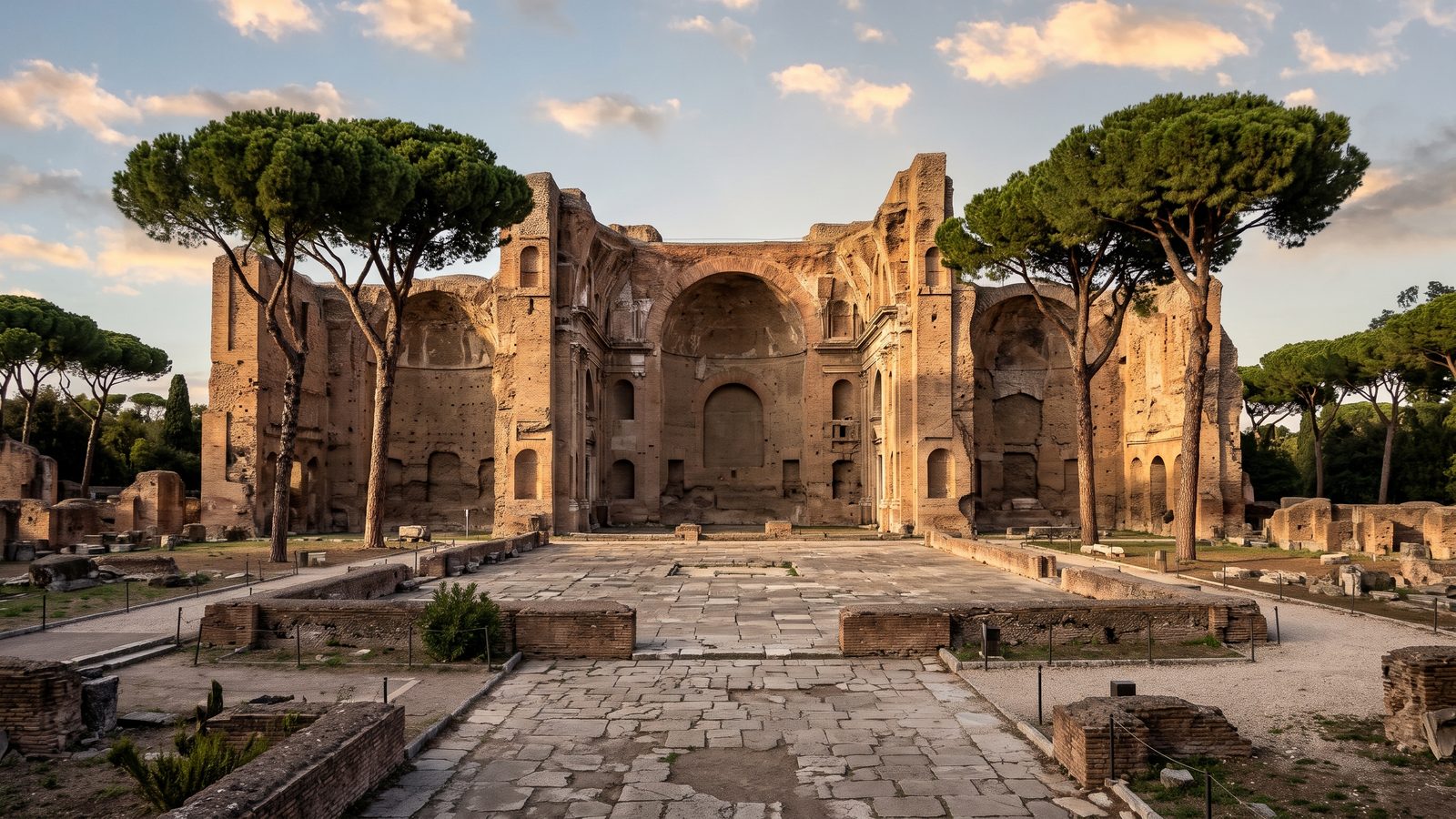
Step back into ancient Rome at the Baths of Caracalla, an extraordinarily preserved 25-acre thermal complex built by Emperor Caracalla in the third century AD. As you explore these soaring brick and concrete walls, this self-guided audio tour brings to life the bustling social world, lavish marble decorations, and mind-boggling engineering that once welcomed up to 1,600 bathers at a time into ultimate imperial luxury.
From subterranean heating furnaces to grand vaulted frigidaria and sunlit gardens, discover how this majestic complex operated for over three centuries. Learn about the rise, decline, and enduring artistic legacy of one of the Roman Empire's greatest architectural and hydraulic achievements.
Listen to a sample
The opening of this tour, exactly as AllTours narrates it on site.
What you'll hear on this tour
Stop 1. Subterranean Fire and Flowing Waters
You stand within an engineering masterpiece powered by 80,000 cubic meters of water daily, supplied through the dedicated Aqua Antoniniana aqueduct. Look around at the towering brick-faced concrete walls made of durable opus caementicium. Beneath your feet once lay a massive underground hypocaust system where roaring furnaces circulated hot air and steam through hollow wall tiles called tubuli. This sophisticated network heated sprawling bath chambers to precise temperatures while subterranean channels managed drainage. As you explore, imagine the vast intricate piping and continuous water supply that seamlessly sustained a daily flood of thousands of bathers across this sprawling imperial sanctuary.
Stop 2. Symmetry, Domes, and Soaring Vaults
Notice the strict, symmetrical layout organizing this grand complex along a central axis. As you walk through the open spaces, picture the soaring frigidarium once capped by immense groin vaults, alongside the massive circular caldarium crowned by a towering dome. Magnificent granite columns brought all the way from Aswan supported high ceilings, while radiant marble veneers and detailed mosaic floors covered nearly every surface. You can still admire fragments of these artistic floor tiles today. Between the central bathing halls, open-air palaestrae for exercise, and the huge swimming pool, the architecture balances monumental scale with graceful public movement.
Stop 3. An Emperor's Ruthless Ambition
You are walking through the passion project of Marcus Aurelius Severus Antoninus, famously known as Caracalla. After seizing sole power in 211 AD by eliminating his own brother Geta, Caracalla rapidly launched this colossal construction project to secure his imperial legacy and public favor. In 212 AD, he issued the famous Constitutio Antoniniana, extending Roman citizenship to nearly all free men across the empire. The resulting tax windfalls directly funded the luxurious scale of these baths. Though remembered for his notorious cruelty, Caracalla personally inaugurated these thermal halls, forever tying his family name to one of Rome's grandest public gifts.
Stop 4. The Fall of the Aqueducts
Imagine the sudden silence that fell over these grand halls in 537 AD during the Gothic Wars. The Ostrogoth king Vitiges severed the crucial Aqua Marcia and Aqua Antoniniana aqueducts, abruptly cutting off the complex's water supply and ending over three centuries of daily bathing. Without water, the massive structure fell into swift decay and became a gigantic quarry. Popes looted precious marble and granite columns to build St. Peter’s Basilica, while other stones were shipped off to churches in Trastevere and Pisa. Earthquakes slowly shattered the remaining vaults, leaving behind the haunting, majestic ruins you see before you today.
Stop 5. Masterpieces Rediscovered in the Ruins
Look up at the looming brick skeletons and realize how profoundly these ruins inspired future generations. During the Renaissance, famous architects like Donato Bramante studied these monumental concrete vaults to spark a revolution in European building design. Centuries after the baths fell quiet, sixteenth-century excavations commissioned by Pope Paul III unearthed legendary artistic treasures hidden beneath the rubble, including the massive marble Farnese Hercules and Farnese Bull sculptures now displayed in Naples. As you walk past surviving floor mosaics and sturdy brick pillars, you witness a site whose majestic scale continues to shape architectural imagination worldwide.
Stop 6. Three Centuries of Imperial Splendor
You are treading on ground that served over 8,000 citizens every single day for more than three centuries. Initiated in 211 AD and opened in 217 AD, the main bathing block stood as a triumph of civic infrastructure and public luxury. Beyond bathing, Romans gathered here to read in libraries, exercise in gymnasiums, and stroll through manicured gardens. Though stripped of its golden mosaics, imported marble, and bronze statues long ago, the sheer scale of the remaining brickwork reveals the enormous economic and military strength of third-century Rome at its peak.
Planning your visit
- Best time to go
- Early morning at opening or late afternoon to avoid summer heat and enjoy soft sunlight on the red brick walls.
- Approximate duration
- about 1.5 to 2 hours
- Where to start
- At the main visitor entrance along Viale delle Terme di Caracalla, just past the ticket checkpoint.
Access and conditions change seasonally — check the official site before you go.
Frequently asked questions
Is Baths of Caracalla worth visiting?
Yes, the Baths of Caracalla are well worth visiting as one of the best-preserved and largest imperial bathing complexes in Rome, offering incredible insight into ancient engineering, massive vaulted architecture, and preserved floor mosaics away from the central crowds.
How long do you need at Baths of Caracalla?
Most visitors spend between 1.5 and 2 hours exploring the vast 25-acre site, walking through the main central bathing block, examining ancient mosaics, and viewing the surrounding gardens.
Why were the Baths of Caracalla abandoned?
The baths were abandoned in 537 AD when Ostrogoth invaders severed the aqueducts supplying water to Rome during the Gothic Wars, rendering the pools and subterranean heating systems permanently unusable.
Keep exploring
Header image is an AI-generated illustration of Baths of Caracalla. AllTours.ai is an AI audio tour guide — point your camera at any landmark and hear its story.