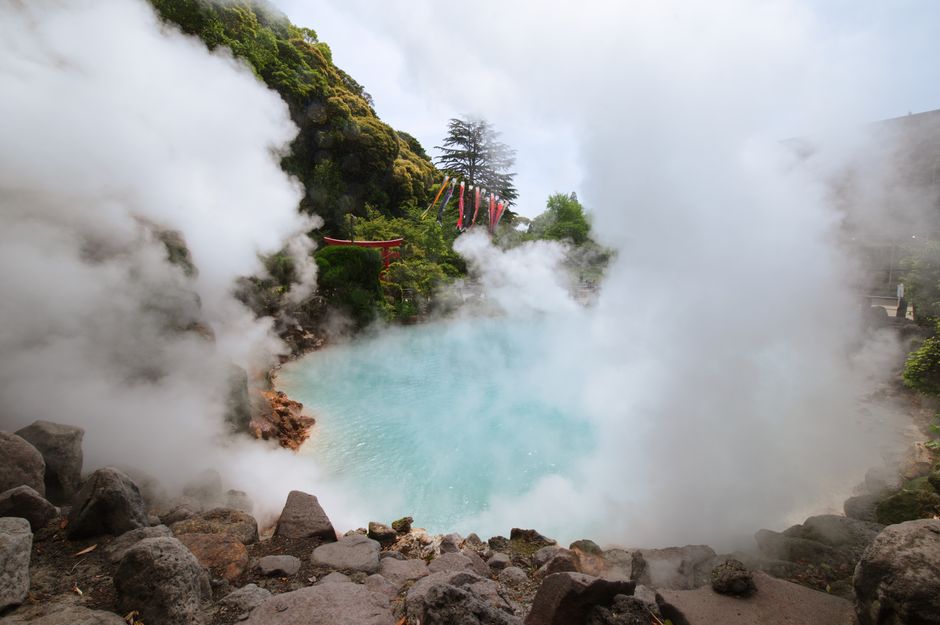
Welcome to Beppu, a city famed for its 'Jigoku' or 'Hells'—stunning geothermal hot springs too hot for bathing, yet captivating to behold. These vibrant, steaming pools showcase the earth's raw power, each with its own distinct color, temperature, and legend. Prepare to be mesmerized by a landscape unlike any other.
With AllTours.ai, your camera becomes a portal to the past and present of these infernal wonders. Simply point your device at any of the Beppu Hells, and our app will narrate their fascinating geology, ancient myths, and unique cultural significance, bringing each bubbling, steaming spectacle to vivid life right before your eyes.
Watch the 20-second tour
What you'll hear on this tour
Stop 1. Umi Jigoku (Sea Hell)
Step before the dazzling azure waters of Umi Jigoku, or 'Sea Hell', named for its deep, ocean-like blue hue. This striking pool, nearly 200 meters deep and boiling at 98 degrees Celsius, is said to have formed over 1,200 years ago after a volcanic eruption. Legend speaks of a monster that once lurked in its depths, adding a chilling mystique to its serene beauty. Beyond its captivating color, observe the steam rising perpetually, a constant reminder of the immense geothermal energy beneath your feet.
Stop 2. Oniishibozu Jigoku (Monk's Head Hell)
At Oniishibozu Jigoku, prepare to witness a unique phenomenon: bubbling grey mud pools. These peculiar formations, resembling the shaved heads of Buddhist monks, give this 'hell' its distinctive name. The mud, heated to extreme temperatures, slowly bubbles and pops, creating an otherworldly, rhythmic display. This particular hell is also known for its foot bath, offering a rare opportunity to experience the geothermal warmth in a safe, soothing way, a stark contrast to the boiling main pools.
Stop 3. Kamado Jigoku (Cooking Pot Hell)
Kamado Jigoku, or 'Cooking Pot Hell', is a vibrant and diverse site, boasting several distinct hot springs, each with its own character. Its name comes from a legend that the steam from this hell was once used to cook offerings for local deities. Here, you'll find pools of various colors—from milky blue to bright red—alongside steaming vents and even a small shrine. It's a fantastic spot to observe different geothermal expressions in one compact area, truly living up to its reputation as a 'hell of many faces'.
Stop 4. Chinoike Jigoku (Blood Pond Hell)
Behold the fiery red waters of Chinoike Jigoku, the 'Blood Pond Hell', one of Japan's oldest and most visually dramatic hot springs. Its distinctive crimson color comes from the iron-rich clay dissolved in its boiling depths. Historically, the red clay from this hell was used as a dye for textiles and even as a traditional medicine for skin diseases. This ancient, intensely colored pool offers a stark, beautiful contrast to the other hells, reminding visitors of the diverse minerals shaping Beppu's geothermal landscape.
Stop 5. Tatsumaki Jigoku (Spout Hell)
Prepare for a spectacular natural show at Tatsumaki Jigoku, the 'Spout Hell'. This unique 'hell' is a geyser that erupts every 30-40 minutes, sending a powerful column of boiling water high into the air. A stone barrier has been placed to cap its full potential, but the sheer force and regularity of its eruptions are still a breathtaking sight. This powerful display of the earth's internal pressure provides a dynamic conclusion to your tour, showcasing the active and unpredictable nature of Beppu's geothermal wonders.
Planning your visit
- Best time to go
- Late morning or early afternoon, avoiding peak crowds. Spring and autumn offer pleasant weather for walking.
- Approximate duration
- About 2-3 hours to comfortably visit all the major hells, allowing for travel between sites.
- Where to start
- Many visitors begin at Umi Jigoku (Sea Hell) in the Kannawa area, easily recognizable by its large blue pool and gift shops. Check official Beppu tourism resources for current access information.
Access and conditions change seasonally — check the official site before you go.
Frequently asked questions
Can I bathe in the Beppu Jigoku Hot Springs?
The main 'hells' are far too hot for bathing and are purely for observation due to their extreme temperatures. However, some sites have designated foot baths or nearby onsen facilities where you can safely experience the geothermal waters.
How much walking is involved between the 'hells'?
The Beppu Hells are divided into two main clusters. The Kannawa cluster has five hells within walking distance of each other, while the other two hells (Chinoike and Tatsumaki) require a short bus ride. The entire experience involves a moderate amount of walking.
Are there food and drink options available at the 'hells'?
Yes, many of the 'hells' have small shops and stalls offering local snacks, souvenirs, and unique geothermal treats. You can often find items like eggs cooked in the hot spring water or 'Jigoku Mushi' (steamed dishes) to try.
Keep exploring
Photography via Pexels. AllTours.ai is an AI audio tour guide — point your camera at any landmark and hear its story.