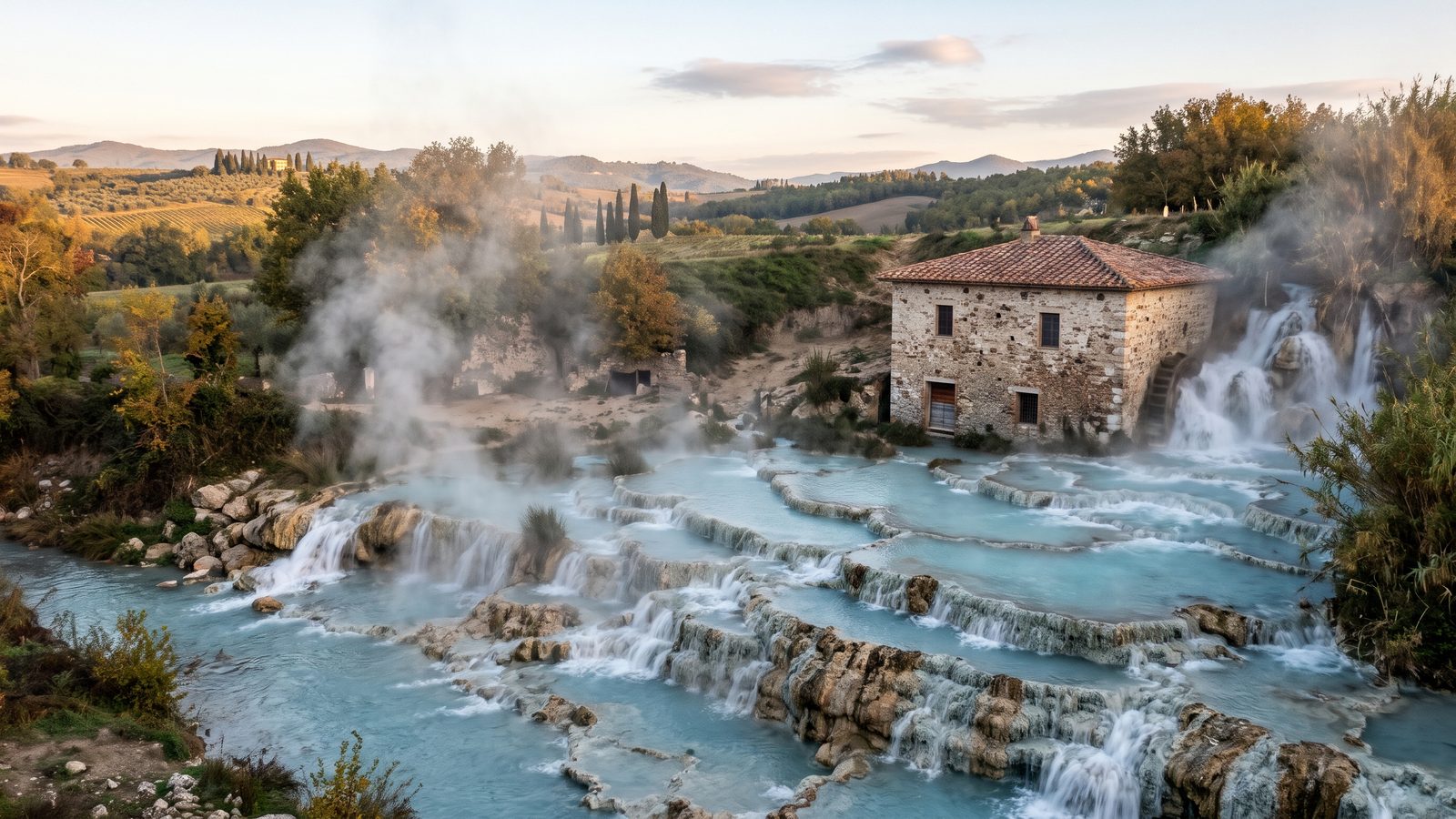
Experience the therapeutic thermal magic of Saturnia with a self-guided Cascate del Mulino tour. Nestled in the heart of Maremma, Tuscany, these striking natural pools cascade beside a historic medieval stone mill. Immerse yourself in 37°C mineral-rich waters that have rejuvenated bathers since Etruscan and Roman times. As warm turquoise streams sculpt the shimmering travertine terraces, discover the geological forces, ancient myths, and rich Tuscan history shaping this iconic open-air sanctuary.
Explore at your own pace while listening to captivating audio stories about Roman legends, local architecture, and centuries of thermal bathing traditions. Step right into the mineral steam, find your ideal cascading pool, and let nature's ancient hydro-massage completely restore your spirit.
Listen to a sample
The opening of this tour, exactly as AllTours narrates it on site.
What you'll hear on this tour
Stop 1. The Thunderbolt of the Roman God Saturn
You step into waters born from divine anger and divine peace. Ancient Roman legend tells that Saturn, enraged by human warfare, hurled a mighty thunderbolt into this earth. Where it struck, steaming thermal springs burst forth to usher in a Golden Age of harmony. Long before the Romans named Saturnia after this event, the Etruscans performed mystical purification rituals in these sacred waters. As you soak in the rising steam, you feel the weight of this ancient myth. You touch the very stream intended to replace human strife with enduring serenity and natural restoration.
Stop 2. Volcanic Travertine Sculptures and Thermal Waters
Look down at the shimmering, turquoise basins layered beneath your feet. You are standing within a geological marvel actively carved by nature. Superheated thermal water travels from deep within Monte Amiata's volcanic core, emerging to cool and deposit rich calcium carbonate. Over millennia, this mineral crystallization forms the gleaming travertine terraces around you. The faint, earthy aroma in the air comes from hydrogen sulfide gas, signaling the water's therapeutic mineral mix. Notice how specialized micro-algae flourish in this sulfur-rich environment, creating brilliant blue-green colors inside every basin. Here, warm water acts as both the sculptor and the living canvas.
Stop 3. Etruscan Rituals and Roman Imperial Roads
You walk along a valley deeply etched into ancient history. Centuries before Roman legions arrived, enigmatic Etruscans revered these springs as sacred gateways to chthonic deities, leaving votive offerings to seek divine cures. Later, Roman travelers journeyed along the Via Clodia from Rome to visit the therapeutic thermae established in nearby Saturnia. As empires collapsed, local villagers turned this natural power toward daily survival. During the medieval period, builders constructed the sturdy stone mill standing beside you. Driven by the Gorello stream, its heavy wheels ground grain for surrounding communities, turning sacred healing waters into an essential economic lifeline.
Stop 4. Engineering the Power of the Gorello Stream
Examine the sturdy old stone mill rising above the rushing cascades. You observe a masterclass in functional Tuscan craftsmanship, constructed from irregular travertine and river stones set to withstand centuries of relentless hydraulic force. Look at the foundation archways and carved channels engineered to capture the Gorello stream's powerful current. These clever stone openings once directed rushing thermal water to spin a massive wooden wheel inside. Weathered terracotta roof tiles and thick walls protect the interior mechanics where heavy grinding stones once turned grain. Every rough-hewn block reflects an era when practical local engineering integrated human needs seamlessly into nature's dynamic flow.
Stop 5. An Enduring Tradition of Egalitarian Bathing
As you join fellow bathers in the warm basins, you participate in an ancient Tuscan social ritual. For thousands of years, families from neighboring Maremma villages have gathered along these banks for health, camaraderie, and conversation. In these open cascades, rich traditions pass between generations as remedies and stories echo through the thermal steam. The local belief in Saturn's gift remains central to the region's cultural identity and daily life. You experience a rare, truly democratic space where nature's thermal spa stays open to all. Basking in these shared waters connects you directly to Tuscany's enduring spirit of hospitality and community.
Stop 6. Soaking in the Warm Mill Falls Cascades
You stand before the Mill Falls of Saturnia, where vivid turquoise pools beckon you into warmth. The thermal spring waters flow consistently at a soothing 37°C (98.6°F), carrying sulfur, carbon dioxide, and restorative minerals celebrated since antiquity. As you settle into one of the tiered travertine basins, you find your perfect depth and current for a gentle, natural hydro-massage. The constant, pristine flow keeps every pool refreshed while the historic stone mill stands watch overhead. Listen to the rhythmic murmur of falling water, breathe in the mineral-rich steam, and let complete physical relaxation refresh your mind and body.
Planning your visit
- Best time to go
- Early morning or late afternoon in spring or autumn to enjoy serene atmospheric steam and avoid peak crowds.
- Approximate duration
- about 1 to 2 hours
- Where to start
- The main viewing area near the historic stone mill overlooking the cascading travertine pools.
Access and conditions change seasonally — check the official site before you go.
Frequently asked questions
Is Cascate del Mulino worth visiting?
Yes, Cascate del Mulino is one of Tuscany's most unique natural attractions. Bathers can relax in 37°C mineral-rich thermal pools carved into travertine cascades beside a medieval stone mill, accessible freely and open year-round.
How long do you need at Cascate del Mulino?
Most visitors spend between 1 to 2 hours soaking in the tiered thermal pools, taking photos of the cascades, and enjoying the historic atmosphere.
What is the history of Cascate del Mulino?
The thermal springs were used by the Etruscans for healing rituals and later by the Romans along the Via Clodia. In the medieval era, locals built the stone mill to harness the thermal stream for grinding grain.
Keep exploring
Header image is an AI-generated illustration of Cascate del Mulino. AllTours.ai is an AI audio tour guide — point your camera at any landmark and hear its story.