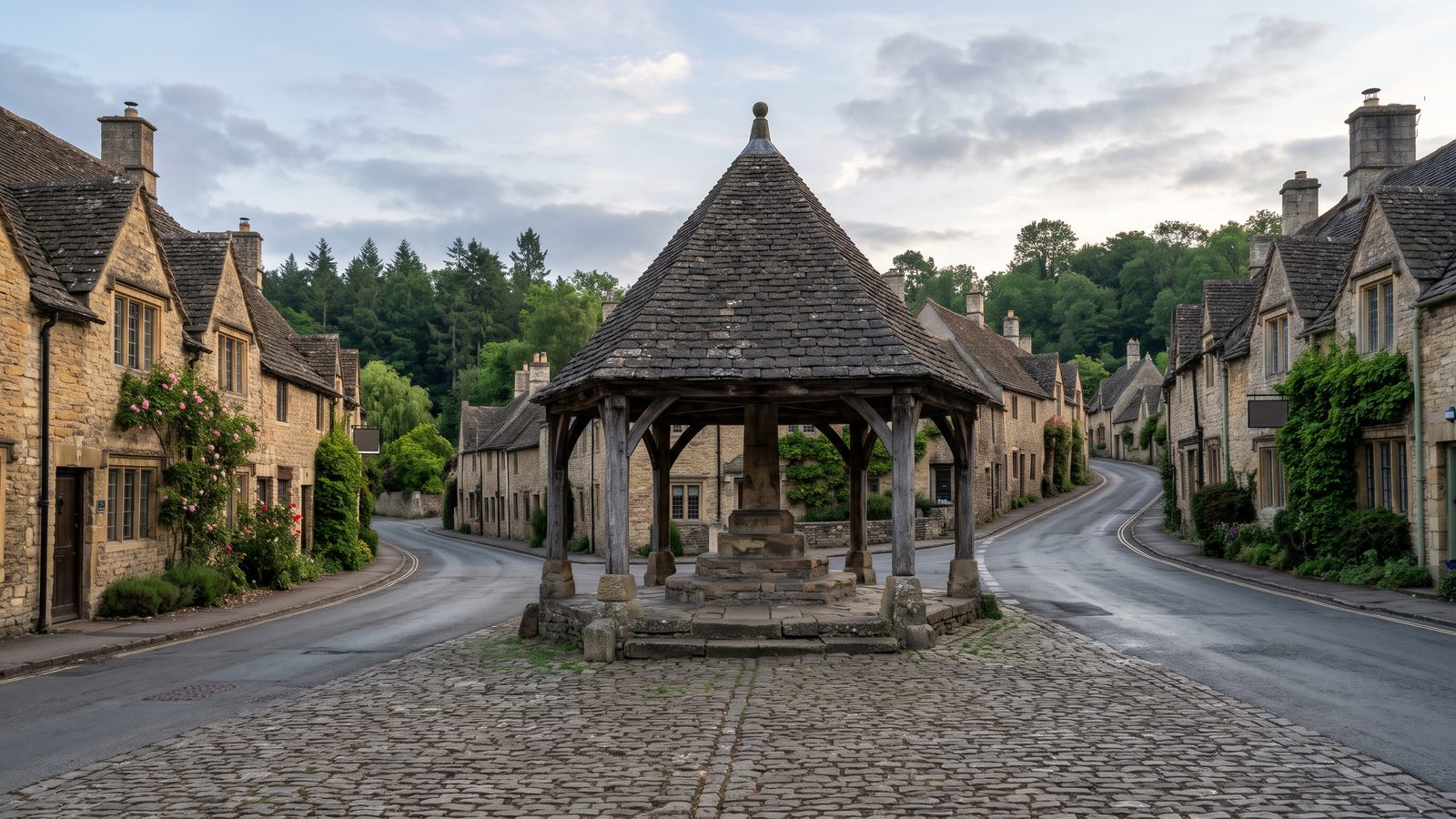
Welcome to Castle Combe and its magnificent 14th-century Market Cross. Standing at the center of this quintessential Cotswold village, you are surrounded by warm honey-coloured limestone, stone-tiled roofs, and centuries of preserved English history. This self-guided audio tour leads you through the history, architecture, and enduring charm of a medieval trading hub that remains virtually untouched by modern intrusions.
Explore the ancient stone structure where merchants once traded wool and local goods under royal charter. Discover scenic photography spots, admire traditional masonry, and immerse yourself in the serene atmosphere of one of England’s most picturesque historic locations.
Listen to a sample
The opening of this tour, exactly as AllTours narrates it on site.
What you'll hear on this tour
Stop 1. Echoes of Medieval Wool Commerce
You step close to the 14th-century Market Cross and touch centuries of local commerce and community. Secured by a royal charter when Castle Combe flourished from its lucrative wool trade, this spot became the village’s official economic hub. You can picture local farmers, weavers, and merchants converging here under the watchful eye of the Lord of the Manor. Prices are set, goods are exchanged, and minor disputes are settled right at this octagonal base. Built with immense economic confidence during a prosperous era, this permanent fixture survives centuries of plague, civil unrest, and changing rural economies, remaining the timeless, beating heart of public life in Castle Combe.
Stop 2. Medieval Craftsmanship in Honeyed Limestone
You stand before an architectural marvel constructed from honey-coloured Cotswold limestone quarried from nearby hills. You notice the robust octagonal base supporting a stout central pillar engineered to bear a heavy timber-framed canopy. Look up at the pyramidal roof, expertly clad in overlapping stone slates designed to shed heavy rain. Wide, open arches characteristic of 14th-century vernacular design invite you into the structure's protective shelter. Every element, from the precisely cut coping stones to the durable supporting masonry, demonstrates pragmatic medieval elegance built to withstand the elements while providing a dry, shaded space for generations of merchants and villagers.
Stop 3. Light, Shadows, and Timeless Stone
You stand before a photographer's dream where low golden light accentuates weathered stone and delicate carvings. In the early morning golden hour, dramatic shadows reveal details missed by the naked eye. You can capture a low-angle shot emphasizing the cross against the Cotswold background or focus tightly on moss-kissed surfaces and ancient inscriptions. Photographers often arrive at misty dawn when the sleeping village creates an ethereal, timeless scene. By adjusting your camera's aperture, you can either blur the background cottages to highlight the cross or keep the entire picturesque village sharp, telling the broader story of Castle Combe's quiet dignity and enduring medieval charm.
Stop 4. A Living Tapestry Frozen in Time
You wander through Castle Combe and notice how honey-coloured stone cottages glow as if bathed in perpetual sunset. Roofs tiled with local stone and intricate gables showcase traditional craftsmanship passed down through generations. As you walk the narrow lanes, you notice a remarkable absence of modern intrusions like streetlights or overhead wires. You stroll along the meandering Bybrook River, which once powered the village wool trade and now flows peacefully through the valley. This village was never built for modern tourism; it simply exists as a preserved snapshot of medieval England, largely untouched by industrial sprawl and moving at its own serene pace.
Stop 5. Unbroken Continuity of Rural Life
You gaze upon this Grade I listed monument, a living symbol of Castle Combe’s unbroken village heritage since the 14th century. Its remarkably intact survival reflects a dedicated community preserving its local history. Built from indigenous Cotswold limestone, the Market Cross highlights regional medieval craftsmanship. You observe the octagonal base where commerce was conducted and minor justice was once dispensed. A weathered sundial sits atop the central shaft, marking time for generations of villagers who gathered here. This monument stands as a physical manifestation of local identity and a silent witness to evolving rural traditions, connecting you directly to England's historical fabric.
Stop 6. Golden Stone and Rolling Hills
You absorb the landscape around you, shaped by unique oolitic limestone that forms the soul of the Cotswolds. This golden stone gives every local building its warm, inviting glow. Medieval prosperity from the wool trade allowed local merchants to construct grand manor houses and magnificent wool churches across these rolling hills. You are standing within an officially designated Area of Outstanding Natural Beauty spanning six counties. Intricate dry stone walls built by generations of skilled hands crisscross gentle river valleys and ancient woodlands, creating a living tapestry of human harmony with the land that preserves an iconic, timeless English idyll.
Planning your visit
- Best time to go
- Early morning or late afternoon for golden hour light and peaceful crowds.
- Approximate duration
- About 30-45 minutes
- Where to start
- Market Cross in the center of Castle Combe village square.
Access and conditions change seasonally — check the official site before you go.
Frequently asked questions
Is Castle Combe Market Cross worth visiting?
Yes, Castle Combe Market Cross is a remarkably preserved 14th-century Grade I listed monument located at the heart of one of the Cotswolds' most iconic and picturesque villages.
How long do you need at Castle Combe Market Cross?
A visit to the Market Cross and a peaceful stroll around the surrounding village lanes typically takes about 30 to 45 minutes.
What is the history of Castle Combe Market Cross?
Built in the 14th century following a royal charter for a weekly market, the Market Cross served as the commercial and social center for Castle Combe's flourishing wool trade.
Keep exploring
Header image is an AI-generated illustration of Castle Combe Market Cross. AllTours.ai is an AI audio tour guide — point your camera at any landmark and hear its story.