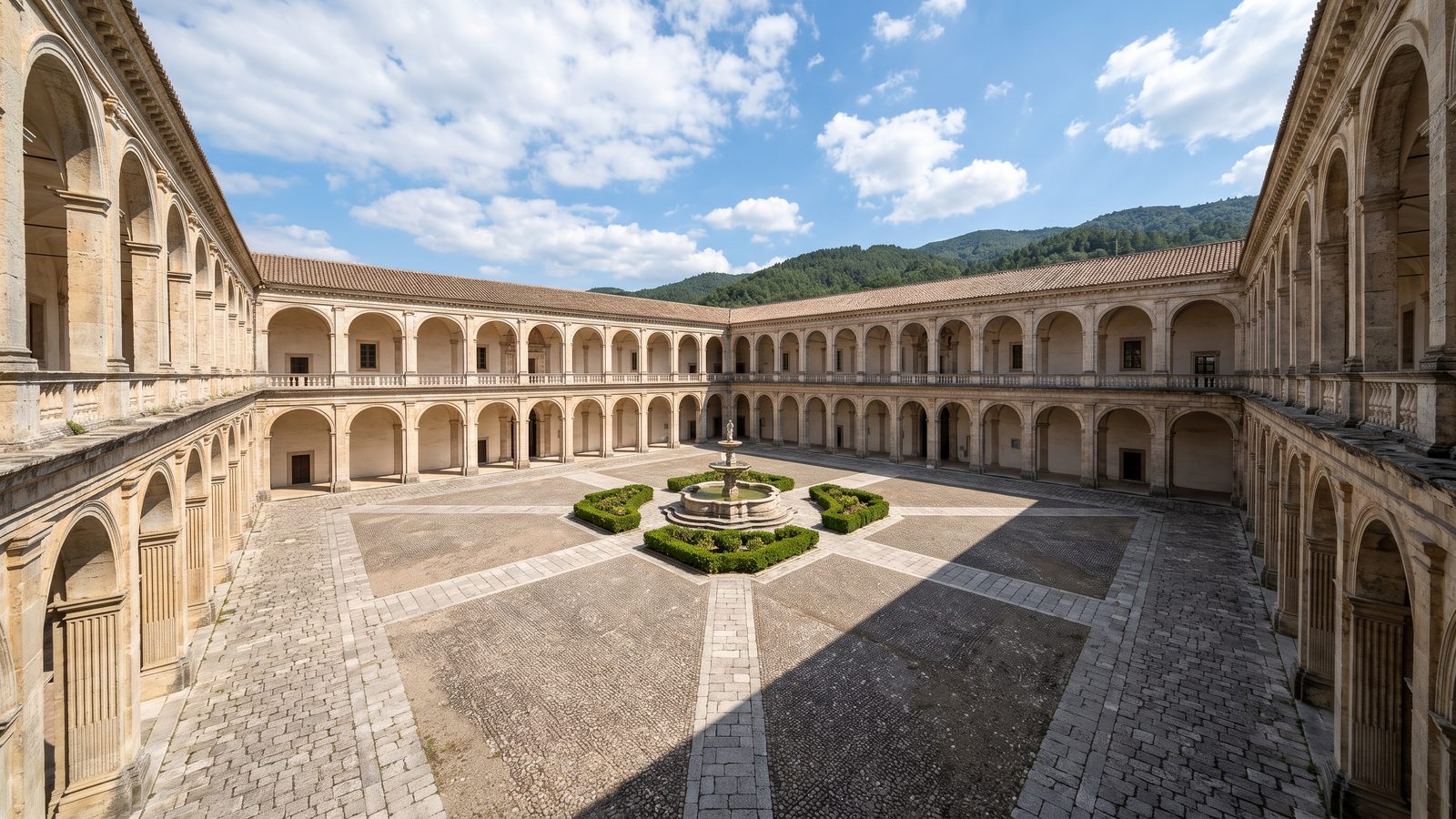
Step into the Certosa di Padula, a monumental UNESCO World Heritage site tucked into Campania's Vallo di Diano. Founded in 1306 by Tommaso Sanseverino, this expansive complex grew into one of the largest Carthusian monasteries in the world. As you explore its majestic grounds, you will discover centuries of silent contemplation, profound artistic patronage, dramatic Baroque transformations, and the enduring architectural legacy of the monks who once lived here.
This self-guided audio tour leads you through breathtaking grand cloisters, vibrant frescoes, serene prior gardens, and historic communal halls. Immerse yourself in the quiet devotion, artistic genius, and dramatic historical transformations that shaped this spectacular Italian masterpiece across centuries of monastic tradition.
Listen to a sample
The opening of this tour, exactly as AllTours narrates it on site.
What you'll hear on this tour
Stop 1. The Grand Cloister and Floating Staircase
You stand inside the Grand Cloister, the monumental heart of this Carthusian sanctuary. Spanning a staggering 15,000 square meters, it ranks among the largest cloisters in the world. As you look up, double-tiered Baroque arcades play with light and shadow. The robust lower tier anchors the space, while the delicate upper tier lifts your gaze toward the sky. Then, your eyes meet the spectacular elliptical spiral staircase. Floating effortlessly between levels, this architectural masterpiece serves as a dramatic sculptural statement. Every sweeping curve, detailed column, and elegant volute displays the daring artistic vision of an era when building was an act of profound expression.
Stop 2. Vibrant Frescoes and Intricate Intarsia
As you wander through the arcades, vibrant 17th- and 18th-century frescoes pull you into visual stories depicting Saint Bruno and Carthusian history. You notice how clever trompe l'oeil techniques extend painted architectural elements into realistic illusions of spatial depth. Inside the Prior's Apartment, delicate stucco work and celestial visions decorate exuberantly painted Baroque ceilings. Moving into the church, you admire detailed intarsia work on the choir stalls, where artisans carefully inlaid contrasting woods to form complex geometric patterns and devotional scenes. From grand altarpieces to decorative tiles, every corner transforms this quiet monastery into a magnificent, living canvas of faith and human ingenuity.
Stop 3. Sanctuary of the Prior's Garden
You step into the Prior's Garden, a quiet sanctuary designed for deep contemplation and self-sufficiency. Geometric planting beds reveal the monks' botanical expertise, where medicinal herbs once grew to supply the monastery's essential apothecary. Fragrant citrus trees laden with golden fruit offer a rare sensory indulgence inside these otherwise austere walls. As you walk past the rustling leaves toward the central fountain, you imagine the monastery's leader finding solace and spiritual inspiration along these paths. This private paradise provided a peaceful retreat from communal duties, blending careful cultivation, practical medicine, and quiet devotion into a sacred microcosm of the natural world.
Stop 4. Communal Spaces of Silence and Purpose
You enter the communal core of the monastery, where daily discipline and shared faith shaped Carthusian life. In the immense Refectory, monks gathered for meals in total silence, listening only to scripture read aloud from the elevated pulpit. You step into the solemn Chapter House, the administrative hub where the brotherhood made major decisions, sought spiritual guidance, and confessed their faults. Nearby, the grand kitchens showcase the impressive scale needed to sustain a self-sufficient monastic community. Each stone in these communal chambers reflects centuries of shared purpose, showing how practical work and quiet devotion combined to nourish both body and spirit.
Stop 5. From Medieval Foundations to Baroque Grandeur
You trace the complex history back to 1306, when Count Tommaso Sanseverino laid the first stone following a successful hunt. Dedicated to Saint Lawrence, the monastery grew into a major economic and spiritual power across Southern Italy. Between the 16th and 18th centuries, dramatic renovations transformed medieval structures into a grand Baroque complex. However, early 19th-century Napoleonic suppression forced the monks out, plunging the site into decades of abandonment and alternate uses as military barracks and a Risorgimento prison. Today, its recovery as a UNESCO World Heritage site lets you walk through layered centuries of triumphs, decay, and preservation.
Stop 6. A Sacred Tradition of Silence and Study
You experience a culture shaped by silence, solitude, and intellectual pursuit. In their scriptorium, Carthusian monks meticulously copied rare manuscripts and built a renowned library, establishing a vital center of learning. Individual cells fostered personal study and spiritual discipline, keeping monks connected through shared prayer rhythms. Beyond scholarship, visual narratives across frescoes and altarpieces reflect deep theological reflections and evolving artistic styles. Even their agricultural labor integrated seamlessly into spiritual life, demonstrating a fully self-sufficient monastic world. Standing here, you witness a physical legacy built upon devotion, knowledge, and an unwavering commitment to a unique way of life.
Planning your visit
- Best time to go
- Morning or early afternoon year-round for optimal daylight across the open cloisters.
- Approximate duration
- about 2 hours
- Where to start
- At the main entrance to the Certosa di Padula complex.
Access and conditions change seasonally — check the official site before you go.
Frequently asked questions
Is Certosa di Padula worth visiting?
Yes, Certosa di Padula is a UNESCO World Heritage site and one of the largest Carthusian monasteries in the world, renowned for its immense 15,000-square-meter Grand Cloister, Baroque spiral staircase, beautiful frescoes, and rich historical heritage.
How long do you need at Certosa di Padula?
Most visitors spend around 2 to 3 hours exploring the extensive grounds, including the Grand Cloister, Prior's Apartment, gardens, Refectory, and historic kitchens.
Who founded the Certosa di Padula and when?
Tommaso Sanseverino, Count of Marsico, founded the monastery in 1306, fulfilling a vow after a successful hunting trip and establishing a Carthusian stronghold dedicated to Saint Lawrence.
Keep exploring
Header image is an AI-generated illustration of Certosa di Padula. AllTours.ai is an AI audio tour guide — point your camera at any landmark and hear its story.