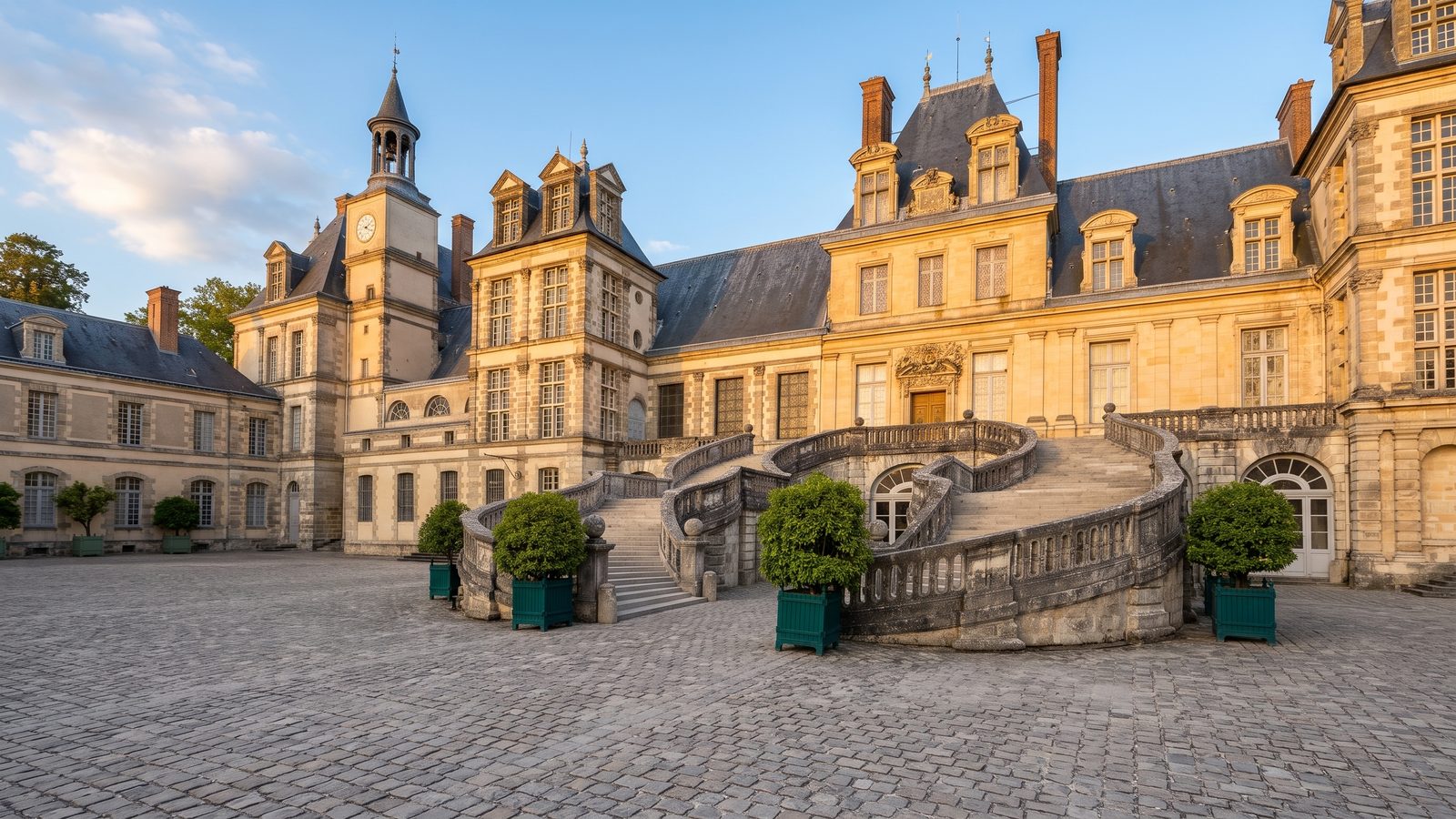
Welcome to Château de Fontainebleau, a magnificent imperial estate where centuries of French royal history unfolded. From its humble origins as a twelfth-century chapel to a grandiose Renaissance masterpiece transformed by Francis I, this palace hosted sovereigns from the Capetian dynasty through Napoleon III. As you explore its opulent apartments, famous galleries, and sweeping formal gardens, you step directly into the convergence of supreme power, architectural evolution, and artistic triumph.
This self-guided audio tour leads you through imperial ballrooms, revolutionary Renaissance artworks, and sweeping historic courtyards. Experience the living story of French monarchs, Italian master artists, and pivotal historical milestones—including Napoleon Bonaparte’s famous 1814 abdication—all while exploring these majestic rooms and peaceful gardens at your own personalized pace.
Listen to a sample
The opening of this tour, exactly as AllTours narrates it on site.
What you'll hear on this tour
Stop 1. Imperial Splendor in the Royal Apartments
Step inside the heart of royal life at Fontainebleau. You stand in the magnificent Salle de Bal, where grand balls once echoed with silk dresses and laughter, framed by Napoleon’s imperial eagle motifs woven into opulent gilding. Feel the grandeur radiating from massive, carved Baroque fireplaces representing royal lineage. As you move into the King’s Bedchamber, admire the ceremonial lit de parade, a bed crafted with embroidered silks and rich velvets designed for monarchy display rather than sleep. Look up to see breathtaking coffered, painted ceilings that turn each space into a celestial realm, bordered by sculpted boiseries depicting classical mythology and royal authority.
Stop 2. Revolutionary Masterpieces of the Galerie François Ier
Look closely at the walls around you, where dynamic frescoes turn the gallery into a living canvas. You are walking through the famous Galerie François Ier, filled with Mannerist works painted by Rosso Fiorentino and Francesco Primaticcio. These paintings express royal power and classical mythology through dramatic, fluid forms. Notice how the sculpted stucco reliefs leap from the plaster, marking a revolutionary break from medieval artistic traditions and defining the renowned School of Fontainebleau. Combined with intricate wood paneling and gilded accents, this vibrant ensemble showcases an era when Italian artistry transformed French decorative sculpture and painting forever.
Stop 3. Centuries of Monarchs and Imperial Drama
You are standing on ground shaped by continuous French rule, from medieval times through Napoleon III. The story begins in the twelfth century with a simple chapel dedicated to Saint-Louis, before King Francis I transforms the site into a Renaissance treasure in the sixteenth century. Later monarchs expand the estate, including Henry IV, who builds the famous Horseshoe Courtyard to project grand royal authority. Napoleon Bonaparte later selects Fontainebleau as his imperial residence, culminating in his dramatic abdication here in 1814. As you walk these halls, you follow the exact footsteps of kings and emperors across centuries of European history.
Stop 4. A Living Evolution of Architectural Styles
Gaze up at the majestic façade, where medieval fortress roots meet Renaissance elegance. You can observe the clear transition from the stern defensive lines of the ancient keep to soaring, light-filled wings adorned with delicate rooflines. Notice the classical symmetry and intricate detailing around the windows and dormers, sculpted by Italian craftsmen who brought Renaissance ideals to France. These light-filled wings contrast with lingering Gothic touches, creating a dialogue between ancient antiquity and French innovation. Feel the immense weight of the solid stonework beneath you as you appreciate this living tapestry of evolving royal taste and architectural grandeur.
Stop 5. Royal Reflection in the Formal Gardens
Step outside into the expansive grounds and breathe in centuries of royal garden design. Before you stretches the Grand Parterre, a vast formal landscape of manicured lawns meant to awe visitors before they reach the palace. Imagine Louis XIV strolling along these tree-lined paths during moments of quiet statecraft. To your side, the Horseshoe Pond reflects the sky like a mirror, anchoring the French formal layout while supplying water across the estate. Further along, you discover the charming Jardin des Abeilles, or Bees’ Garden, where gentle buzzing recalls the royal apiaries and the simpler pleasures enjoyed by French monarchs.
Stop 6. Frontiers of Renaissance Art and Ambition
As you wander through these royal courtyards, reflect on the spirit of discovery that defined this realm. Rather than exploring distant oceans, King Francis I and his court explored the frontiers of human creativity and intellect. You follow the path of Italian masters like Rosso Fiorentino, who journeyed across Europe to experiment with bold artistic techniques and aesthetics. Architects and craftspeople treated these walls as an uncharted canvas, charting new visual territories for the French monarchy. Standing here, you participate in a legacy where exploration meant pushing the boundaries of art, culture, and royal aspiration.
Planning your visit
- Best time to go
- Morning on weekdays is best to enjoy quiet gardens and peaceful room visits.
- Approximate duration
- about 2 to 3 hours
- Where to start
- Begin at the Horseshoe Courtyard (Cour d'Honneur) near the main palace entrance.
Access and conditions change seasonally — check the official site before you go.
Frequently asked questions
Is Château de Fontainebleau worth visiting?
Yes, Château de Fontainebleau is well worth visiting. It features over 800 years of French royal history, breathtaking Renaissance art, preserved imperial apartments, and beautiful formal gardens, offering a rich alternative to Versailles.
How long do you need at Château de Fontainebleau?
Plan to spend between 2 and 4 hours to thoroughly explore the interior royal apartments, artistic galleries like the Galerie François Ier, and the extensive grounds including the Grand Parterre.
Who lived at Château de Fontainebleau?
A continuous line of French rulers lived at Fontainebleau from the 12th to the 19th centuries, including Francis I, Henry IV, Louis XIV, and Napoleon Bonaparte, who signed his 1814 abdication here.
Keep exploring
Header image is an AI-generated illustration of Château de Fontainebleau. AllTours.ai is an AI audio tour guide — point your camera at any landmark and hear its story.