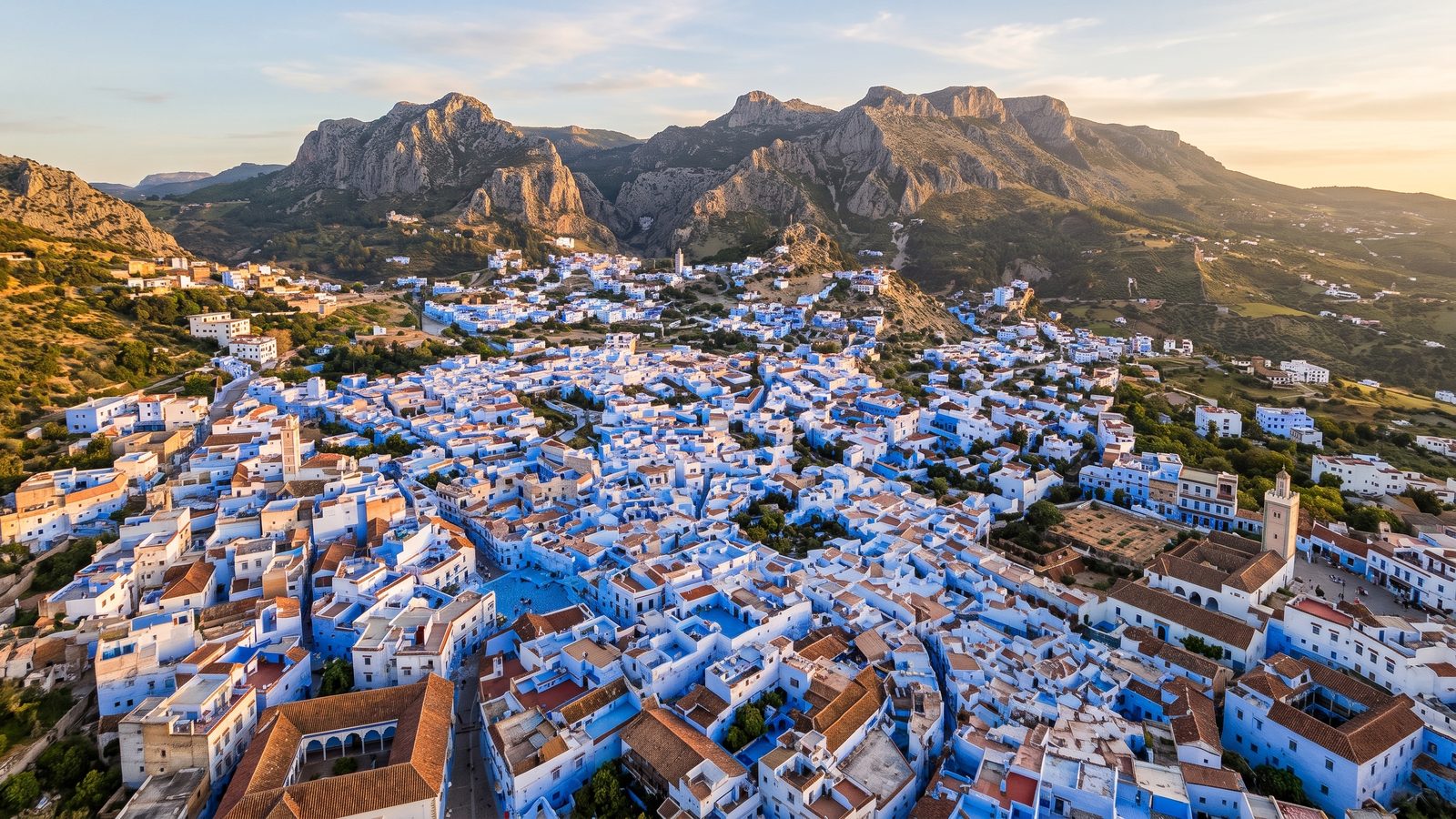
Welcome to Chefchaouen, Morocco's enchanting 'Blue Pearl' nestled high in the Rif Mountains. Founded in 1471 as a strategic fortress against Portuguese invaders, this mountain town soon grew into a haven for Jewish and Muslim exiles fleeing Spain. As you explore its iconic blue-washed alleyways, you will discover a dreamlike labyrinth of Moroccan-Andalusian architecture, vibrant souks, and living heritage tucked beneath dramatic peaks.
This self-guided audio tour leads you through winding passages, historical quarters, and scenic mountain views. Immerse yourself in local weaving traditions, learn why the walls are painted blue, and experience the relaxed rhythm of life in one of Morocco's most unforgettable destinations.
Listen to a sample
The opening of this tour, exactly as AllTours narrates it on site.
What you'll hear on this tour
Stop 1. Symphony of Azure and Heaven
You let your eyes drink in a captivating symphony of azure, indigo, and periwinkle shades defining Chefchaouen's walls. This vibrant blue tradition stems from 15th-century Jewish exiles, who painted their homes to symbolize the sky, heaven, and divine connection. As you walk along these glowing alleys, you feel a natural coolness radiating from the plaster, providing relief against the warm sun while local lore suggests the shade deters mosquitoes. You witness locals constantly refreshing the brilliant coat of paint, maintaining this living canvas day by day. Every blue-washed building keeps a centuries-old spiritual and practical legacy alive right before your eyes.
Stop 2. Labyrinth of Shadows and Weathered Doors
You step deeper into the Medina's winding, labyrinthine alleys, intentionally crafted to disorient incoming invaders while offering welcome cooling shade from the Moroccan sun. Every turn brings you face-to-face with intricate wooden doors, weathered by time, standing as unique portals into centuries of family life. The pervasive blue palette envelops you completely, honoring the tradition brought by 15th-century Jewish exiles who sought refuge here. As you explore these quiet, shaded passages, you feel the tranquil rhythm of local life unfolding around you, turning every twist of the pathway into a profound discovery.
Stop 3. Refuge of the Twin Peaks
You trace the origins of Chefchaouen back to 1471, when Moulay Ali ibn Rashid al-Alami established this fortified kasbah high in the Rif Mountains. He built the fortress as a strategic stronghold to repel encroaching Portuguese invaders. Soon after, this mountain haven transforms into a vital refuge for Muslim exiles and Jewish families fleeing the Spanish Reconquista. As you look around these historical streets, you sense how these diverse groups blended their heritage to shape a unique Moroccan-Andalusian cultural tapestry. This secluded stronghold offered safety and hope, laying the foundation for the vibrant mountain sanctuary you explore today.
Stop 4. Sentinels of the Sacred Springs
You look up at the towering Rif Mountains surrounding you, the very origin of Chefchaouen’s name, which translates to 'look at the horns.' This name references the dramatic twin peaks of Jebel Kelaa and Meggou looming over the town. These massive natural sentinels provided vital defense throughout history, keeping the blue city secluded and secure. You see how the historic medina nestles closely against the rugged contours of the slopes, drawing its lifeblood directly from the freshwater Ras el-Maa spring. The mountain waters cascade down into the town, bringing continuous vitality and nourishment to the community.
Stop 5. Living Traditions and Mountain Hospitality
You discover the soul of Chefchaouen through its vibrant living traditions and rich heritage. Local women skillfully weave heavy wool jebbas on handlooms, passing down centuries of craft while subtly incorporating Andalusian motifs into their patterns. Around you, the warm ritual of mint tea unfolds, poured with ceremonial grace to offer you an authentic taste of mountain hospitality. As you stroll through the town, the soft cadence of the local dialect merges with the melodious call to prayer echoing across the blue alleyways, creating an unforgettable sensory soundscape that defines daily life in the Rif region.
Stop 6. Artistry of the Rif Souks
You navigate the bustling souks of the medina, where centuries of Rif Mountain craftsmanship come alive around you. Here, you discover unique hand-woven wool blankets featuring rich indigo hues that mirror the blue soul of the city, created using age-old dyeing techniques. You inspect supple leather babouches meticulously crafted by local artisans, alongside jars of aromatic, cold-pressed olive oil extracted from the fertile surrounding valleys. As you browse these vibrant stalls, you interact directly with local trade traditions, taking home authentic pieces of Moroccan heritage that reflect the hard work and artistry of mountain artisans.
Planning your visit
- Best time to go
- Spring (March to May) or autumn (September to November) offer mild temperatures; early mornings provide quiet alleys and optimal photography light.
- Approximate duration
- about 2 hours
- Where to start
- Kasbah square (Place Outa el Hammam) in the heart of the Medina.
Access and conditions change seasonally — check the official site before you go.
Frequently asked questions
Is Chefchaouen worth visiting?
Yes, Chefchaouen is world-famous for its striking blue-washed medina, rich Andalusian-Moroccan history, peaceful mountain atmosphere, and unique artisanal crafts.
How long do you need at Chefchaouen?
A 1- to 2-day visit allows enough time to comfortably explore the medina on foot, experience local souks, visit the historic kasbah, and take in scenic views.
Why was Chefchaouen founded and why is it painted blue?
Chefchaouen was founded in 1471 as a military kasbah to defend against Portuguese invasions. It later became blue due to a tradition introduced by 15th-century Jewish refugees, symbolizing heaven and the sky.
Keep exploring
Header image is an AI-generated illustration of Chefchaouen. AllTours.ai is an AI audio tour guide — point your camera at any landmark and hear its story.