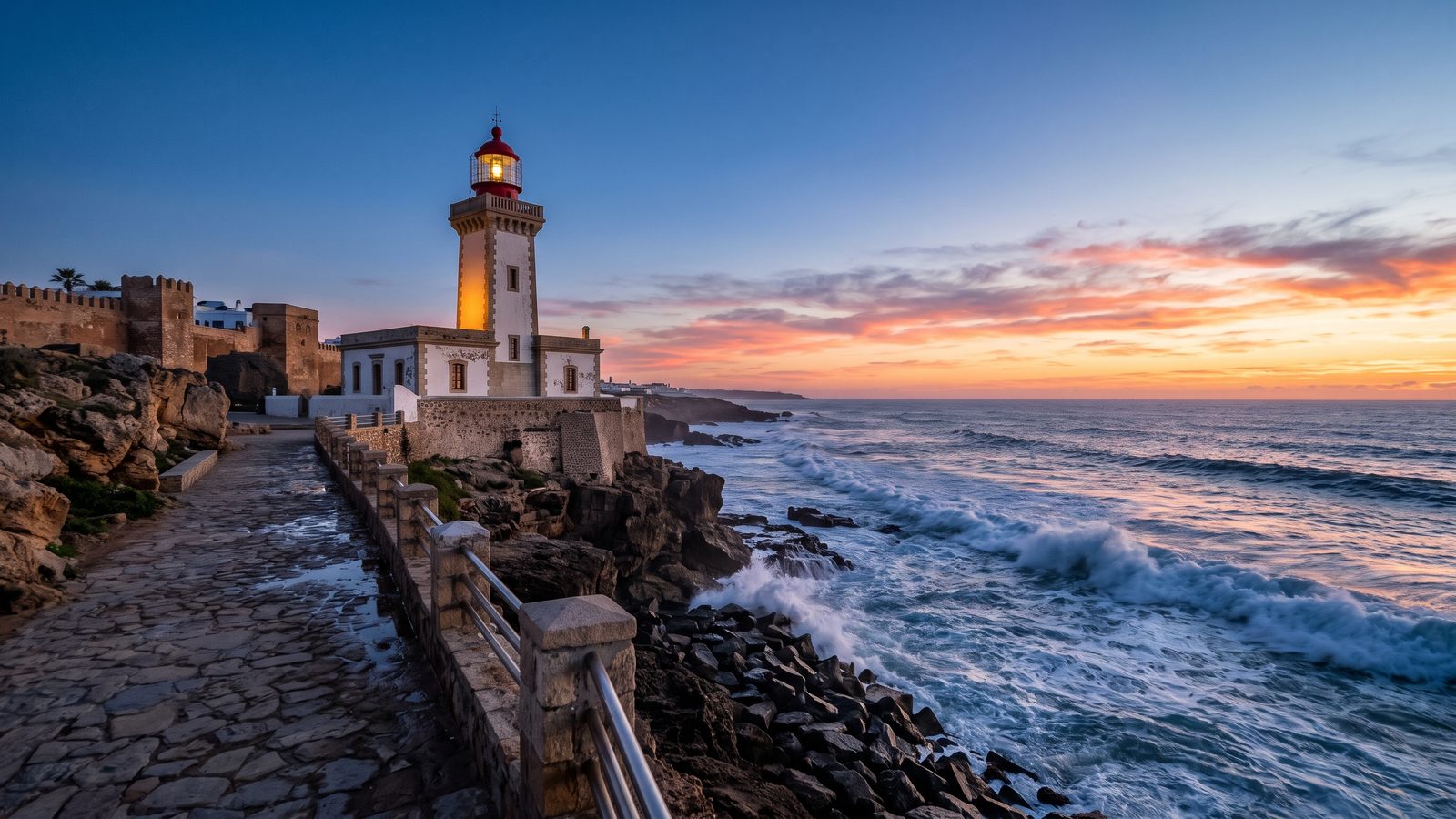
You stand along Morocco's rugged Atlantic coastline where the mighty ocean meets the historic Bou Regreg estuary. The gleaming white Rabat Lighthouse rises above the waves, topped with its distinctive red lantern room. Built in 1920 during the French Protectorate, this towering guardian has guided mariners safely past treacherous currents for over a century. Take in the crisp sea air as you explore its rich history and surrounding coastal vistas.
This self-guided audio tour leads you through the landmark's architecture, strategic navigational importance, and sweeping views across Rabat and ancient Salé. Feel the ocean spray, admire the traditional blue fishing boats below, and experience the timeless connection between land and sea at Morocco's capital edge.
Listen to a sample
The opening of this tour, exactly as AllTours narrates it on site.
What you'll hear on this tour
Stop 1. Panoramic Vistas of River and Reefs
As you stand before the Atlantic, a sweeping panorama opens around you. To your left, the silver ribbon of the Bou Regreg River merges with the ocean, where Phoenician traders, Roman legions, and Andalusian exiles once passed. Look inland to admire the ochre walls of the Kasbah des Oudaias perched on the cliffside, its blue and white houses cascading toward the water. Farther beyond, the iconic silhouette of Hassan Tower stands tall against the sky, while the ancient city of Salé rests across the river bank. Waves crash against the rugged shoreline below, offering an extraordinary vantage point where natural ocean drama meets centuries of Moroccan heritage.
Stop 2. A Century of Coastal History
You are looking at a landmark completed in 1920 during the French Protectorate. Before this beacon illuminated the coast, mariners faced immense danger attempting to enter the treacherous Bou Regreg estuary using far less reliable markers. The construction of this lighthouse formed part of a deliberate modernizing effort to secure trade routes and enhance Morocco's maritime infrastructure. As Rabat transformed into a modern capital, the towering light symbolized the nation's forward trajectory and strategic vision. Standing here today, you connect with a pivotal chapter in Morocco's modern development, witnessing how a simple navigational guardian helped secure coastal access and assert the capital's presence on the global stage.
Stop 3. Functional Genius in Concrete
Observe the clean, functional design of this early 20th-century masterpiece. The tower tapers subtly as it ascends, a brilliant structural decision that enhances stability against harsh Atlantic storms while creating a dynamic visual flow. Constructed primarily from reinforced concrete, which was revolutionary for its era, the structure provides remarkable strength and longevity. Notice the wide gallery encircling the top beneath the red lantern room. This platform allows vital access for maintaining the powerful optic inside. The angled glass panels of the lantern room are precisely engineered to project light with maximum efficiency across the sea, creating a harmonious balance between elegant modernist aesthetics and practical engineering.
Stop 4. Where the Atlantic Sculpts the Coast
Feel the ocean winds carrying salt and ocean spray as you gaze down at the cliffs below. Here at the mouth of the Bou Regreg estuary, relentless Atlantic waves continually sculpt the rocky shore in an eternal dialogue between land and sea. For thousands of years, this treacherous stretch presented extreme hazards with shifting sandbars and powerful currents. Ancient mariners, Phoenician merchants, and the daring corsairs of Salé all navigated these dangerous waters, praying for safe passage. The enduring presence of the lighthouse marks this critical maritime gateway, standing valiantly against the elements and reminding you of the dramatic history that unfolded along these rugged shores.
Stop 5. Guiding Lights Through Treacherous Waters
Positioned high above the Atlantic, you can appreciate how vital this structure remains for nighttime navigation. Its powerful lamp sends a meticulously calibrated sequence of flashes across the ocean, providing a unique light signature that mariners rely on to fix their precise coordinates. Before modern satellite navigation, captains depended entirely on this distinctive light pattern to avoid submerged reefs and hidden sandbars near the river mouth. Carefully positioned for optimal visibility, the intense beam can reach dozens of nautical miles out to sea. Every flash emitted across the water represents a crucial safety signal, keeping ships safely within narrow channels and away from dangerous coastal rocks.
Stop 6. Rhythm of the Atlantic Shore
Inhale the sharp salt air as you watch the dynamic sea unravel around you. Down in the water, traditional blue fishing boats known as floukas bob amidst the rolling swell, continuing maritime traditions passed down through generations. These local fishermen navigate the very same currents that mariners have faced for centuries, working under the watchful eye of the white tower above. The rhythmic crash of waves against the cliffs creates a constant coastal symphony at the continent's edge. Standing here, you experience the authentic pulse of Rabat's seaside life, where human heritage and the raw force of the Atlantic remain forever bound together.
Planning your visit
- Best time to go
- Late afternoon for clear ocean light and spectacular sunset views over the Atlantic.
- Approximate duration
- About 30 to 45 minutes
- Where to start
- Near the base of Rabat Lighthouse along the coastal boulevard overlooking the Atlantic.
Access and conditions change seasonally — check the official site before you go.
Frequently asked questions
Is Rabat Lighthouse worth visiting?
Yes, Rabat Lighthouse is well worth a visit for its dramatic coastal views of the Atlantic, the Bou Regreg estuary, Kasbah des Oudaias, and its clean 1920 French Protectorate architecture.
How long do you need at Rabat Lighthouse?
You need about 30 to 45 minutes to take in the lighthouse exterior, stroll along the oceanfront promenade, and enjoy the panorama across the water to Salé.
When was Rabat Lighthouse built and why?
Rabat Lighthouse was completed in 1920 during the French Protectorate to modernize Morocco's maritime infrastructure and guide ships safely through the dangerous Bou Regreg estuary.
Keep exploring
Header image is an AI-generated illustration of Rabat Lighthouse. AllTours.ai is an AI audio tour guide — point your camera at any landmark and hear its story.