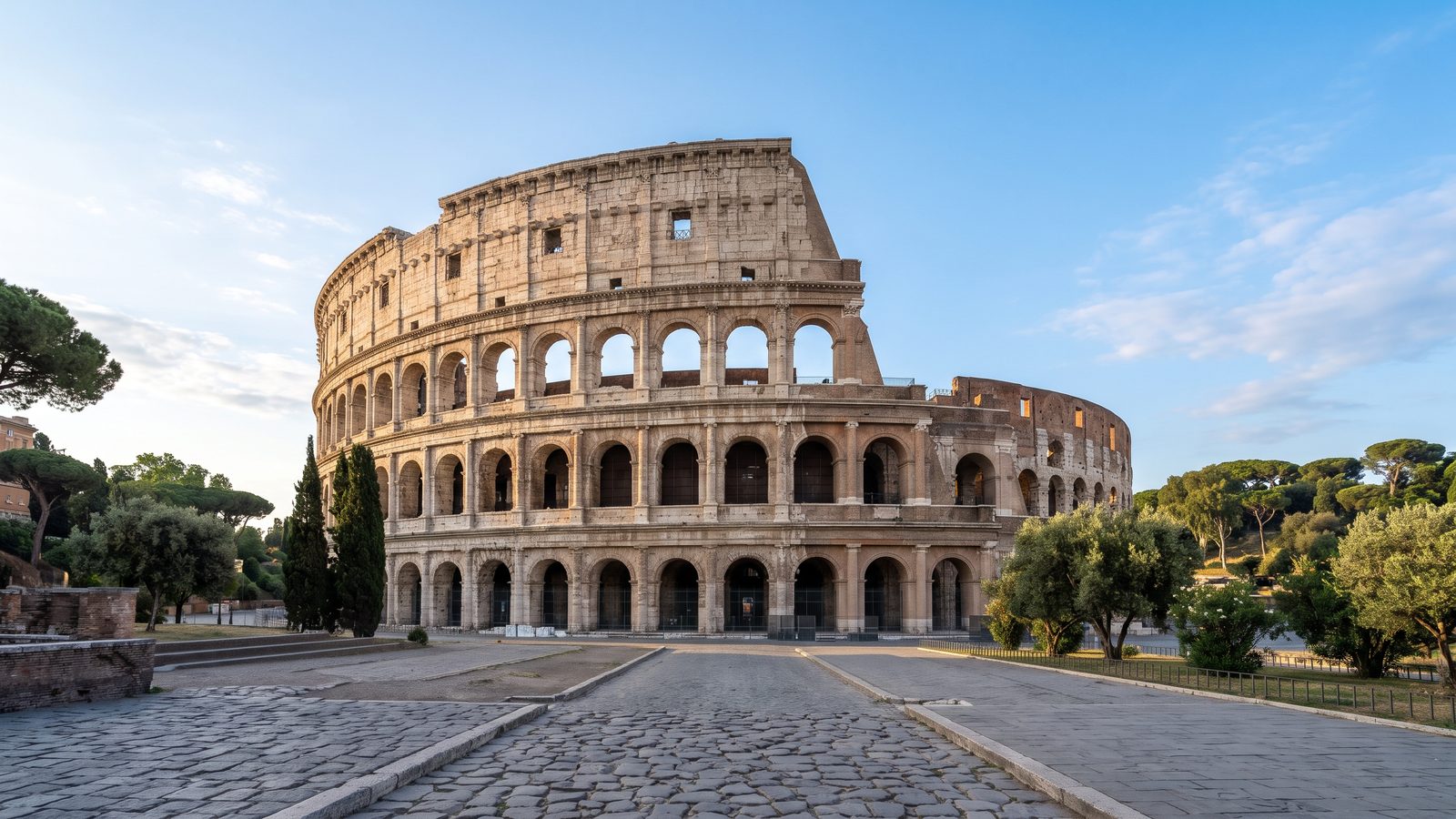
Welcome to the Colosseum, the monumental heart of Imperial Rome and an enduring masterpiece of ancient engineering. Commissioned by Emperor Vespasian around 70 AD and inaugurated by his son Titus in 80 AD, this monumental Flavian Amphitheatre once held up to 80,000 eager spectators. As you step inside, imagine the thunderous cheers of crowds gathering to witness thrilling gladiatorial combats, wild animal hunts, and grand imperial spectacles.
Through this self-guided audio tour, you will explore the genius of Roman architecture, walk in the footsteps of famous gladiators, and uncover how powerful emperors used bloody arena games to control and entertain the empire. Prepare to step back nearly two millennia into ancient Rome's most legendary arena.
Listen to a sample
The opening of this tour, exactly as AllTours narrates it on site.
What you'll hear on this tour
Stop 1. Clash of the Arena Legends
You stand where courageous fighters face their ultimate fate. These gladiators are not just enslaved prisoners; some are free volunteers, called auctorati, pursuing fame and fortune. They train relentlessly in specialized schools under a lanista. Look across the arena and picture a heavily armored Murmillo, boasting a fish-crested helmet and large rectangular shield, as he duels a swift Retiarius armed only with a net and trident. While many fall in combat, victorious gladiators earn fame as true celebrities of ancient Rome. For those who survive long enough, a humble wooden sword, the rudis, grants them ultimate freedom, ending their bloody trials in this legendary venue.
Stop 2. The Engine of Imperial Drama
Below the arena floor lies the Hypogeum, the heart of the Colosseum's theatrical machinery. You can imagine massive lifts raising exotic beasts—lions, bears, and elephants—straight into wild animal hunts known as venationes. These thrilling hunts precede the main gladiatorial combats. High above, emperors preside over the crowd, enjoying the dramatic spectacles. In the early days, workers even flood the arena to stage incredible mock naval battles, or naumachiae. Although Christian influence leads Emperor Honorius to ban gladiatorial games around 404 AD, wild animal hunts continue here for over another century, with the final recorded hunt taking place in 523 AD under Theodoric the Great.
Stop 3. Mastery of Roman Concrete and Travertine
Look around at the colossal structure supporting this ancient amphitheater. Roman engineers construct this marvel using opus caementicium—strong, moldable concrete—along with over 100,000 cubic meters of Tivoli travertine limestone secured with iron clamps. The elliptical shape relies on a radial network of 80 arches per level and 240 radiating walls, dispersing physical stresses evenly across the frame. Subterranean passages, ramps, and dozens of manual lifts facilitate seamless operations below the stage. Built between 72 and 80 AD under Emperors Vespasian and Titus, this brilliant system of materials and load distribution demonstrates the peak of Roman engineering, ensuring the monumental structure endures across thousands of years.
Stop 4. Grand Arches and Rapid Crowds
As you admire the exterior, observe four main levels featuring a tiered system of 80 arches per level, originally faced with gleaming white marble on the upper stories. Internally, you navigate a complex web of radial corridors and staircases called vomitoria. This revolutionary design allows between 50,000 and 80,000 spectators to fill or empty the massive seating tiers within minutes. Above you, a gigantic retractable canvas awning, the velarium, shields spectators from the fierce Mediterranean sun, operated skillfully by Roman sailors using intricate ropes and textile systems. Beneath the wooden arena floor lies the underground hypogeum, making this amphitheater both a practical masterpiece and a dramatic architectural icon.
Stop 5. Power from the Imperial Box
You now focus on the powerful rulers who shape this grand arena. Emperor Vespasian begins construction in 72 AD over Nero’s reclaimed Golden House, and his son Titus opens the games in 80 AD with 100 days of celebration. Later, Emperor Domitian adds the complex subterranean hypogeum. High in the elevated Imperial Box, the Pulvinar, emperors decide a fallen fighter's fate with a simple thumb gesture. Not all rulers remain passive spectators; Emperor Commodus famously enters the arena floor himself to battle as a gladiator. Ultimately, Emperor Honorius bans gladiatorial contests in 404 AD, shifting the imperial role in Roman public entertainment forever.
Stop 6. From Imperial Pride to Sacred Ruin
You trace the long lifecycle of this monumental ruin across two millennia. After hosting four centuries of gladiatorial combats and animal hunts, the arena faces quiet decline after the fall of the Roman Empire. Earthquakes cause severe structural damage, and stone-robbers extensively quarry its precious travertine limestone to construct famous landmarks like St. Peter's Basilica. Over time, the grand amphitheatre serves as a medieval fortress before Pope Benedict XIV consecrates the site in the 18th century, honoring Christian martyrs believed to have perished here. Today, despite centuries of plunder and natural disasters, the surviving structure remains an eternal symbol of Rome's ancient power and monumental history.
Planning your visit
- Best time to go
- Early morning at opening or late afternoon to avoid peak sun and large crowd queues.
- Approximate duration
- about 1.5 to 2 hours
- Where to start
- Outside the main entrance facing the Arch of Constantine on the south side.
Access and conditions change seasonally — check the official site before you go.
Frequently asked questions
Is the Colosseum worth visiting?
Yes, the Colosseum is one of the world's most impressive architectural achievements and iconic historic landmarks, offering an unforgettable look into ancient Roman engineering and culture.
How long do you need at the Colosseum?
Most visitors spend between 1.5 and 2 hours exploring the interior seating levels, surrounding arches, and underground views.
When was the Colosseum built and why?
Construction began under Emperor Vespasian around 70–72 AD and was completed by his son Titus in 80 AD as a grand public amphitheater for gladiatorial contests, beast hunts, and public entertainment.
Keep exploring
Header image is an AI-generated illustration of Colosseum. AllTours.ai is an AI audio tour guide — point your camera at any landmark and hear its story.