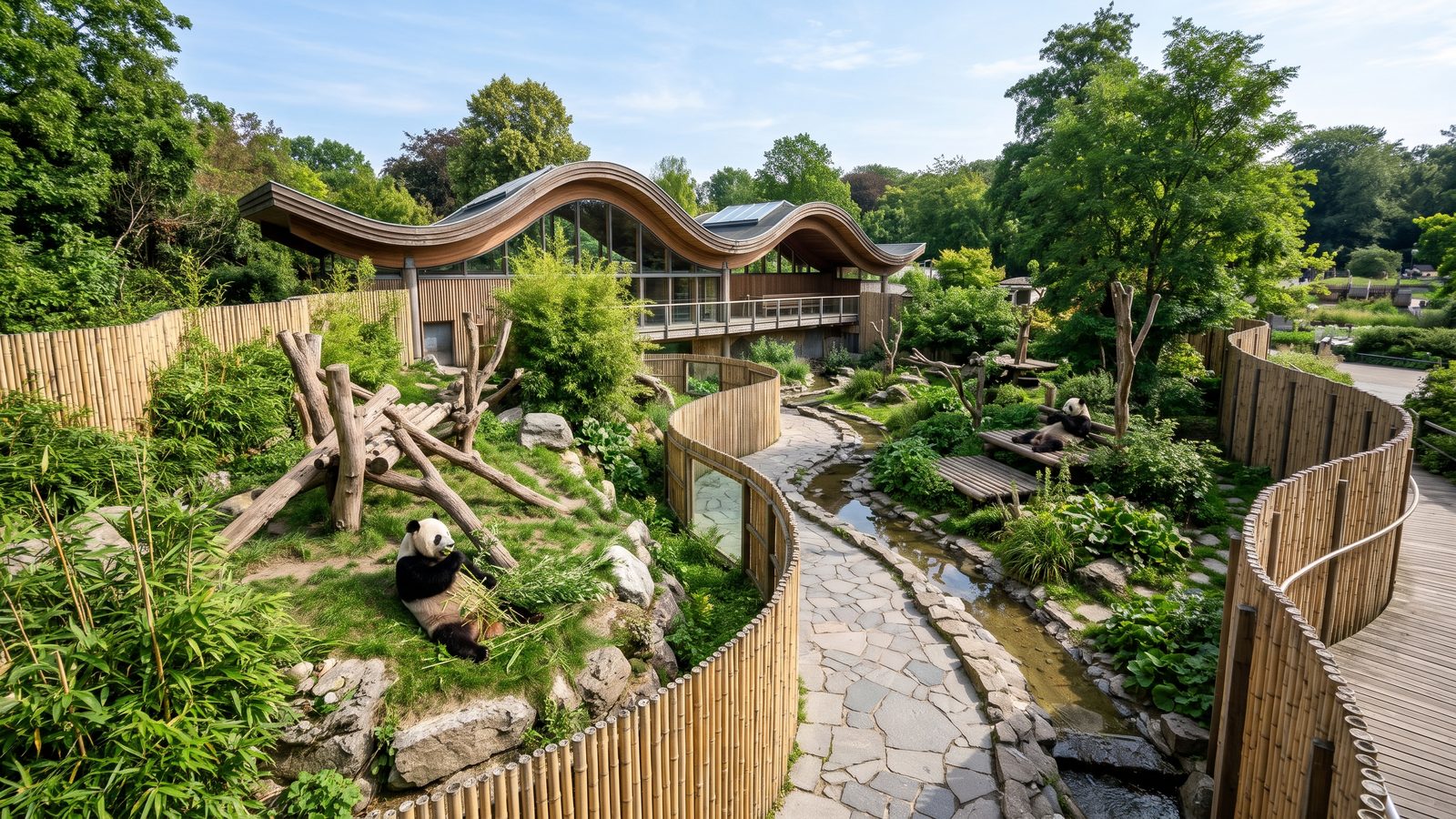
Step into Copenhagen Zoo, one of Europe's oldest zoological gardens, founded in 1859 in the Capital Region of Denmark. As you wander through this historic sanctuary, you encounter cutting-edge habitats that blend world-class architecture with animal welfare. From giant pandas stripping bamboo in their custom yin-yang enclosure to polar bears gliding above you in the icy Arctic Ring, every step unveils an unforgettable connection with wildlife.
Beyond these remarkable sights, your presence directly supports global conservation efforts. You are walking through a living laboratory where groundbreaking research, European Endangered Species Programmes, and field projects protect biodiversity worldwide. Pick up your headphones and let this self-guided audio tour guide you through an immersive journey of discovery.
Listen to a sample
The opening of this tour, exactly as AllTours narrates it on site.
What you'll hear on this tour
Stop 1. Masterpieces of Habitat Architecture
You stand before extraordinary habitats engineered to blend human design with natural animal behavior. Look at the iconic Elephant House, a triumph of biomimicry designed by Sir Norman Foster, where you watch Asian elephants gather for mud baths that soothe their skin and strengthen social bonds. Nearby, you enter the Arctic Ring's vast underwater tunnel, where polar bears and seals glide effortlessly directly above your head in a chilling, watery domain. Further along, you observe the Panda House, crafted in a striking Yin and Yang shape that mirrors the native Sichuan mountains, giving giant pandas a serene sanctuary to leisurely munch on bamboo.
Stop 2. Meet the Extraordinary Inhabitants
You encounter some of the rarest creatures on Earth, starting with giant pandas Mao Sun and Xing Er. You watch their deliberate movements as they methodically strip bamboo inside their custom enclosure. Next, you venture into the Arctic Ring to see Malik the polar bear dive and swim with immense power, patrolling an environment built to match his natural icy home. In the Elephant House, you observe complex social rituals as calves play under the watchful eyes of the herd. Finally, you view the rare Tasmanian devils, the first housed outside Australia, highlighting the zoo's commitment to safeguarding unique marsupials.
Stop 3. A Global Lifeline for Endangered Species
You are standing at a crucial hub for world biodiversity where science directly saves species from extinction. Copenhagen Zoo coordinates and participates in over one hundred European Endangered Species Programmes, leading the vital breeding effort for the elusive okapi from the Congo forest. As you explore, remember that your visit funds active wild projects across the globe, including clouded leopard protection in Southeast Asia and red panda habitat restoration in Nepal. Pioneering genetic studies and behavioral research conducted right here ensure that every effort maximizes survival chances for vulnerable animals, making you an essential partner in safeguarding the planet's ecological future.
Stop 4. Pioneering Survival and Biodiversity Programs
You witness a living ark where every resident contributes to vital international survival programs. Before you, polar bears participate in a global breeding network designed to preserve genetic diversity against the growing threat of climate change. As you watch the Tasmanian devils, you are observing an active line of defense against facial tumor disease through the 'Save the Tasmanian Devil Program.' Nearby, the Asian elephant herd displays natural behaviors carefully nurtured to match wild dynamics. From colorful dart frogs to towering giraffes, every species you meet plays a key role in an interconnected narrative of wildlife rescue and preservation.
Stop 5. Kinship and Social Dynamics in Nature
You step into a world defined by deep family bonds and natural social hierarchies. In the spacious Elephant House, you observe a multi-generational matriarchal society where wise matriarchs guide the herd, attentive aunts nurture young calves, and playful siblings interact constantly. This carefully designed home fosters complex emotional development and natural social dynamics. Beyond the elephant herd, you see these familial principles at play throughout the zoo, from chimpanzees negotiating their intricate social structures and demonstrating parental care to penguin pairs jointly protecting and rearing their chicks. You are watching living stories of protection, kinship, and shared survival unfold.
Stop 6. The Zoo as an Interactive Classroom
You discover a vibrant center of learning where curiosity transforms into environmental stewardship. Nearby stands the Zoo School, where thousands of students examine real animal skulls, dissect owl pellets, and track simulated wildlife to understand complex ecological systems. As you wander past detailed information panels and tactile displays, every exhibit invites you to engage intellectually with animal adaptations. During keeper talks, you listen to structured, insightful lessons about daily animal behaviors, ecosystem challenges, and actionable conservation efforts. Here, interactive discovery empowers you with knowledge, cultivating genuine empathy and transforming a simple day out into a profound educational journey.
Planning your visit
- Best time to go
- Morning right at opening offers the quietest views of active animals during morning feeding routines.
- Approximate duration
- about 3 to 4 hours
- Where to start
- Begin at the main entrance along Roskildevej near Frederiksberg Gardens.
Access and conditions change seasonally — check the official site before you go.
Frequently asked questions
Is Copenhagen Zoo worth visiting?
Yes, Copenhagen Zoo is one of Europe's oldest and most renowned zoos, famous for Norman Foster's Elephant House, the immersive Arctic Ring, giant pandas, and extensive global conservation projects.
How long do you need at Copenhagen Zoo?
Most visitors spend between 3 and 4 hours exploring the architectural enclosures, observing animal feedings, and walking through the educational exhibits.
When was Copenhagen Zoo founded?
Copenhagen Zoo was founded in 1859, making it one of the oldest zoological gardens in Europe.
Keep exploring
Header image is an AI-generated illustration of Copenhagen Zoo. AllTours.ai is an AI audio tour guide — point your camera at any landmark and hear its story.