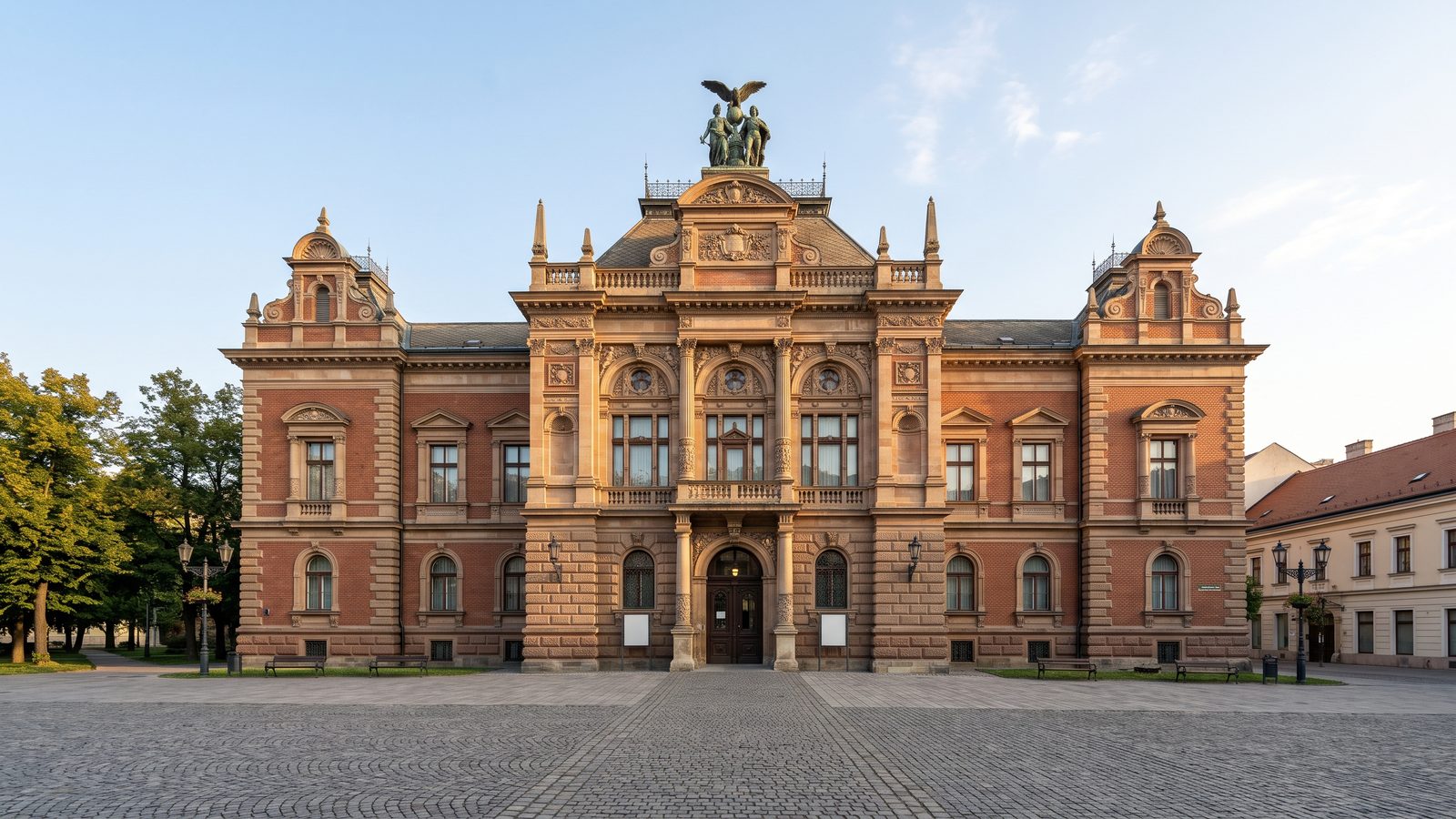
Welcome to the East Slovak Museum's Historical Building in Košice. Designed at the turn of the twentieth century, this grand landmark stands as one of Slovakia's oldest and most vital cultural institutions. As you walk through its halls, you experience the rich heritage of Eastern Slovakia, spanning prehistoric archaeology, Gothic sacral art, regional ethnography, and the famous Košice Gold Treasure.
Whether you come to admire the Neo-Renaissance architecture or uncover centuries of regional history, this self-guided audio tour leads you through defining historic moments. Prepare to explore masterfully preserved artifacts that reveal how diverse cultures, traditions, and artistic movements shaped Košice and its surrounding Carpathian landscape over the centuries.
Listen to a sample
The opening of this tour, exactly as AllTours narrates it on site.
What you'll hear on this tour
Stop 1. The Dazzling Gold Treasure and Beyond
As you step beyond the grand entrance, you embark on a chronological journey through East Slovakia's rich heritage. You begin with ancient tools and pottery that whisper tales of prehistoric settlements. Soon, you reach the museum's legendary vault, home to the celebrated Košice Gold Treasure. You gaze upon an extraordinary hoard of 2,920 gold coins, three gold medals, and a delicate Renaissance chain, all discovered by chance during 1935 building renovations. Hidden away during the turbulent seventeenth century, this fortune highlights the region's historic wealth. Moving past the shimmering gold, you explore detailed ethnographic displays of traditional folk costumes, alongside natural history exhibits celebrating the diverse ecosystems of the Carpathian basin.
Stop 2. A Century of Preserving Regional Identity
You stand before a structure built from a passionate ambition to preserve regional identity. Laid in 1899 and opened in 1901, the building rises during Košice's flourish as a vital cultural hub in the Austro-Hungarian Empire. Designed by architect Gyula Pártos, this Neo-Renaissance edifice is purpose-built to house the Upper Hungarian Museum. As you admire its facade, you reflect on how civic pride brought this institution to life to safeguard local archaeological, natural, and ethnographic heritage. Through imperial collapses, Czecho-Slovak statehood, and modern Slovak nationhood, this building endures as a proud cultural guardian, continuously adapting its story to reflect the ever-evolving spirit of East Slovakia.
Stop 3. Sacral Masterpieces and Regional Painters
Step into the sacred art galleries, where Eastern Slovakia’s artistic soul reveals itself in vivid detail. Your attention turns to Gothic altarpieces, where carved wooden panels still showcase original polychromy, blending Central European techniques with local folk craft. As you walk further, dramatic Baroque canvases surround you, displaying intense plays of light and shadow that capture fervent scenes of saints and miracles from the Counter-Reformation. You also discover works by Košice's own nineteenth-century masters, including Elemér Halász-Hradil. His landscapes and expressive portraits reveal a growing regional identity. Every brushstroke in these halls speaks of deep devotion, local patronage, and timeless artistic expression.
Stop 4. The Tapestry of Regional Traditions
In these cultural galleries, you encounter the living heritage of East Slovakia. As you examine traditional folk garments, intricate embroidery reveals how different communities celebrated the seasons of life. The museum highlights a rich tapestry woven by diverse ethnic groups, including Slovaks, Hungarians, Rusyns, and Roma. You observe vibrant glazed pottery featuring ancient patterns alongside delicate lacework and carved wooden implements once used in rural homes. These displays illustrate how music, dance, and craft anchored daily life, from seasonal farming rituals to sacred spiritual ceremonies. Walking past these colorful artifacts, you gain a deep appreciation for the unique cultural mosaic defining Košice and its surrounding lands.
Stop 5. Grand Architecture and Delicate Carvings
As you gaze upon the exterior, you appreciate the stately Neo-Renaissance facade and intricate design elements crafted in the late nineteenth century. You notice the precise brickwork laid by master craftsmen, forming a sturdy anchor for the grand structure. Your eyes travel upward past delicate pinnacles toward soaring roofs featuring a picturesque arrangement of gables and dormers. Around the main entrance, you discover detailed stone carvings depicting allegorical figures and historic motifs that quietly recount the region's heritage. Tall pointed arch windows add vertical rhythm to the exterior. Every architectural detail works in harmony, standing as a deliberate monument meant to inspire awe for the history inside.
Stop 6. The Legacy of the Upper Hungarian Museum
Inside the building, you connect directly with the museum's founding mission, rooted in the Upper Hungarian Museum Society established back in 1845. This institution emerged during a key moment of regional awareness, aiming to collect and safeguard local cultural memory for future generations. As you move through the archaeological exhibits, you discover replicas of historic finds alongside authentic regional artifacts that document centuries of commerce, craftsmanship, and daily survival. The museum is far more than an assembly of rare objects; it acts as a dynamic repository of Eastern Slovakia's spirit. Here, preserved traditions and historical discoveries continue to tell an enduring story.
Planning your visit
- Best time to go
- Morning on weekdays for quiet visits to the Gold Treasure vault, or autumn afternoons when light illuminates the front entrance.
- Approximate duration
- about 1.5 to 2 hours
- Where to start
- In front of the main entrance at Námestie Maratónu mieru.
Access and conditions change seasonally — check the official site before you go.
Frequently asked questions
Is East Slovak Museum - Historical Building worth visiting?
Yes, it is one of Košice's premier cultural destinations, housing the remarkable Košice Gold Treasure vault, extensive Gothic sacral art, and rich ethnographic collections inside an ornate historic landmark.
How long do you need at East Slovak Museum - Historical Building?
Most visitors spend between 1.5 to 2 hours exploring the permanent history exhibits, sacred art galleries, and the subterranean gold vault.
When was the East Slovak Museum Historical Building constructed?
Its cornerstone was laid in 1899, and the Gyula Pártos-designed Neo-Renaissance structure officially opened in 1901 to house the Upper Hungarian Museum.
Keep exploring
Header image is an AI-generated illustration of East Slovak Museum - Historical Building. AllTours.ai is an AI audio tour guide — point your camera at any landmark and hear its story.