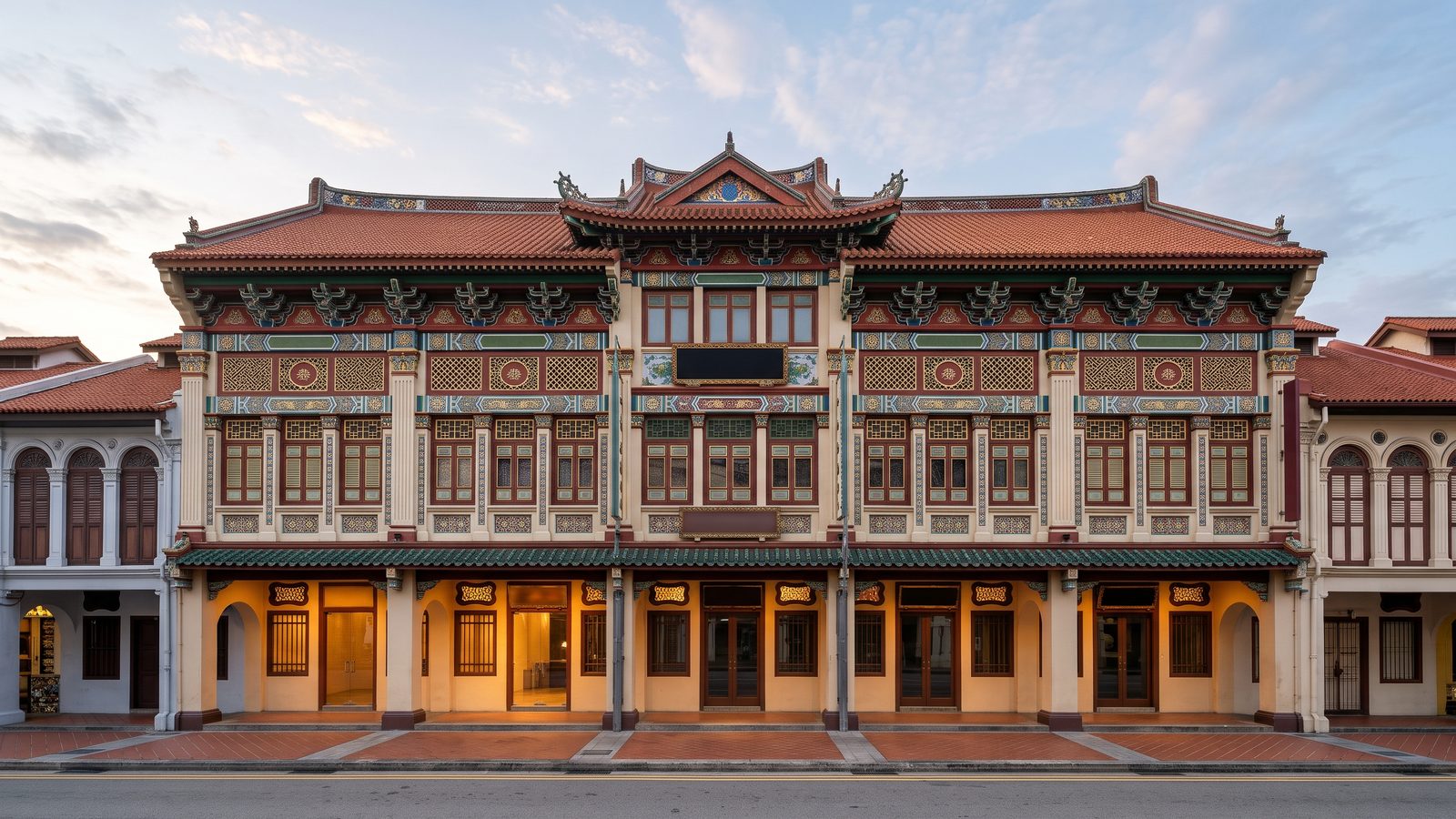
Welcome to South Bridge Road in Singapore's historic Chinatown, where the iconic Eu Yan Sang Building stands as a proud guardian of traditional Chinese medicine and cultural heritage. Established in the late 19th century during Singapore's rapid growth as a colonial trading hub, this striking landmark transformed humble herbal dispensing into a respected institution. As you stand before its ornate facade, you step directly into a legacy of holistic wellness.
Look up at its detailed architectural features, where centuries-old Eastern philosophy meets classic streetscape design. From balanced feng shui proportions to symbolic red accents and delicate calligraphy, every element tells a story of longevity, prosperity, and time-honored remedies adapted for modern living.
Listen to a sample
The opening of this tour, exactly as AllTours narrates it on site.
What you'll hear on this tour
Stop 1. Foundations of a Healing Legacy
As you step closer to the Eu Yan Sang Building, you trace the footsteps of generations who built a grand legacy on traditional healing. Established in the late 19th century during Singapore’s rise as a bustling colonial trading hub, this structure represents a visionary leap forward. At a time when traditional Chinese medicine operated out of humble shophouses, this building sought to bring ancient practices into an organized, reputable setting. You can appreciate the immense effort required back then—navigating colonial administration, sourcing rare herbs from across Asia, and earning public trust. Today, you stand before a true cornerstone of heritage, where ancient wisdom found its permanent home.
Stop 2. Harmony of Feng Shui and Facade
Observe the striking facade, where traditional Chinese architecture gracefully blends with classic streetscape design. As your eyes trace the building's lines, you witness a deliberate application of feng shui principles. The structure's alignment is not accidental; it is carefully oriented to harmonize with natural energy flows to foster prosperity and longevity. Notice how the distinctive roof design nods to classic shophouse aesthetics while utilizing modern structural precision. The balanced proportions of the building create an immediate sense of stability. You are looking at far more than simple brick and mortar; this is a living structure crafted to embody balance, enduring philosophy, and modern urban rhythm.
Stop 3. Symbolic Colors and Lattice Work
Look closely at the delicate lattice work gracing the windows. This design reinterprets traditional Chinese fretwork, allowing fresh air and soft sunlight to circulate while maintaining privacy and protection, reflecting the balanced philosophy of TCM itself. Notice the prominent shade of red vibrant across the facade; in Chinese culture, red carries deep symbolic meaning, welcoming prosperity, vitality, and good fortune while warding off negative energy. As you look toward the roof, observe its gentle curves inspired by nature's soft contours. Even the precise placement of the main entrance follows feng shui rules, establishing complete alignment between the building and its surrounding environment.
Stop 4. Calligraphy and Artisanal Craftsmanship
Examine the elegant calligraphy adorning the building's exterior accents. Each stroke of the stylized characters reflects master skill and deep visual symbolism, communicating auspicious sayings and founding values. Look closer at the hand-painted ceramic motifs featuring unique, non-mass-produced details that give the facade a distinct artisanal warmth. Notice the selection of natural materials, including rich wood finishes that invite a tactile connection. As natural sunlight plays across these varied surfaces, you can appreciate the layered aesthetic and deliberate craftsmanship. Every artistic detail has been chosen to celebrate living heritage and bring visual richness to your surrounding streetview.
Stop 5. Living Roots of Traditional Chinese Medicine
Standing before this landmark, you can feel how deeply its cultural roots extend beyond simple commercial space. This building serves as a living monument to Traditional Chinese Medicine, a holistic system of wellness that has guided health across countless generations. Look around at the symbolic motifs and color choices echoing ancient principles of yin and yang balance and harmony with nature. You can see meticulous craftsmanship in every architectural element, preserving time-honored remedies within the dynamic setting of modern Singapore. This structure remains a vital cultural thread woven into the island's social identity, bridging historical traditions with everyday urban life.
Stop 6. A World of Curated Wellness
Immerse yourself in the distinct world of traditional wellness that Eu Yan Sang represents. Stepping into this retail environment offers a sensory contrast to modern sterile pharmacies. You notice carefully displayed jars of dried herbs, each releasing subtle aromatic notes while holding centuries of healing knowledge. Look out for premium bird's nest, an ingredient celebrated for generations for its rejuvenating properties and presented here as a refined wellness item. Though contemporary packaging updates the presentation, the commitment to authenticity remains unchanged. Every remedy displayed here reflects an ongoing tradition of vitality, offering you a direct connection to heritage health practices passed down through families.
Planning your visit
- Best time to go
- Morning or early afternoon for clear daylight on the facade details and lower street crowds.
- Approximate duration
- about 30 minutes
- Where to start
- In front of the Eu Yan Sang Building on South Bridge Road in Chinatown.
Access and conditions change seasonally — check the official site before you go.
Frequently asked questions
Is Eu Yan Sang Building worth visiting?
Yes, the Eu Yan Sang Building is a key historical landmark in Singapore's Chinatown, renowned for its late 19th-century heritage, traditional Chinese medicine legacy, and architectural details influenced by feng shui.
How long do you need at Eu Yan Sang Building?
A visit typically takes about 20 to 30 minutes to view the external architectural features, ornate lattice work, calligraphy, and take in the surrounding Chinatown atmosphere.
What is the history of the Eu Yan Sang Building in Singapore?
Established in the late 19th century, the building was created to elevate traditional Chinese medicine from simple shophouse settings into a reputable, organized institution, sourcing authentic herbs and preserving holistic health heritage.
Keep exploring
Header image is an AI-generated illustration of Eu Yan Sang Building. AllTours.ai is an AI audio tour guide — point your camera at any landmark and hear its story.