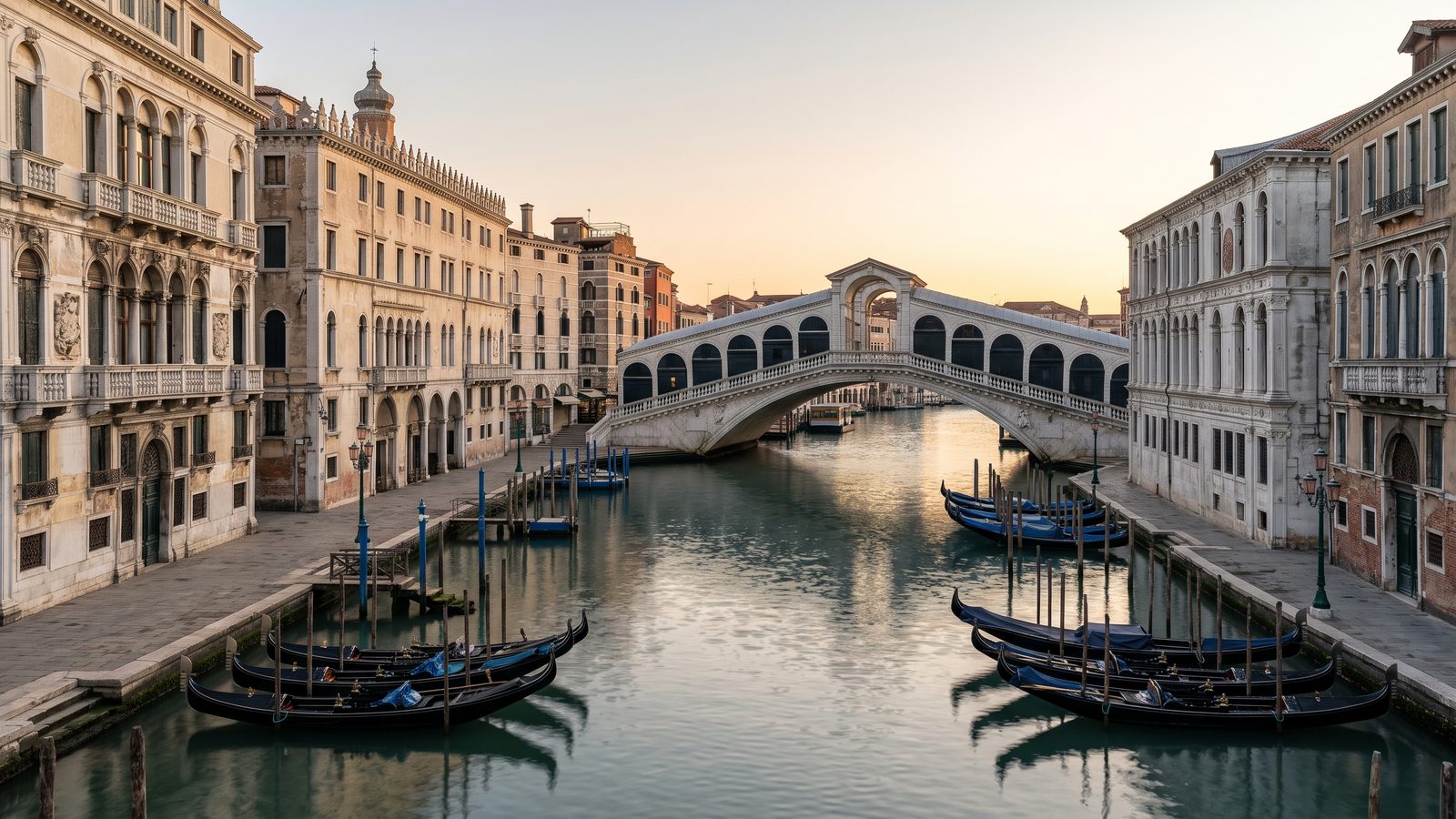
Welcome to the Grand Canal, the iconic watery S-curve sweeping through the center of Venice. As you drift past centuries-old palazzi, you enter a realm where roads give way to light, reflections, and maritime grandeur. Once the bustling trade artery of a mighty Mediterranean republic, this legendary waterway remains the vibrant heart of Venetian daily life, lined with breathtaking Gothic and Renaissance facades, bustling vaporettos, and graceful gondolas.
This self-guided audio tour reveals the hidden narratives carved into Istrian stone and whispered across the lagoon. You will explore how refugees transformed marshy shallows into a global trading power, how famous artists captured this unique light, and what eerie legends haunt the magnificent mansions floating upon these gentle tides.
Listen to a sample
The opening of this tour, exactly as AllTours narrates it on site.
What you'll hear on this tour
Stop 1. Cursed Palaces and Whispered Secrets
As you glide along the water, observe the hauntingly beautiful Ca' Dario. While celebrated for its early Renaissance elegance, a dark legend casts a long shadow over this palace, claiming tragic fates lie in wait for whoever owns it. Venetian history hides in the shadows of its watergate alleys. Look out for whispers of the Bocca di Leone, secret mailboxes where anonymous accusations once doomed citizens to silent disappearances by order of the Council of Ten. Even public celebrations carry mystical weight, such as the annual Sposalizio del Mare, a ceremony where the Doge symbolically weds the Adriatic Sea to ensure protection and everlasting power over the waves.
Stop 2. Stone Lace Floating on Water
Look closely at the magnificent facades rising directly from the canal's surface. You are witnessing a masterclass in architectural evolution, starting with solid Byzantine arches at the waterline. As Venetian wealth soared, local builders crafted Venetian Gothic architecture, replacing heavy fortress walls with delicate stone tracery that feels light as lace. Notice the grand polifora windows lining the piano nobile, engineered to flood grand reception rooms with reflected sunlight. Later Renaissance masters brought classical symmetry and polished Istrian stone to these waterside palaces. Every building features a dedicated water-level entrance, welcoming guests straight from boats into expansive marble foyers designed for a unique lifestyle on the water.
Stop 3. The World's Greatest Aquatic Muse
You are floating through a living open-air gallery that inspired a world-changing artistic revolution. Masters of the Venetian School, such as Giovanni Bellini, turned luminous local light into a primary artistic subject. Inside these palazzi, Titian transformed private grand salons with bold brushwork and dramatic compositions. Higher up, Veronese painted dazzling ceiling frescoes celebrating civic pride and extravagant feasts. Later on, Canaletto painted his famous vedute with razor-sharp fidelity, capturing the precise sparkle of sunlight dancing across the water to share Venice's beauty with all of Europe. The dynamic interplay between light and water continues to offer an extraordinary muse for every creator who passes by.
Stop 4. Masks, Melodies, and Venetian Tradition
Beyond the marble facades, you feel a deep cultural rhythm shaped by centuries of tradition. During Carnival, the city becomes a theatrical stage where citizens wear classic white bauta masks to blur social lines and explore total freedom. The local patronage system filled grand ballrooms with brilliant frescoes and delicate Murano glass chandeliers that catch the water's glint. This aquatic atmosphere also inspired famous music, including Antonio Vivaldi's Baroque masterpiece, The Four Seasons, composed while training young musicians at local Ospedali. From the rhythmic sweep of a gondolier's oar to grand theatrical pageants, every detail along this waterway reflects an enduring dedication to artistic expression and beauty.
Stop 5. Refugees, Merchants, and Empire
Your journey follows a historical channel that traces back to the 5th century. Fleeing barbarian invasions on the mainland, refugees sought shelter among marshy islands, turning this natural waterway, then named Rio Businiacus, into a crucial lifeline. By the 9th century, when the capital shifted to Rialto, the canal grew into the political and economic spine of the Venetian Republic. You are tracing the exact path where merchant ships once docked, heavy with precious silks and spices from the East. Here, the Doge led grand naval parades, celebrating a maritime empire whose immense trade wealth built the stunning palazzi that frame your view today.
Stop 6. The Tidal Pulse of the Lagoon
Look beneath your vessel to see the complex lagoon ecosystem nourishing this floating city. This body of water combines fresh river currents with salty Adriatic tides, sustaining hidden sandbanks and underwater meadows of Zostera marina seagrasses. As you travel, you might see diving cormorants or soaring gulls hunting above the water. Unseen crustaceans work beneath the surface to clarify the canal. The subtle push and pull of daily tides acts as Venice's natural circulatory system, flushing these channels twice a day to clean the city without modern plumbing, while occasional high waters, known as acqua alta, reveal the delicate balance between urban survival and nature.
Planning your visit
- Best time to go
- Early morning or late afternoon when light reflects off the palazzi and canal traffic is gentle.
- Approximate duration
- About 1 to 2 hours
- Where to start
- Piazzale Roma or Santa Lucia train station, traveling towards San Marco.
Access and conditions change seasonally — check the official site before you go.
Frequently asked questions
Is Grand Canal worth visiting?
Yes, the Grand Canal is Venice's central, most breathtaking thoroughfare. Floating past its magnificent Gothic and Renaissance palazzi, historic bridges, and vibrant water traffic offers an unmatched perspective on the city's unique history and architecture.
How long do you need at Grand Canal?
A complete trip along the Grand Canal by vaporetto or gondola takes about 45 to 90 minutes, though spending 1 to 2 hours allows you to relax, take photos, and appreciate the historic palaces lining both sides.
How was the Grand Canal formed?
The Grand Canal originated as an ancient natural river channel known as the Rio Businiacus in the Venetian lagoon. Beginning in the 5th century, refugees settled along its banks, eventually developing the natural waterway into the central canal of Venice.
Keep exploring
Header image is an AI-generated illustration of Grand Canal. AllTours.ai is an AI audio tour guide — point your camera at any landmark and hear its story.