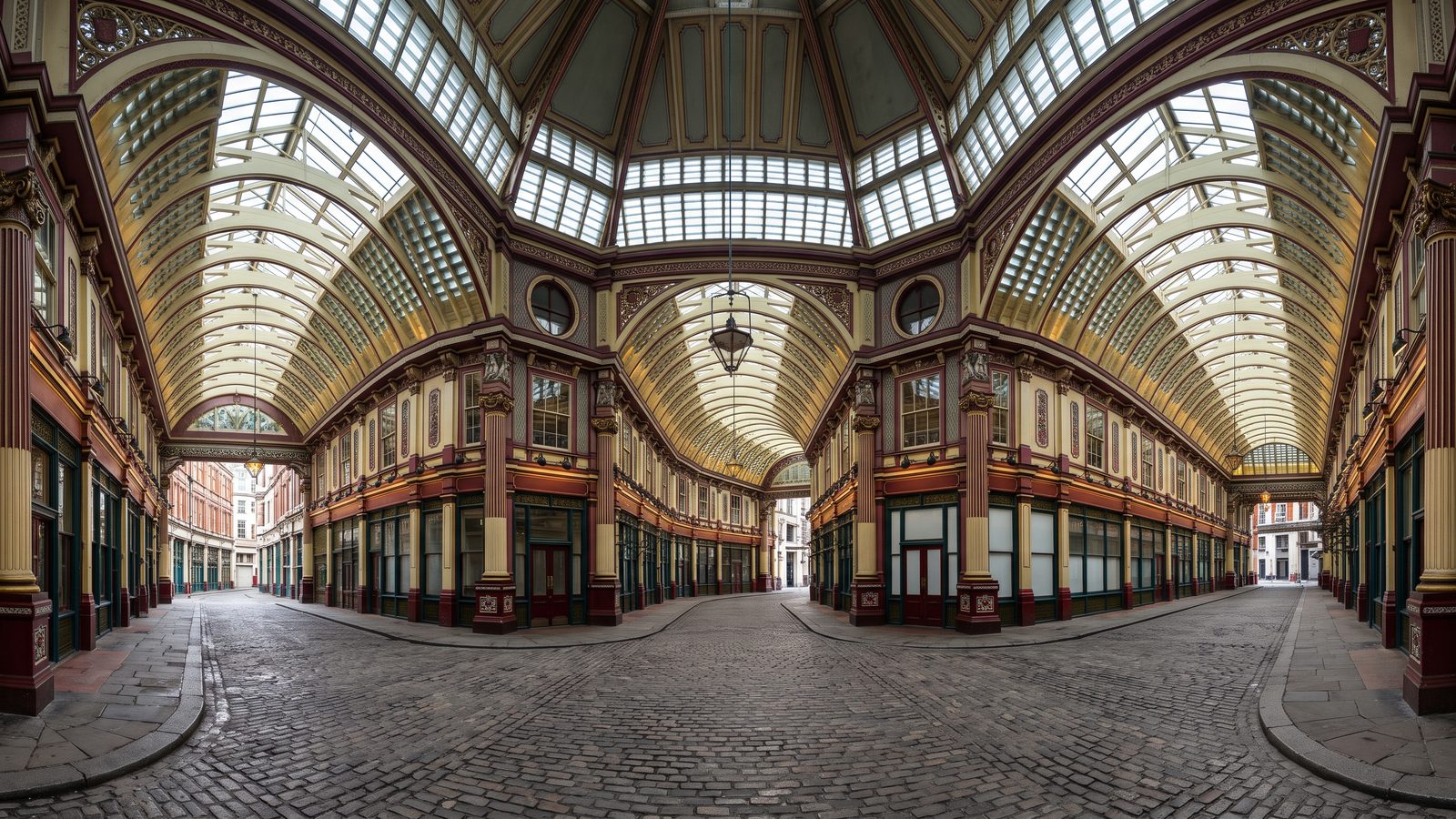
Step inside Leadenhall Market, one of London's most breathtaking covered spaces, where ancient Roman history meets stunning Victorian architecture. Nestled in the heart of the City of London, this grand arcade features soaring glass ceilings, intricate wrought-iron arches, and cobbled avenues. On this self-guided audio tour, you will discover how an ancient Roman forum evolved into a vibrant 19th-century masterpiece and modern commercial destination.
Wander beneath ornate painted details, explore atmospheric passages famous from film, and soak up centuries of trade history. Whether you are hunting for hidden architectural features or exploring artisan shops, this tour brings the market's rich story to life at your own pace.
What you'll hear on this tour
Stop 1. Cathedral of Victorian Ironwork and Glass
As you gaze upwards, your eyes take in the grand wrought-iron framework designed by Sir Horace Jones in 1881. You observe intricate filigree and scrollwork painted in vibrant shades of green, maroon, and cream. This rich palette highlights the structural details, turning the market into an impressive cathedral of commerce. Above you, a soaring glass roof floods the cobbled avenues with natural light, elevating daily routine into something ethereal. As you follow the cruciform layout, slender decorative columns support vaulted ceilings that create a sense of boundless space. Every rivet and glass pane around you reflects the height of Victorian ambition and engineering ingenuity.
Stop 2. From Roman Forum to Victorian Masterpiece
You stand on ground steeped in nearly two millennia of history. Long before this Victorian structure existed, this exact location served as the heart of Roman Londinium, housing its vast basilica and forum. By 1321, King Edward III granted a royal charter for a market trading poultry, game, and cheese, which the City of London Corporation later managed. Although the Great Fire of London destroyed the medieval market in 1666, it quickly rebuilt to feed the city. Today, you admire Sir Horace Jones's 1881 redesign, which transformed the ancient trading site into a magnificent iron and glass landmark of London's commercial power.
Stop 3. Framing Light, Shadows, and Cinematic Alleyways
Look around, and you quickly see why photographers consider this market a living canvas. As natural light filters through the roof glass, dramatic interplay between light and shadow highlights the geometric ironwork throughout the day. Early morning brings soft, diffused light over quiet cobblestones, while midday sun casts crisp lines across ornate shop facades. If you follow the central avenues, you will encounter Bull's Head Passage, famous as the entrance to the Leaky Cauldron in the Harry Potter films. You can capture long exposures of moving visitors against the timeless architecture, or zoom in on detailed shop signs and rich maroon and green paintwork.
Stop 4. Culinary Delights Beneath the Canopy
The air around you hums with enticing culinary aromas, marking a complete evolution from the market's medieval origins as a raw meat exchange. Today, you discover a vibrant gastronomic scene set beneath Victorian arches. You can step inside the historic Lamb Tavern for traditional London pub fare, robust pies, and conditioned ales where City workers have gathered for generations. Nearby, spots like The Cheese Bar transform artisanal British cheeses into gourmet grilled sandwiches and sharing platters. Whether you pause at a pavement cafe for a fresh pastry or sit down for a hearty meal, you dine surrounded by breathtaking architectural detail and lively city energy.
Stop 5. Curated Boutiques and Independent Craftsmanship
As you stroll the covered passages, you witness how a historic poultry exchange has transformed into a destination for boutique shopping. Instead of raw game, you now browse refined displays of handcrafted leather goods, bespoke stationery, and vibrant floral arrangements. Independent cheesemongers showcase artisanal wheels, while cozy nooks house rare books and specialty gifts. Here, your shopping experience centers on meeting passionate purveyors who take pride in their craft. Every store window invites you to discover unique treasures, turning a simple stroll through the market into an engaging encounter with quality, character, and London's living commercial traditions.
Stop 6. Echoes of Global Discovery and Trade
As you walk these passageways, consider the spirit of exploration that has defined this spot for centuries. Centuries ago, merchants arrived here with exotic treasures brought across ocean trade routes, from Indian spices to Chinese silks and Mediterranean fruits. This market served as London's gateway to the world, where buyers and sellers exchanged stories of far-off lands along with rare goods. As you navigate the winding avenues today, you participate in that same tradition of discovery. Hidden alleyways, independent shops, and inviting cafes offer fresh encounters at every turn, connecting your modern stroll with the adventurous global trade of London's past.
Planning your visit
- Best time to go
- Weekday mornings offer quiet photography opportunities before lunchtime crowds arrive from the nearby financial district.
- Approximate duration
- About 45 minutes to 1 hour
- Where to start
- Gracechurch Street entrance to Leadenhall Market
Access and conditions change seasonally — check the official site before you go.
Frequently asked questions
Is Leadenhall Market worth visiting?
Yes, Leadenhall Market is worth visiting for its spectacular Victorian glass-and-iron architecture designed by Sir Horace Jones, rich Roman heritage, dynamic dining choices, and famous filming locations like Bull's Head Passage.
How long do you need at Leadenhall Market?
You typically need about 45 to 60 minutes to stroll the central covered avenues, take photos of the ornate ironwork, browse boutique shops, or stop for a quick meal or drink.
What is the history of Leadenhall Market?
Occupying the site of ancient Roman Londinium's forum, the market received its charter in 1321 from Edward III. After surviving rebuilds following the 1666 Great Fire, it was redesigned in 1881 into a Victorian landmark.
Keep exploring
Header image is an AI-generated illustration of Leadenhall Market. AllTours.ai is an AI audio tour guide — point your camera at any landmark and hear its story.