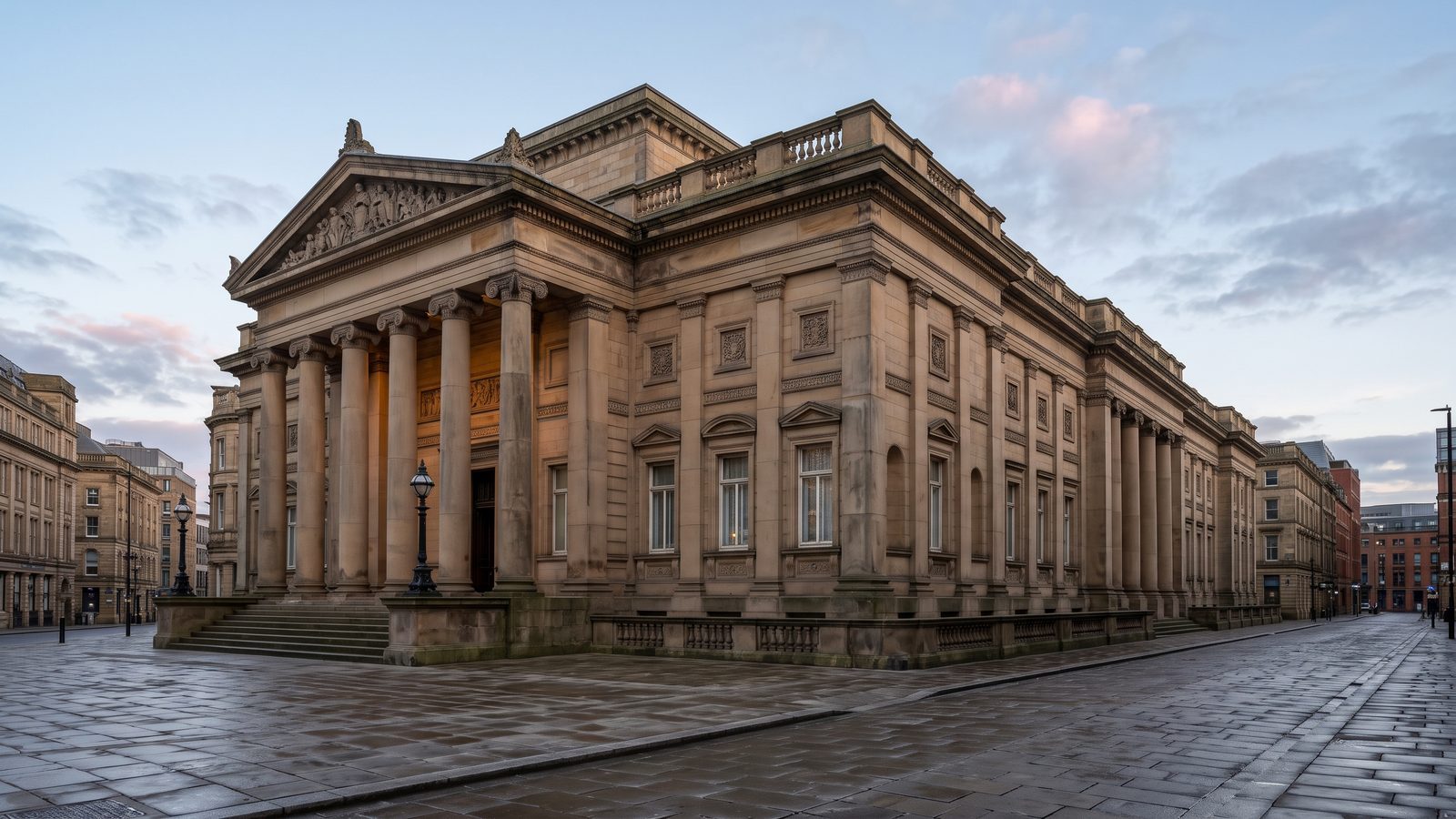
Welcome to Manchester Art Gallery, a magnificent beacon of culture in the heart of the city. Housed in a grand Greek Revival building designed by Sir Charles Barry, this civic institution has served as a sanctuary for creativity since the early 19th century. From famous Pre-Raphaelite masterpieces to dynamic contemporary exhibitions, the gallery reflects Manchester's ambitious industrial heritage, progressive social spirit, and enduring passion for artistic expression.
This self-guided audio tour leads you through the gallery's rich history, striking architecture, and world-renowned collections. Discover how a private 1820s cultural institution transformed into a democratic public treasure, while encountering celebrated works by John Everett Millais, William Holman Hunt, Dante Gabriel Rossetti, and John William Waterhouse.
Listen to a sample
The opening of this tour, exactly as AllTours narrates it on site.
What you'll hear on this tour
Stop 1. Victorian Masterpieces and Pre-Raphaelite Visions
You step before one of the world's most significant collections of Pre-Raphaelite art, a movement that boldly challenges academic conventions. In John Everett Millais's Autumn Leaves, you feel the poignant passage of time through meticulously rendered details of nature. Nearby, you encounter William Holman Hunt's The Hireling Shepherd, where a moral allegory unfolds through symbolic details, from straying sheep to a buzzing death's-head moth. As you walk further, you find Dante Gabriel Rossetti's dreamlike muses, whose intense gazes and flowing hair invite you into a world of myth and poetry. Every brushstroke reveals the radical spirit and emotional depth these revolutionary artists poured into their work.
Stop 2. Classical Splendor in Portland Stone
You gaze across the magnificent façade designed by Sir Charles Barry, the famous architect behind Britain's Houses of Parliament. You are admiring a pristine example of Greek Revival architecture, built in Portland stone to grant this civic institution timeless dignity during the height of the Industrial Revolution. As you look at the grand portico, you notice majestic Ionic columns with intricate fluting that pays homage to ancient Greek temples. Above, a meticulously carved pediment overlooks the street. You see precise, symmetrical windows crafted to flood the interior galleries with natural light, ensuring that every painting receives gentle, harsh-glare-free illumination just as the architect intended.
Stop 3. From Private Society to Public Treasure
You explore an institution born in 1823, when visionary citizens establish the Royal Manchester Institution to cultivate taste and educate a rapidly expanding industrial city. Designed by Sir Charles Barry, this neoclassical building opens in 1829 as a privately funded hub for art and education. In 1882, you trace a pivotal transformation as it becomes the Manchester Corporation Art Gallery. This transition democratizes art across the city, converting an exclusive club into a public sanctuary accessible to all factory workers and residents. The gallery expands its collections dramatically, embracing contemporary British artists alongside Old Masters to reflect Manchester's forward-thinking cultural ambition.
Stop 4. The Vibrant Heart of Industrial Creativity
You experience the unique cultural pulse of Manchester, where past and present engage in a dynamic dialogue. Here, the city's radical identity aligns with movements like the Pre-Raphaelite Brotherhood, whose detailed narratives and rich colors resonate with the dramatic industrial landscape. As you move through the rooms, you witness an institution committed to cultural democracy, ensuring art transcends social divides through accessible programming and thought-provoking displays. The collection reflects global connections alongside local masterworks, actively shaping public discourse. You discover a place where art breathes and actively influences the collective memory of a resilient, creative city.
Stop 5. Contemporary Voices and Dynamic Conversations
You turn your attention to the gallery's dynamic temporary exhibitions, which host rotating conversations designed to challenge perceptions. You observe how curated displays spotlight emerging artists and reframe historical movements to spark fresh dialogue about pressing social issues. As you walk through these ever-changing spaces, each room transforms to submerge you in a distinct visual narrative, from major career retrospectives to multi-medium installations. This commitment to evolving programming ensures that your visit offers new discoveries each time. You engage directly with living art that stays at the forefront of contemporary discourse, mirroring Manchester's own fluid cultural landscape.
Stop 6. Welcome to Manchester's Cultural Jewel
You stand before the grand Manchester Art Gallery, a crowning jewel of the city originally designed by Sir Charles Barry. Opened in 1824 as the Royal Manchester Institution, this landmark was created to promote art and science for a rapidly growing industrial powerhouse. Today, you enter a treasure house filled with six centuries of extraordinary art, ranging from Pre-Raphaelite masterpieces like J.W. Waterhouse's Hylas and the Nymphs to cutting-edge contemporary works. As you step inside, you sense the ambitious spirit and deep appreciation for beauty that built this city, preserved forever within these historic walls.
Planning your visit
- Best time to go
- Weekday mornings shortly after opening offer the quietest experience to view the artworks without crowds.
- Approximate duration
- about 1 to 1.5 hours
- Where to start
- Main entrance on Mosley Street, standing in front of the grand portico and Ionic columns.
Access and conditions change seasonally — check the official site before you go.
Frequently asked questions
Is Manchester Art Gallery worth visiting?
Yes, Manchester Art Gallery is widely considered a must-visit destination. It houses a world-class collection spanning six centuries, including renowned Pre-Raphaelite works by Millais, Hunt, and Rossetti, set within a grand Greek Revival building designed by Sir Charles Barry.
How long do you need at Manchester Art Gallery?
Most visitors spend around 1 to 2 hours exploring the key galleries, admiring the Pre-Raphaelite collection, and taking in the architecture. If you wish to visit temporary exhibitions or spend extra time in the café, allow up to 2.5 hours.
Who designed the Manchester Art Gallery building and when was it built?
The original building was designed by Sir Charles Barry—the famous architect of the Houses of Parliament—in the Greek Revival style. Founded in 1823 as the Royal Manchester Institution, it officially opened its doors in 1829.
Keep exploring
Header image is an AI-generated illustration of Manchester Art Gallery. AllTours.ai is an AI audio tour guide — point your camera at any landmark and hear its story.