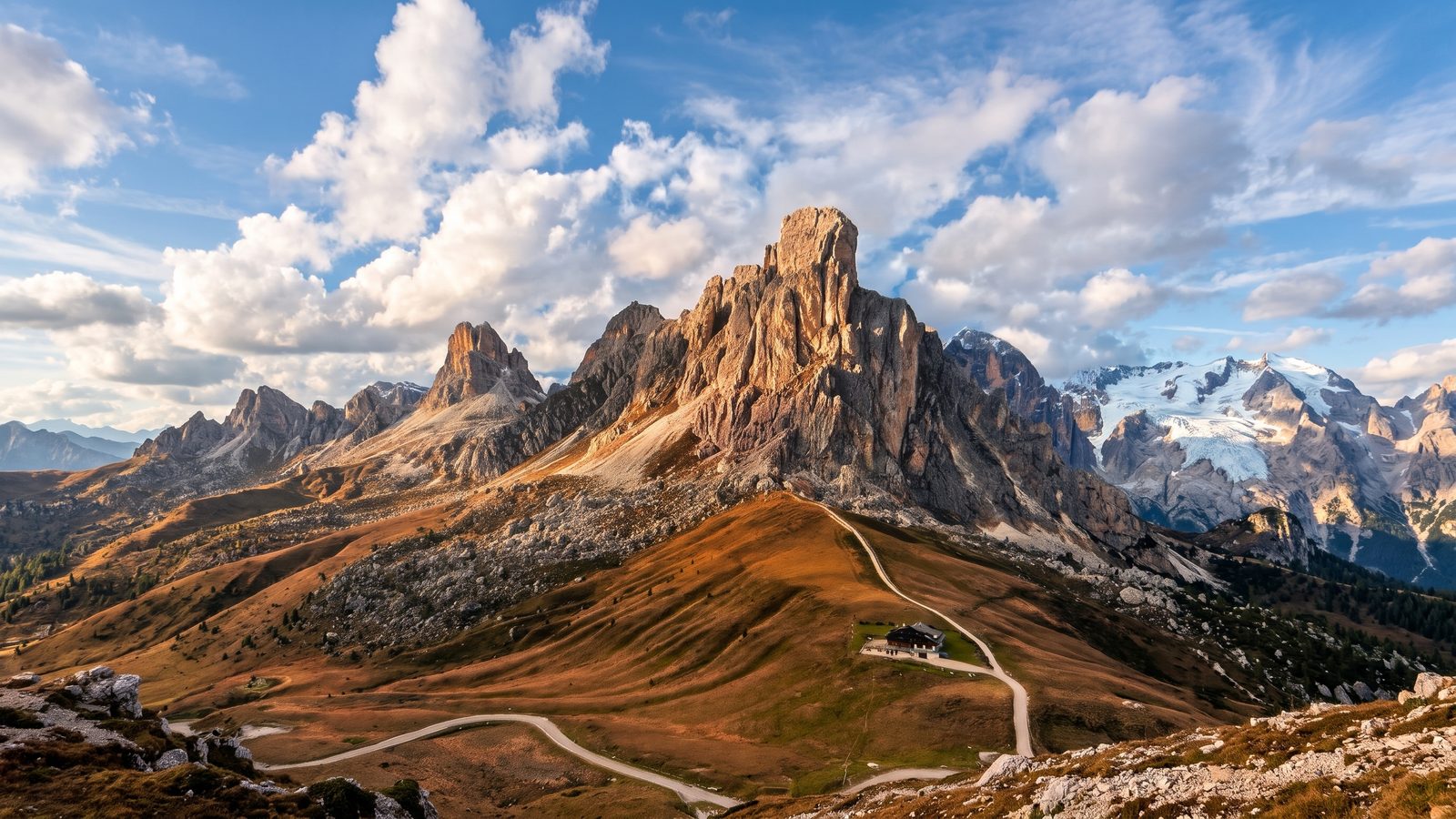
Stand atop Monte Averau at 2,649 meters, where towering pale spires pierce the sky in the heart of the Italian Dolomites. This UNESCO World Heritage landmark blends millions of years of geological evolution with powerful human history. From ancient coral reefs turned to stone to the dramatic high-altitude battles of World War I, Monte Averau invites you into a world of breathtaking natural grandeur and captivating alpine stories.
As you explore these high-altitude paths, your self-guided audio tour reveals iconic panoramic views, rich local culinary traditions at high-mountain refuges, and thrilling trails. Step onto the crags of Cortina d'Ampezzo and experience the majesty of the Dolomites at your own unhurried pace.
Listen to a sample
The opening of this tour, exactly as AllTours narrates it on site.
What you'll hear on this tour
Stop 1. 360-Degree Panorama of Alpine Giants
Stand atop Monte Averau and immerse yourself in an unbelievable landscape. Directly north, the massive Tofane group rises with sheer rock faces, offering a unique high-altitude perspective. Look east to see the elegant curves of Croda da Lago contrasting with the rugged spires of nearby Nuvolau. To the south, the immense Civetta massif stretches across the horizon. Looking west, Marmolada, the 'Queen of the Dolomites,' shines with her iconic glacier cap. Far below, the legendary Cinque Torri appears like a miniature sculpture garden. From this lofty vantage point, you witness the raw, sculpted beauty of glacial forces unfolding infinitely around you.
Stop 2. Traces of the White War
Feel the mountain wind as you walk upon ground marked by profound human struggle. During World War I, Monte Averau served as a dramatic stage for the bitter 'White War' between Italian Alpini and Austro-Hungarian Kaiserschützen soldiers. High at these extreme altitudes, men laboriously carved trenches, tunnels, and underground barracks directly into the solid rock. They survived not only enemy fire, but also fierce blizzards, deadly avalanches, and subzero cold. Look closely at the rocky outcrops surrounding you to discover faint, ghostly traces of these historical fortifications, standing as lasting testaments to the brave soldiers who clung to survival on these precipitous cliffs.
Stop 3. Thrill on the Vertical Iron Paths
Turn your eyes toward the sheer rock faces where the mountain calls to the vertical adventurer. Here, you can experience the rush of Via Ferrata Averau, navigating iron rungs, ladders, and steel cables bolted straight into the dolomite. As you clip your harness to the cable and traverse narrow ledges suspended high above valley floors, you feel the thrilling exposure of true alpine climbing. Beyond via ferratas, these cliffs offer classic rock climbing routes for every skill level. When winter blankets these summits in white, the adventure continues with deep-powder ski touring descents through hidden mountain gullies.
Stop 4. Flavors of the Ampezzo Refuges
Take a pause to celebrate the rich culinary heritage of the Ampezzo Valley at Rifugio Averau. Here, Italian culinary flair meets hearty Tyrolean traditions. Picture savoring casunziei all'ampezzana, half-moon pasta stuffed with sweet beetroot, dressed in golden butter, poppy seeds, and smoked ricotta. You can also sample warming canederli, traditional bread dumplings studded with speck and cheese served in rich broth. Game meats like tender venison or chamois pair beautifully with creamy polenta, sustaining hikers for centuries. To finish your mountain meal, enjoy a slice of flaky apple strudel while taking in the high-altitude surroundings.
Stop 5. Ancient Coral Reefs and Alpine Blooms
Gaze at these towering pale formations and discover the ancient story encoded within the dolomite rock. More than 250 million years ago, these peaks were living coral reefs beneath a warm primordial sea, later thrust skyward by immense tectonic forces. Today, vibrant life clings to these high-altitude slopes. In spring and summer, lush alpine meadows burst into color with vivid blue gentians, pink rhododendrons, and resilient edelweiss blooming under the bright mountain sun. Keep your ears open for the sharp whistle of a marmot alerting its colony, or look toward the rocky scree to glimpse a nimble chamois leaping across the crags.
Stop 6. Walking the Historic Trails of Alta Via 1
Step onto the mountain paths and feel the timeless pull of alpine hiking. Around Monte Averau, options range from gentle walks through sweeping high-alpine pastures to challenging ascents toward neighboring peaks like Nuvolau. Breathe in the crisp, pure air as your feet trace paths carved through ancient scree fields, where bright edelweiss flowers bloom along the edges. As you walk, you step along historic routes that connect with segments of the famous Alta Via 1. Every turn along these elevated trails brings a breathtaking new vista, inviting you deeper into the silent cathedral of the Dolomites.
Planning your visit
- Best time to go
- Summer and early autumn (June to September) offer clear hiking paths and vibrant alpine wildflowers, while winter attracts ski tourers.
- Approximate duration
- about 2 to 3 hours
- Where to start
- Rifugio Averau area, accessible via hiking trails or chairlift from Passo Falzarego near Cortina d'Ampezzo.
Access and conditions change seasonally — check the official site before you go.
Frequently asked questions
Is Monte Averau worth visiting?
Yes, Monte Averau is exceptionally worth visiting. It offers spectacular 360-degree views of famous Dolomite peaks like Marmolada, Cinque Torri, and Tofane, alongside historic World War I trenches, fantastic hiking trails, via ferratas, and authentic alpine cuisine at mountain refuges.
How long do you need at Monte Averau?
Most visitors spend between 2 to 4 hours exploring Monte Averau. This allows enough time to take in the panoramic views, walk along the historic trails, explore WWI military remnants, and enjoy a traditional meal at Rifugio Averau.
What is the history of Monte Averau during World War I?
During World War I, Monte Averau was part of the 'White War' frontline between Italian Alpini and Austro-Hungarian Kaiserschützen. Soldiers carved tunnels, trenches, and underground rock barracks into these harsh, high-altitude peaks, enduring extreme winter blizzards while fighting for control of the summits.
Keep exploring
Header image is an AI-generated illustration of Monte Averau. AllTours.ai is an AI audio tour guide — point your camera at any landmark and hear its story.