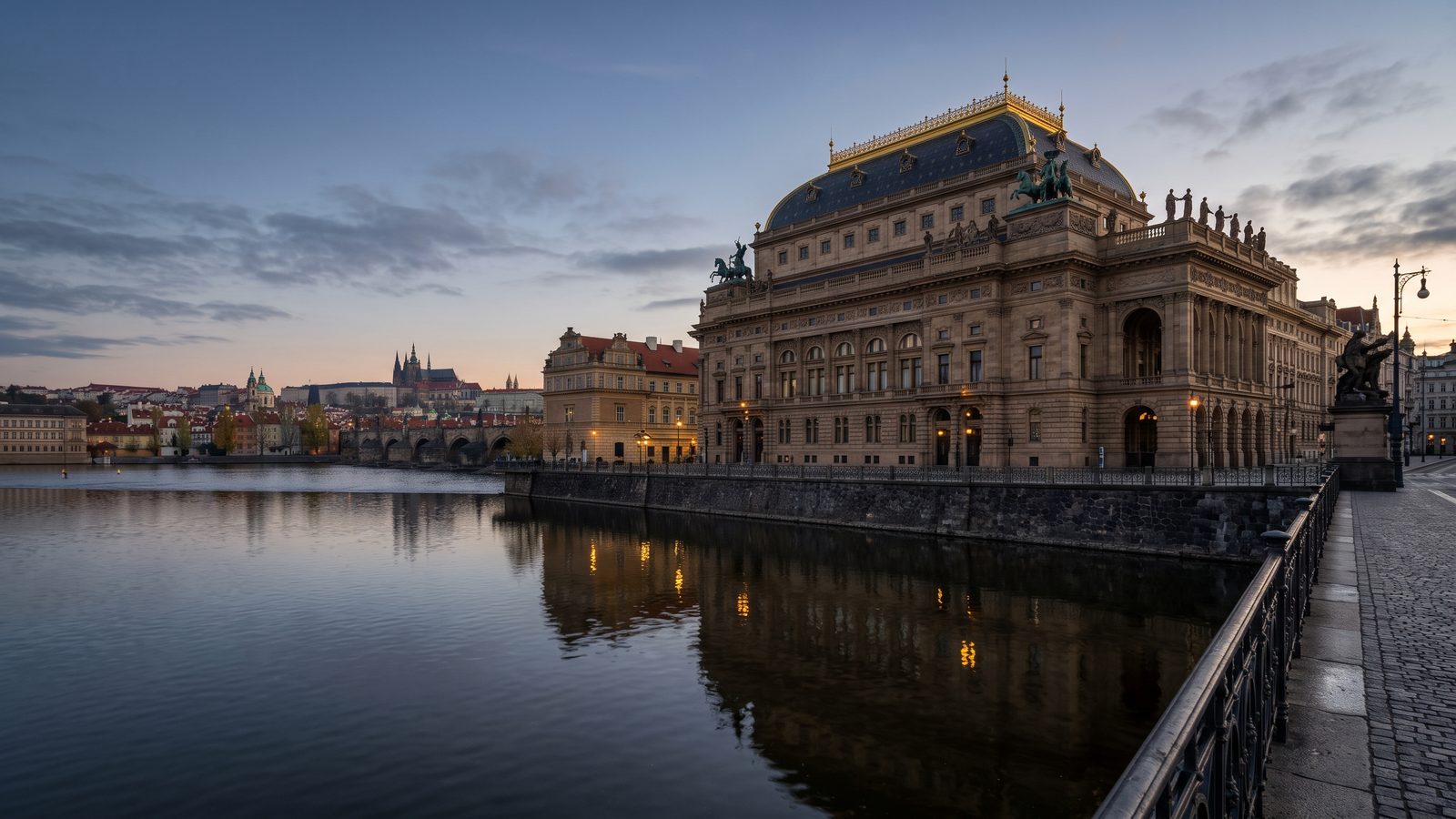
Welcome to the National Theatre, a crowning achievement of 19th-century Czech identity standing proudly along the Vltava River. Born from the fervent desire of ordinary citizens to celebrate their language and art under Austro-Hungarian rule, this Neo-Renaissance masterpiece embodies national pride. Built entirely through public donations under the motto 'The Nation to Itself', the theatre stands today as an enduring symbol of cultural resilience, artistic excellence, and historic determination.
As you explore its grand facade and surroundings, you trace a story of triumph over disaster. Rebuilt grander after a devastating fire shortly after its 1881 debut, the golden-roofed landmark remains the beating heart of Prague’s performing arts, hosting world-class opera, ballet, and drama.
Listen to a sample
The opening of this tour, exactly as AllTours narrates it on site.
What you'll hear on this tour
Stop 1. A Dream Built by the People
You stand before a monument born not from royal decree, but from the unyielding spirit of a nation. During the 19th-century Czech National Revival, ordinary citizens across the Austro-Hungarian Empire pooled their money to create a sanctuary for Czech culture. Known as the 'Nation to Itself' campaign, this collective effort built the theatre brick by brick. You trace the dramatic timeline from its proud 1881 opening to the tragic fire that consumed it just weeks later. Instead of giving up, people poured in donations again, allowing for a swift, triumphant reopening in 1883 that cemented this grand venue as a symbol of identity.
Stop 2. The Golden Crown of Neo-Renaissance Design
As you gaze at the exterior, you take in Josef Zítek's Neo-Renaissance masterpiece, reminiscent of Italian High Renaissance palaces. High above, the famous golden roof gleams in the sunlight, earning the theatre its affectionate nickname as a 'golden chapel' funded by the people. Below, you admire the allegorical statues by Bohuslav Schnirch depicting Tragedy, Comedy, Opera, and Drama adorning the loggia above the triple-arched portico. Following the tragic fire, architect Josef Schulz preserved Zítek’s striking exterior while enriching the interior with opulent Czech artistic motifs, creating an enduring architectural phoenix right before your eyes.
Stop 3. The Living Soul of Czech Identity
You are stepping into a sacred cultural sanctuary designed to defend and cherish the Czech language. Here, the motto 'Národ sobě'—The Nation to Itself—is not merely words on a wall, but a living legacy. You imagine the emotional thunder that filled the hall during the premiere of Bedřich Smetana's opera Libuše, composed specifically to announce Czech glory. From the dramatic masterpieces of Karel Čapek to Antonín Dvořák’s lyrical Rusalka, every performance staged within these walls serves as an act of artistic preservation. You feel the deep thread of national consciousness weaving through generations of passionate Czech creation.
Stop 4. A Stage for National Masterpieces
You listen closely as you contemplate the incredible artistic legacy brought to life on this stage. Built specifically to showcase Czech-language drama and opera, this theatre amplifies the country's cultural voice. You imagine the overwhelming emotion of opening night, when Smetana's Libuše echoed across a rapt audience. Today, you discover how world-class opera, ballet, and drama continue this proud tradition. As you stand in the auditorium, you appreciate the meticulous acoustic design, crafted to carry every unamplified vocal nuance directly to your ears, ensuring an intimate connection between you and the extraordinary performers.
Stop 5. Panoramas Across the Golden City
You step onto the terrace to admire a sweeping panorama of Prague’s historical landscape. Below you, the shimmering Vltava River flows gently beneath elegant stone bridges, dividing the city into iconic architectural eras. On the horizon, the majestic spires of Prague Castle stand watch over the red-tiled roofs of the Lesser Town cascading toward the water. You absorb this golden view of a hundred spires, recognizing the very vistas that have inspired centuries of painters, poets, and dreamers. Standing here, you feel connected to the timeless pulse of Bohemia’s historic capital.
Stop 6. The Silent Witness of the Vltava
You gaze out at the Vltava River, the historic lifeline flowing beside the theatre. For over a thousand years, these waters served as a vital trade artery, carrying wealth and culture deep into Bohemia. You reflect on how Bedřich Smetana immortalized its gentle currents and dramatic power in his famous symphonic poem 'Má Vlast'. As you watch the water flow past islands like Kampa, you contemplate how the river has defended the city from invaders while enduring legendary floods. The Vltava remains Prague's constant, flowing pulse, gracefully connecting the city's ancient history to your present journey.
Planning your visit
- Best time to go
- Late afternoon before sunset to catch the golden roof shimmering, or early morning for quiet exterior photography.
- Approximate duration
- about 45 minutes
- Where to start
- Outside the main facade of the National Theatre on Národní Street, facing the Vltava River.
Access and conditions change seasonally — check the official site before you go.
Frequently asked questions
Is National Theatre Prague worth visiting?
Yes, the National Theatre is an iconic symbol of Czech resilience and culture. Even if you do not attend a performance, visiting its grand Neo-Renaissance exterior and shimmering golden roof along the Vltava River is a highlight of Prague.
How long do you need at National Theatre Prague?
An exterior walk and audio tour around the National Theatre takes about 45 minutes to an hour. If you attend an opera, ballet, or drama performance inside, plan for 2 to 3 hours.
What is the history behind the National Theatre in Prague?
Built during the 19th-century Czech National Revival via public donations under the motto 'Nation to Itself', it opened in 1881. After a devastating fire destroyed it weeks later, citizens rapidly raised funds again to rebuild and reopen it in 1883.
Keep exploring
Header image is an AI-generated illustration of National Theatre. AllTours.ai is an AI audio tour guide — point your camera at any landmark and hear its story.