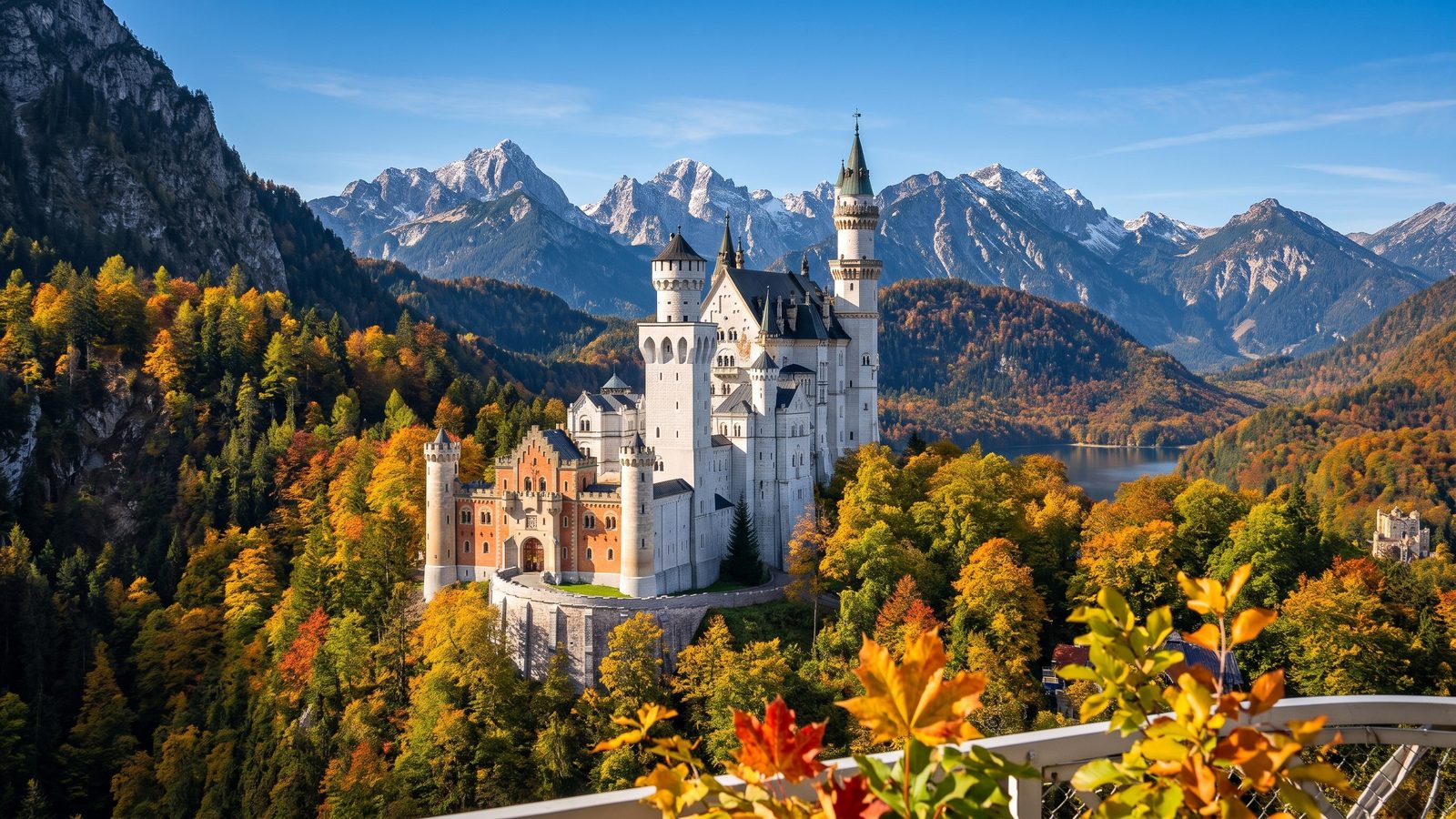
Welcome to Neuschwanstein Castle, a world-famous 19th-century Romanesque Revival fortress dramatically set against the Bavarian Alps near Füssen. Commissioned by King Ludwig II as a romantic retreat, this soaring masterpiece blends medieval knight legends, operatic grandeur, and modern technology. As you walk through its gates and gilded halls, you step directly into a realm of myths, art, and architectural wonder that continues to capture imaginations around the globe.
This self-guided audio tour walks you through the castle's captivating history, extravagant interiors, and breathtaking natural surroundings. Experience the legendary Throne Hall, discover the stories behind Richard Wagner's musical influences, and take in unforgettable panoramic views of the alpine landscape from the famous Marienbrücke.
Listen to a sample
The opening of this tour, exactly as AllTours narrates it on site.
What you'll hear on this tour
Stop 1. The Dream of the Fairy Tale King
You stand before Neuschwanstein Castle, a 19th-century Romanesque Revival masterpiece nestled high in Germany's Bavarian Alps. Commissioned in 1869 by King Ludwig II, this castle embodies romantic ideals, drawing deep inspiration from medieval knight sagas and the operas of Richard Wagner. Perched on a rugged hill, it serves as a striking symbol of Ludwig’s passion for artistic expression. Although built as a private sanctuary, the king resides here for only a short time before his sudden death in 1886. Inside, you discover extravagant frescoes depicting legendary tales, intricate woodwork, and the Byzantine-inspired Throne Room with its gilded details. You see how historical fantasy seamlessly meets modern innovation like running water.
Stop 2. Operatic Grandeur and Modern Marvels
As you approach the dramatic cliffside structure, you admire how its soaring spires and intricate stonework pierce the alpine sky. You explore rooms that harmoniously blend diverse architectural styles into a living canvas. The Throne Room shines with Byzantine splendor, featuring an intricate mosaic floor adorned with plant and animal motifs beneath a grand chandelier. You notice how every chamber showcases meticulous murals inspired by Richard Wagner’s operas. In the Singer’s Hall, high-ceilinged acoustics and sumptuous decorations create an acoustic stage designed for magnificent performances that never came to fruition. You marvel at how medieval romanticism integrates with advanced 19th-century technology like central heating and running water.
Stop 3. Gateway to Bavarian Romance
You step through the main gates and enter a captivating realm of myth and majesty. As you move through the interior, you encounter opulent chambers including the gilded Throne Hall and the melodious Singer’s Hall, where visual artistry pays homage to Wagnerian legends. Outside, you gaze across dramatic alpine landscapes and look toward Marienbrücke, the iconic bridge spanning the Pöllat Gorge that provides incredible views of the fortress framed by rugged cliffs. Beyond its whimsical turrets, you reflect on the mysterious life of King Ludwig II and see why this fairytale stronghold inspired Disney’s Sleeping Beauty Castle. Every path offers a journey into pure Bavarian mythology.
Stop 4. Legends Woven into Stone
You enter the magical realm known locally as 'Fairytale,' where ancient sagas come alive through exquisite craftsmanship. As you inspect the detailed archway carvings, you follow scenes from the 'Whispering Woods' legend, where forest spirits lead lost travelers home. You walk across a shimmering mosaic floor telling the story of the 'Star-Kissed Maiden,' whose tears formed local river springs. High above, light filters through stained-glass panels, casting vibrant, ethereal hues across the stone walls to mirror the northern lights from the 'Sky Weaver' myth. You feel the enduring power of folklore transforming raw stone into a living realm where myth and reality interweave seamlessly.
Stop 5. Royal Solitude and Culinary Delights
You envision the castle's bustling kitchens far below, where skilled royal chefs prepare lavish meals from fresh Bavarian ingredients. Although King Ludwig II leads a reclusive life and dines alone, his meals mirror the castle's immense grandeur. You picture elegant tables set with shimmering silver platters and fine delicate porcelain, filling grand corridors with aromas of rich roasted meats and freshly baked breads. You imagine the king savoring hearty venison stew alongside creamy local desserts in solitary reflection. Standing here, you appreciate how every dish blends rustic regional traditions with regal luxury, turning a private meal into an extraordinary spectacle of taste and royal sophistication.
Stop 6. Bavarian Feasts and Kitchen Craft
You turn your attention to the castle's industrious kitchens, carefully designed to produce substantial royal feasts despite King Ludwig’s solitary eating habits. You picture massive stone hearths and expansive pantries prepared to serve unexpected visitors or grand celebrations that never took place. The daily dining reflects the natural richness of Bavaria, featuring hearty game meats, fresh root vegetables, and artisanal cheeses. You imagine savory plump sausages, dense potato dumplings, and warm apple strudel crafted from local farm ingredients. As you explore, you see how the king's personal chef elevates simple regional staples into artistic culinary statements that harmonize with Neuschwanstein's romantic ideals.
Planning your visit
- Best time to go
- Early morning or late afternoon during spring or autumn for fewer crowds and optimal light.
- Approximate duration
- About 2 to 3 hours
- Where to start
- The ticket center in Hohenschwangau village at the base of the castle hill.
Access and conditions change seasonally — check the official site before you go.
Frequently asked questions
Is Neuschwanstein Castle worth visiting?
Yes, Neuschwanstein Castle is world-famous for its dramatic alpine setting, opulent Romanesque Revival architecture, and romantic history. It offers breathtaking views and stunning Wagner-inspired interiors that captured global pop culture.
How long do you need at Neuschwanstein Castle?
Plan to spend about 2 to 4 hours overall. This provides enough time to walk or take a shuttle up the hill, explore the exterior viewpoints, and tour the internal rooms.
Who built Neuschwanstein Castle and why?
King Ludwig II of Bavaria commissioned Neuschwanstein Castle in 1869 as a personal, romantic retreat inspired by medieval legends and the operas of Richard Wagner, combining historical aesthetics with modern tech.
Keep exploring
Header image is an AI-generated illustration of Neuschwanstein Castle. AllTours.ai is an AI audio tour guide — point your camera at any landmark and hear its story.