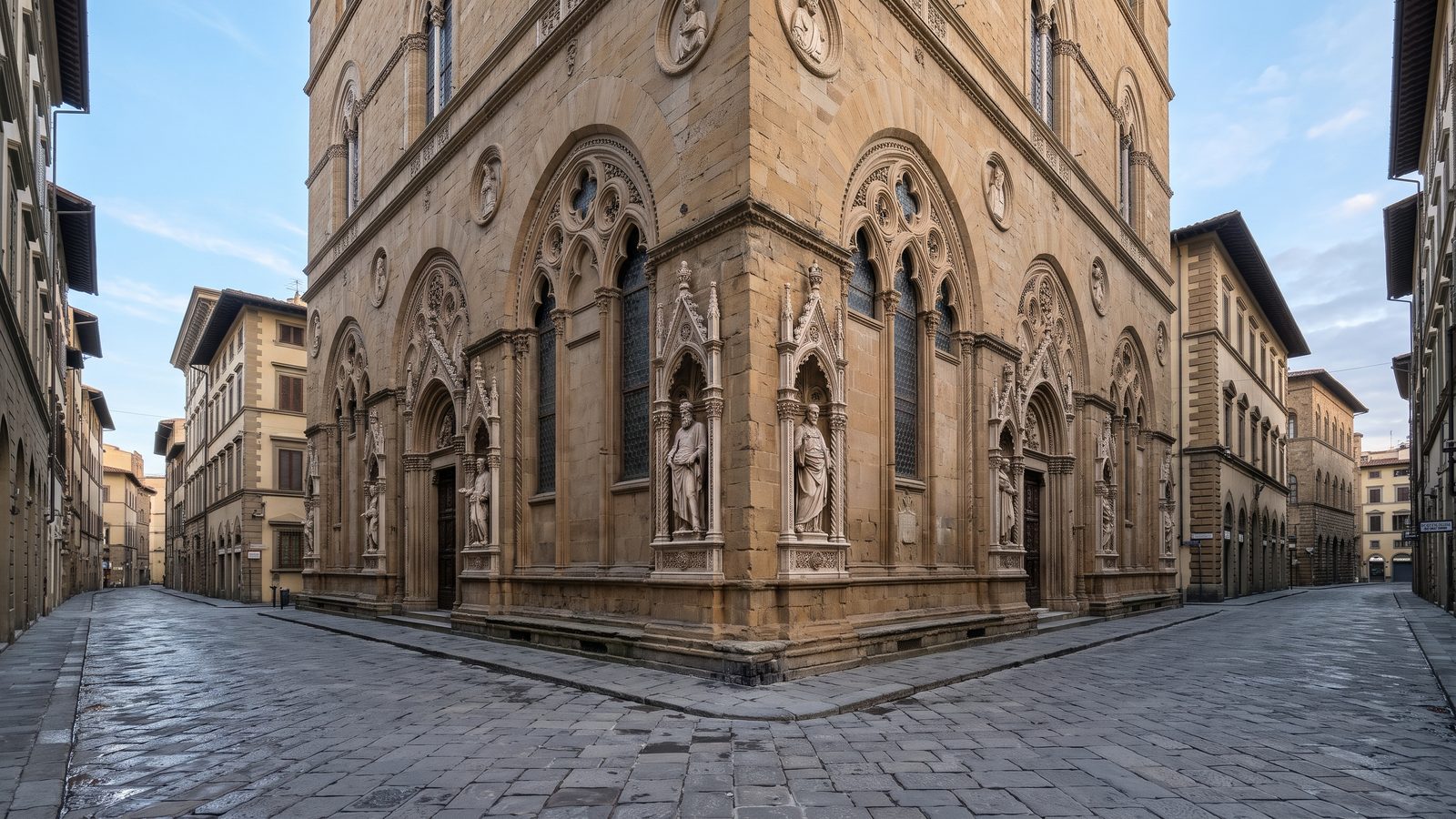
Welcome to Orsanmichele, a monumental structure in the heart of Florence that encapsulates the city's unique historical blend of civic pride, commerce, and faith. Originally constructed in the early 14th century as a bustling grain market, this impressive building was later transformed into a revered church. As you walk along its exterior, you will witness how Gothic architecture seamlessly merges with the competitive artistic legacy of Florence's trade guilds.
This audio tour guides you around the building's exterior niches and intricate stonework. You will discover how master artisans like Donatello and Ghiberti shaped these stones, creating an outdoor gallery that captures the revolutionary spirit of Renaissance sculpture and the enduring devotion of a thriving mercantile city.
Listen to a sample
The opening of this tour, exactly as AllTours narrates it on site.
What you'll hear on this tour
Stop 1. From Sacred Granary to Civic Shrine
You stand before a building whose stone walls embody Florence’s fierce civic pride and complex past. Long before it became a church, this structure served as a granary known as Orto di San Michele, storing the city's essential grain supply. During the devastating famine and Black Death of 1348, locals believed a miraculous event occurred when an image of the Virgin Mary wept on site. This miracle transformed the utilitarian granary into a bustling pilgrimage destination. Wealthy Florentine guilds took control of the exterior niches, commissioning statues of their patron saints to publicly display their power, economic prosperity, and religious devotion on a grand civic stage.
Stop 2. Guild Competition in Bronze and Marble
Gazing up at the exterior facade, you see a multi-layered gallery of Renaissance artistry. Powerful guilds, such as the wool merchants and silk weavers, competed fiercely to outdo one another in devotion and artistic patronage. Each niche serves as a sculpted masterpiece framed by intricate Gothic tabernacles with delicate pinnacles and tracery. Look closely at Donatello's St. George; even weathered by time, the figure commands attention with its intense gaze and bold, defiant posture, showcasing the revolutionary realism of the Renaissance. Here on this single facade, religion, commercial pride, and artistic innovation converge to display the unmatched skill of master Florentine stone workers and sculptors.
Stop 3. Mastery of Bronze and Polished Marble
As you inspect these niches, you witness the extraordinary dedication of Florence's top craftsmen. The city's guilds demanded perfection, putting their reputations directly into the hands of master artisans. Notice Ghiberti's bronze St. John the Baptist, crafted using complex lost-wax techniques that create flowing hair and realistic aged skin. Turn your eyes to Ghiberti's marble St. Luke, where carved stone drapes so naturally it seems to move in a gentle breeze. These ambitious projects required years of painstaking chiseling, polishing, and casting. Each detail reveals an absolute peak of skill, turning raw marble and bronze into enduring symbols of pride and technical mastery.
Stop 4. Gothic Arches and Fortress Walls
Take a moment to appreciate the genius of this architecture, which expertly blends Gothic ambition with practical Florentine design. The lower levels feature robust, fortress-like masonry and deep-set windows, reflecting the building's origin as a secure grain market and defensive structure. Higher up, soaring pointed arches reach toward the heavens, framed by elegant tracery that lets light flood into the upper stories. This unique dual purpose remains etched directly into the stone structure. By integrating religious statuary within exterior niches, the builders created a groundbreaking architectural solution that turned a civic utility into an unmatched public showcase of faith and civic identity.
Stop 5. Where Earthly Trade Meets Heavenly Grace
You stand at a unique threshold where the sacred and secular overlap. The building's core purpose shifted when a reported miracle transformed a humble granary into a holy sanctuary. In response, local trade guilds sought to honor their heavenly patrons by turning earthly wealth into spiritual offerings. The statues you see were crafted not merely as decorative art, but as living prayers in bronze and stone, designed to capture a divine presence. Walking around the perimeter, you can feel the deep reverence embedded within these walls, representing a continuous historical dialogue between human ambition and celestial aspirations as a city sought divine favor.
Stop 6. The Lasting Impact of Civic Artistry
Standing at Orsanmichele, you experience the legacy of civic artistry that helped define Renaissance Florence. This monument represents a rare historical moment where mercantile ambition met deep religious devotion. Each statue placed in these exterior niches served as both a competitive act of urban beautification and a public statement of spiritual validation. This bold experiment set a lasting precedent for public art that continues to inspire observers today. As you admire these sculptures, you connect directly with generations of visitors who have looked to Orsanmichele to understand Florence's collaborative spirit, artistic heritage, and fierce historical identity.
Planning your visit
- Best time to go
- Early morning or late afternoon for soft natural light on the facade sculptures.
- Approximate duration
- About 45 minutes
- Where to start
- Corner of Via dei Calzaiuoli and Via Orsanmichele outside the exterior niches.
Access and conditions change seasonally — check the official site before you go.
Frequently asked questions
Is Orsanmichele worth visiting?
Yes, Orsanmichele is essential for anyone interested in Renaissance art and Florentine history, featuring groundbreaking exterior niches and sculptures by masters like Donatello and Ghiberti.
How long do you need at Orsanmichele?
A visit typically takes about 30 to 45 minutes to admire the exterior architecture, niches, and sculpted details around the building.
What was Orsanmichele originally used for?
Orsanmichele was originally built in the early 14th century as a grain market ('Orto di San Michele') before being converted into a church following reported miracles during the famine of 1348.
Keep exploring
Header image is an AI-generated illustration of Orsanmichele. AllTours.ai is an AI audio tour guide — point your camera at any landmark and hear its story.