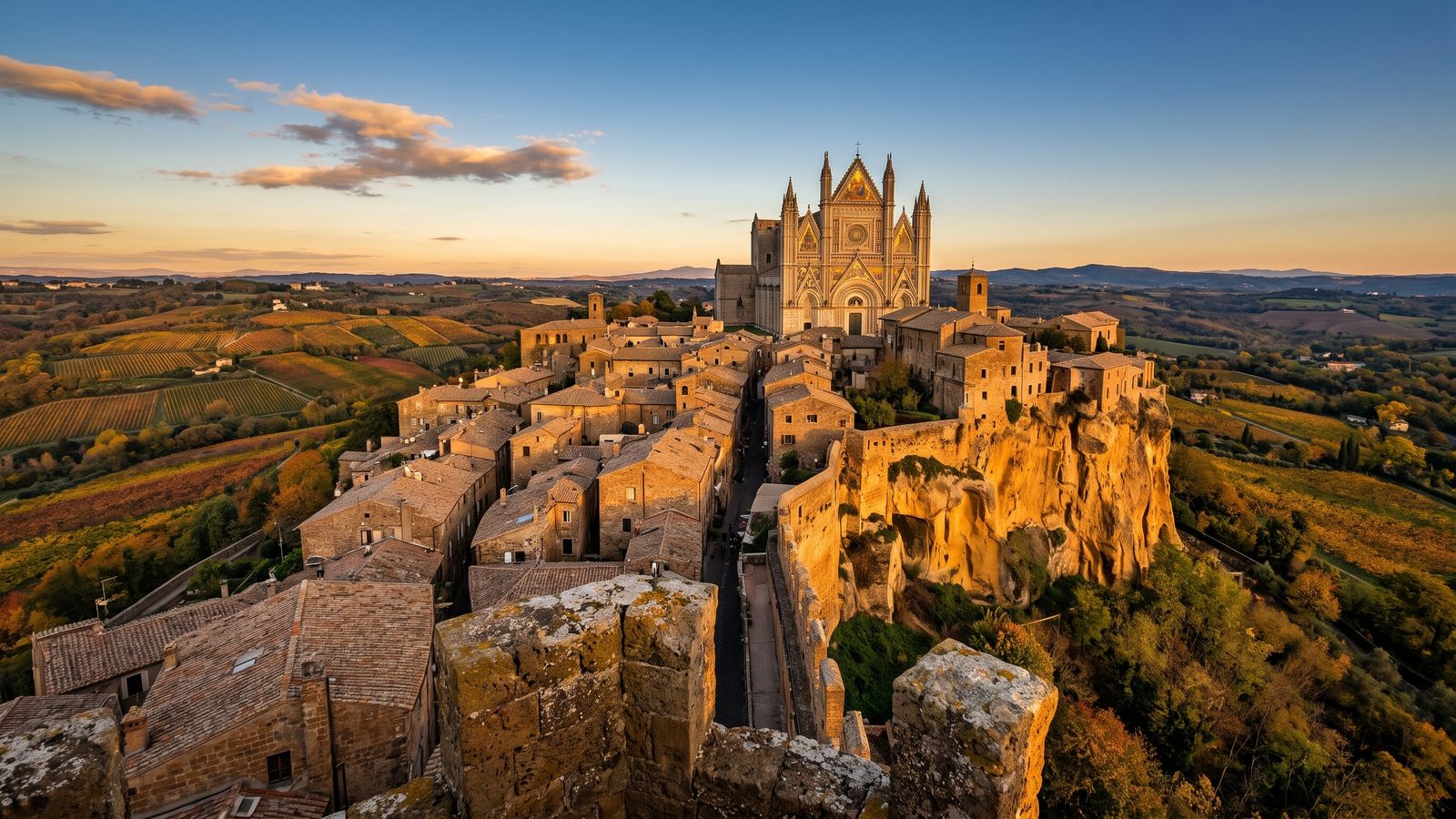
Welcome to Orvieto, an extraordinary Italian city perched atop a dramatic cliff of volcanic tufa. Rising above the Paglia River valley in Umbria, this natural fortress seamlessly blends nature with human ingenuity. As you walk its ancient stone streets, you step through thousands of years of history, from its Etruscan roots as Velzna to its era as a powerful medieval papal refuge. Prepare to explore a town built directly into the rock.
From breathtaking panoramas across green Apennine valleys to an incredible subterranean labyrinth carved deep beneath your feet, Orvieto invites you to unearth its secrets. Discover world-renowned cathedral art, savory truffle pasta, and celebrated white wines as you navigate this defiant, timeless hilltop jewel at your own pace.
Listen to a sample
The opening of this tour, exactly as AllTours narrates it on site.
What you'll hear on this tour
Stop 1. Dazzling Mosaics and Apocalyptic Masterpieces
You stand before the magnificent Duomo of Orvieto, gazing up at a facade alive with shimmering gold mosaics that illustrate the life of the Virgin Mary. Below these radiant colors, examine the detailed bronze reliefs crafted by Lorenzo Maitani, depicting foundational biblical tales directly on the portal stone. As you step inside the sacred darkness of the cathedral, navigate toward the famous Chapel of San Brizio. Here, Luca Signorelli’s apocalyptic frescoes surround you in dramatic detail. Look closely at the vivid scenes of the Last Judgment—a powerful artistic achievement that later inspired Michelangelo’s work in the Sistine Chapel.
Stop 2. Secrets Beneath the Volcanic Tufa
You step away from the sunlight and descend into Orvieto's subterranean world, a labyrinth of over 1,200 caves carved into the soft volcanic stone. As you trace passages created by Etruscans and medieval residents, you uncover centuries of hidden daily life. Notice the ancient olive presses used to extract oil and the cool, shadowy cellars built for storage. Look up to examine the colombaie, hundreds of small square niches hollowed out from the tufa to raise pigeons for food. These hidden tunnels served as vital water sources, storage rooms, and secret escape routes during perilous medieval sieges.
Stop 3. From Etruscan Fortress to Papal Refuge
You walk along streets built upon ancient foundations first established by the Etruscans, who named their formidable hilltop city Velzna long before Roman forces conquered it in 264 BC. By the 13th century, Orvieto flourishes as a proud, independent free commune. Its sheer cliffs offer impressive defensive strength, making the city a trusted sanctuary for popes during turbulent times. Imagine Pope Clement VII fleeing here to seek safety after the devastating 1527 Sack of Rome. As you explore, feel how this natural volcanic citadel served as a resilient fortress that protected its people across shifting empires and dramatic historical eras.
Stop 4. Endless Horizons Over Umbrian Valleys
You walk toward the edge of Orvieto's ancient defensive walls to take in a sweeping panorama of Umbria. Below your feet, vast green valleys open up, patterned with neatly rowed vineyards and silvery olive groves that extend all the way toward the distant Apennine foothills. You feel the strategic brilliance of this high perch, which once provided soldiers with a clear view over the vital Paglia River trade routes below. As sunlight shifts across the landscape, watch the light transform the valley into glowing shades of emerald and gold, creating a view that has captivated visitors for thousands of years.
Stop 5. Golden Nectar of Popes and Painters
You enter the heart of Orvieto Classico wine country, where nutrient-rich volcanic soil produces famous white wines crafted primarily from Grechetto and Trebbiano grapes. Throughout history, this celebrated golden drink captivated popes and artists alike, even becoming a personal favorite of Michelangelo during his painting commissions. While historical vintages leaned toward sweet styles, today you can savor crisp secco varieties alongside traditional, slightly sweet abboccato wines. As you sample a glass in a local cellar, you taste the direct connection between Orvieto’s ancient geological roots, its centuries of viticulture, and the refined winemaking traditions preserved across generations.
Stop 6. Handmade Umbrichelli and Local Truffles
Your culinary journey begins as you discover the hearty, traditional flavors of Umbria. You taste palomba alla ghiotta, a prized local dish of wild pigeon slow-cooked with fresh herbs and olives according to centuries-old recipes. Earthy black truffles, gathered directly from the surrounding oak-covered hills, top plates of thick, hand-rolled umbrichelli pasta. Inside stone cellars carved deep into the cool tufa rock, local cooks age region-specific ingredients and pair them perfectly with chilled white wine. Every bite offers you an authentic connection to the countryside, celebrating rustic ingredients shaped by Orvieto’s unique landscape and rich agricultural heritage.
Planning your visit
- Best time to go
- Spring (April to June) or autumn (September to October) for pleasant walking temperatures and vibrant valley views.
- Approximate duration
- About 2 to 3 hours
- Where to start
- Piazza del Duomo, right in front of the Cathedral facade.
Access and conditions change seasonally — check the official site before you go.
Frequently asked questions
Is Orvieto worth visiting?
Yes, Orvieto is widely considered one of Umbria's most striking hill towns. It features a world-famous Gothic cathedral, extensive Etruscan underground caves, medieval architecture, and renowned Orvieto Classico wines.
How long do you need at Orvieto?
A visit of 3 to 5 hours allows you to see the main sights, including the Duomo, the underground tunnels, and enjoy a local lunch. A full day or overnight stay allows for a more relaxed pace.
What is the history of Orvieto?
Orvieto originated as the Etruscan city-state of Velzna before Roman conquest in 264 BC. By the Middle Ages, it developed into a powerful free commune and served as a fortified sanctuary for popes, including Pope Clement VII after the 1527 Sack of Rome.
Keep exploring
Header image is an AI-generated illustration of Orvieto. AllTours.ai is an AI audio tour guide — point your camera at any landmark and hear its story.