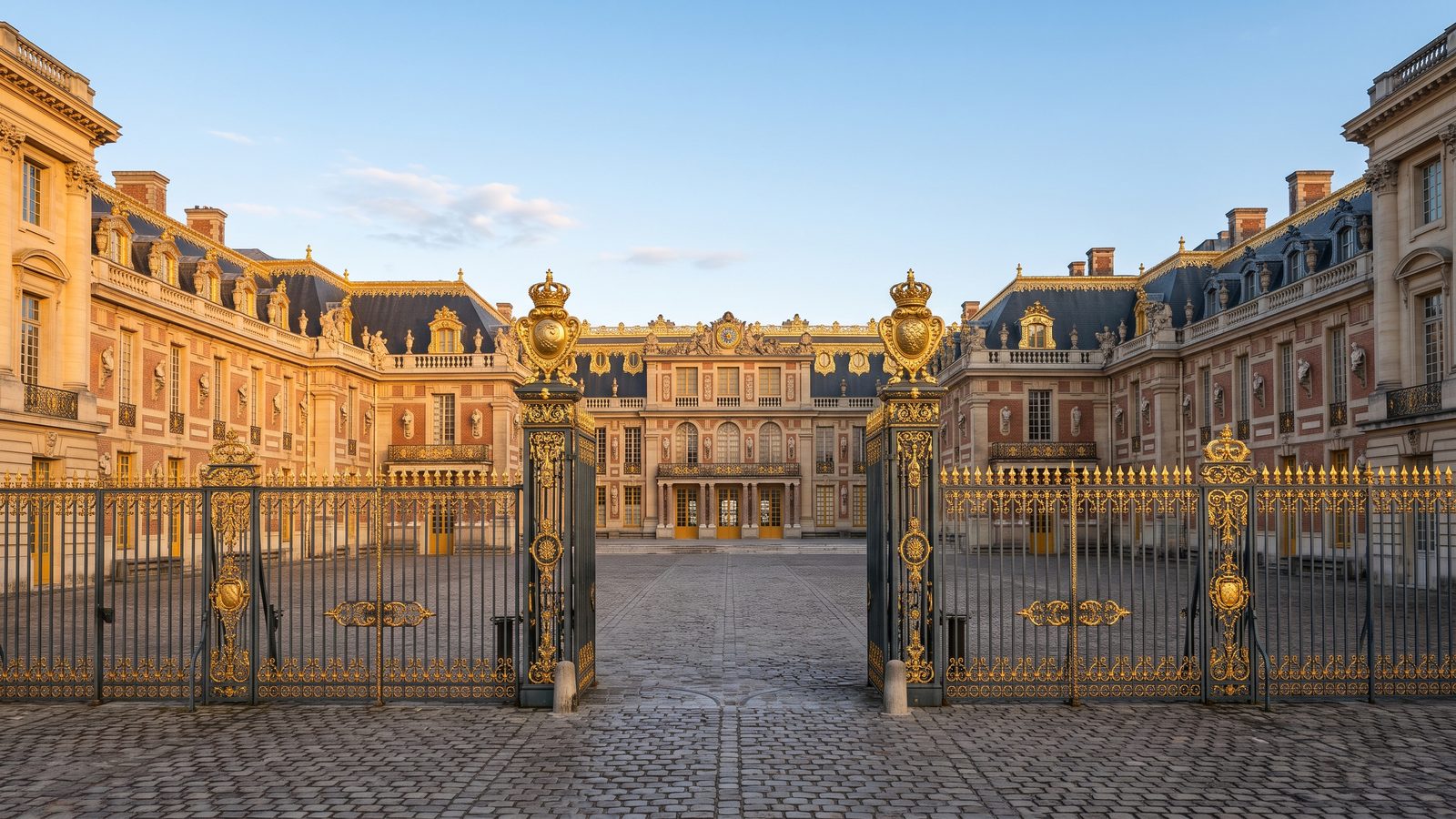
Step into the dazzling world of the French monarchy at the Palace of Versailles. Originally built as a humble hunting lodge for Louis XIII in 1623, this estate was dramatically transformed by his son, Louis XIV, into a breathtaking seat of absolute power. As you explore its gilded halls and sprawling grounds, you will walk through centuries of royal extravagance, political intrigue, and groundbreaking architectural brilliance that reshaped European history.
This self-guided audio tour leads you through the estate's iconic spaces, from the shimmering Hall of Mirrors to the meticulously sculpted French gardens. Discover how artistic genius, grand optical illusions, and sheer ambition were orchestrated to glorify the Sun King and project France's cultural dominance across the globe.
Listen to a sample
The opening of this tour, exactly as AllTours narrates it on site.
What you'll hear on this tour
Stop 1. Shimmering Light in the Hall of Mirrors
Step inside the magnificent Hall of Mirrors and feel yourself surrounded by instant brilliance. You are looking at a masterwork of Venetian craftsmanship, crafted during an era when France competed fiercely to master mirror making. As you walk down this grand gallery, notice how each luxury pane reflects the glowing chandeliers, gilded stucco, and the courtiers who once gathered here in silk and powdered wigs. This deliberate arrangement was far more than an aesthetic showcase; it served as a striking declaration of French economic power and technological dominance. These vast mirrors dissolve the stone walls around you, creating a dizzying, infinite realm of light that amplifies the glory of the French state.
Stop 2. Mastering Nature in the Royal Gardens
Look out across these sprawling gardens, a colossal landscape engineered to showcase total royal dominion over nature. Imagine thirty thousand laborers working over decades to sculpt this terrain, divert water sources, and align every single tree. As you gaze down the Grand Canal, you see a massive aquatic stage created for pleasure barges and symbolic power over the elements. Take in the geometric precision of the boxwood-edged parterres, reflecting the Sun King's vision of an ordered universe. Beyond these grand vistas, you can explore secluded groves like the Bosquet de la Colonnade, where secret rendezvous and quiet court intrigue unfolded far from public view.
Stop 3. From Hunting Lodge to Gilded Cage
Stand before these massive gilded gates and imagine the transformation of this estate. What began as a modest hunting lodge under Louis XIII became a monumental statement of absolute authority under his son, Louis XIV. You are standing where the Sun King established a central seat of government to keep a watchful eye on rebellious French aristocrats. By gathering the nobility inside this gilded cage, he channeled their political ambitions into constant courtly rituals and extravagant spectacles. This decades-long construction effort brought thousands of artisans and engineers together, crafting not merely a palace, but an enduring physical mirror of royal glory and centralized monarchy.
Stop 4. Divine Imagery and Artistic Power
Gaze at the opulent decorative details around you, where every painting and sculpture reinforces royal divine right. Look up at the ceiling of the Salon d'Apollon, where painter Charles Le Brun depicted the sun god in his celestial chariot—a direct allegory for King Louis XIV himself. As you move through the rooms, observe how stucco artists, sculptors, and painters worked under unified direction to glorify the monarchy. In the Hall of Mirrors, over three hundred individual mirrors reflect France's artistic supremacy. You are experiencing art created with a singular political purpose: to awe every visiting ambassador, courtier, and dignitary with absolute grandeur.
Stop 5. The Classical Elegance of the East Facade
Observe the impressive scale of the East Facade stretching across your view, built to project strength and artistic ambition. Notice how the central structure uses balanced columns and pilasters to echo Italian Baroque palaces, subtly asserting French cultural leadership. Peer closely at the intricately carved stone, where detailed keystones and cartouches highlight the extraordinary skill of royal artisans. Above, the classic Mansart roofline cleverly expands usable attic space while keeping a harmonious classical silhouette. As light pours through these tall windows into the state apartments, you are looking at a carefully calculated masterpiece of stone, proportion, and light designed to project royal supremacy.
Stop 6. The Illusion of Endless Space
Approach the edge of the Hall of Mirrors and observe how arcaded windows transform the gallery into a continuous optical illusion. Sunlight streams through seventeen vast windows and strikes three hundred and fifty-seven opposing mirrors, doubling the perceived depth and brightness of the gallery. As you look across the hall, the interior surfaces seem to merge into an endless shimmering tunnel of light. Painted ceiling scenes portraying the king's military and political triumphs mirror back upon the court below. You are witnessing a calculated visual trick where art and reality blend together, endlessly reflecting the Sun King's power and divinity to all who enter.
Planning your visit
- Best time to go
- Early morning right at opening or late afternoon, especially midweek outside peak summer months.
- Approximate duration
- About 2 to 3 hours
- Where to start
- In front of the Main Gates (Cour d'Honneur) at the entrance of the Palace estate.
Access and conditions change seasonally — check the official site before you go.
Frequently asked questions
Is Palace of Versailles worth visiting?
Yes, the Palace of Versailles is world-famous for its spectacular Hall of Mirrors, vast classical gardens, and rich royal history, making it one of France's top historical landmarks.
How long do you need at Palace of Versailles?
Most visitors spend between 2 to 4 hours exploring the main palace apartments, the Hall of Mirrors, and taking a walk through the central gardens.
Why did Louis XIV move the French court to Versailles?
Louis XIV moved the court to Versailles to centralize royal power, escape political instability in Paris, and keep the French nobility under close supervision within a controlled court environment.
Keep exploring
Header image is an AI-generated illustration of Palace of Versailles. AllTours.ai is an AI audio tour guide — point your camera at any landmark and hear its story.