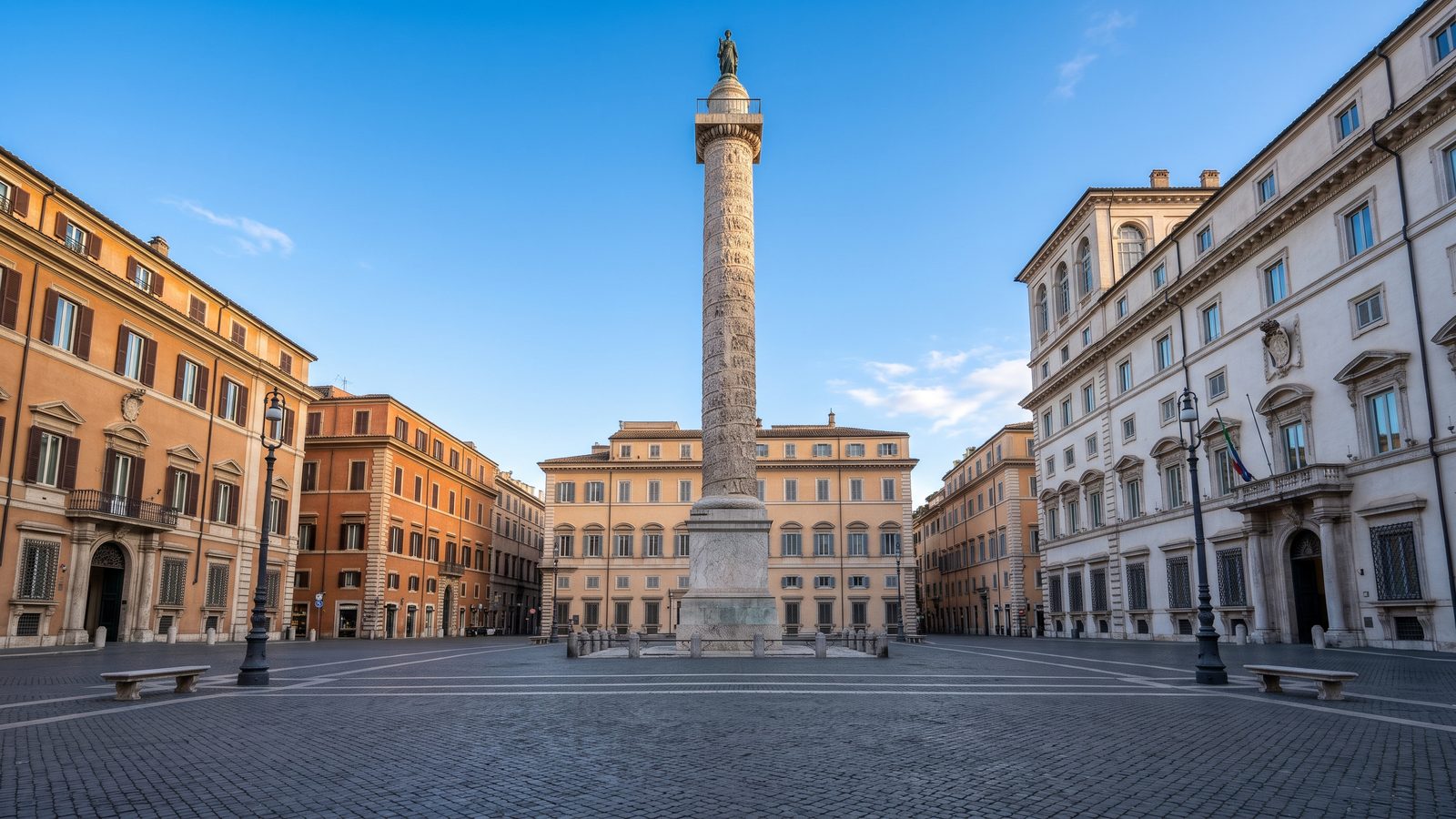
Welcome to Piazza Colonna, where ancient imperial glory seamlessly intersects with the pulse of modern Italian democracy. Standing at the geographic and historic center of Rome, this iconic square is dominated by the soaring Column of Marcus Aurelius. Surrounding it are stately palazzos hosting Italy's top leaders, creating a dynamic open-air museum where centuries of power, art, and vibrant city life meet under the bright Roman sky.
As you walk across these ancient cobblestones, this self-guided audio tour reveals the artistic triumphs, papal legends, and architectural rivalries carved into the square's stones. From imperial propaganda to modern Roman rituals, prepare to experience a captivating crossroads where history continues to be written every day.
Listen to a sample
The opening of this tour, exactly as AllTours narrates it on site.
What you'll hear on this tour
Stop 1. The Emperor Topped by a Saint
Look high up to the summit of the Column of Marcus Aurelius. Notice the bronze figure standing watch over Rome? You are gazing at Saint Paul, but he was not always there. For over a thousand years, Romans misidentified this monument, believing it honored Emperor Antoninus Pius. In the late sixteenth century, Pope Sixtus V commissioned architect Domenico Fontana to crown the ancient pillar with the Christian apostle. By placing Saint Paul atop a pagan relief celebrating military victories against Germanic tribes, the pope symbolically claimed imperial history for Christian Rome. You stand before a thousand-year-old misunderstanding transformed into a dramatic statement of papal authority.
Stop 2. A Symphony of Marble and Masters
Stand in the middle of the square and turn your eyes toward the surrounding buildings. Before you lies a living textbook of Roman architectural history. At the center rises the column, stacked from colossal drums of Carrara marble without modern machinery over thirty meters high. Look left toward Palazzo Montecitorio to admire its travertine facade. Notice the gentle, dynamic curve designed by Gian Lorenzo Bernini, bringing theatrical Baroque motion to a massive government building. Now, turn your gaze directly opposite to Palazzo Chigi. Feel the restrained, dignified harmony of the Roman Renaissance in its rusticated ground floor and balanced window lines. You are witnessing three distinct eras harmonizing in one magnificent piazza.
Stop 3. Crossroads of Ancient and Modern Power
You stand at the historic heart of Rome, surrounded by layers of political power spanning two millennia. Look closely at the delicate spiral reliefs decorating the central column. Carved around 193 AD, this ancient comic strip depicts the military victories of Marcus Aurelius against northern tribes. Now, scan the palazzos framing the square. Palazzo Montecitorio houses Italy’s Chamber of Deputies, its clock tower keeping time for lawmakers within. Across the paving sits Palazzo Chigi, the official residence of Italy's Prime Minister. As diplomats meet and politicians debate, Romans pass by below, connecting imperial grandeur directly to the rhythm of modern Italian politics.
Stop 4. The Art of Living and La Passeggiata
Pause for a moment and observe the people moving across the cobblestones around you. Beyond the historic stone facades, you are participating in the living theatre of Roman daily life. Look for locals enjoying a quick espresso at an outdoor counter or engaged in lively, hand-gestured conversations. Here, Romans practice la bella figura—the art of making a beautiful impression through grace and presence. As evening approaches, watch the piazza transform for the passeggiata. This traditional evening stroll brings families, friends, and lovers together to see and be seen. You are not just observing history; you are standing in the authentic social heart of the Eternal City.
Stop 5. Taste the Daily Rhythm of Rome
Take a deep breath and let the aroma of freshly roasted coffee guide your senses. While emperors once ruled here, daily life in Rome has always revolved around simple, delicious food. Imagine ancient workers grabbing flatbread and olives near this spot thousands of years ago. Today, that vibrant culinary tradition endures just steps away from where you stand. Watch politicians and visitors alike step into neighborhood cafes for a swift espresso or grab a slice of authentic pizza al taglio. From quick bites to classic plates of cacio e pepe, food connects everyone in this square, offering you a delicious taste of living Roman culture.
Planning your visit
- Best time to go
- Late afternoon to early evening, when the buildings catch the warm golden sunlight and locals gather for the traditional passeggiata.
- Approximate duration
- about 30 minutes
- Where to start
- At the center of Piazza Colonna, directly in front of the Column of Marcus Aurelius facing Palazzo Chigi.
Access and conditions change seasonally — check the official site before you go.
Frequently asked questions
Is Piazza Colonna worth visiting?
Yes, Piazza Colonna is well worth visiting. Located directly along Via del Corso, it features the 1,800-year-old Marcus Aurelius Column surrounded by major architectural landmarks like Palazzo Chigi and Palazzo Montecitorio.
How long do you need at Piazza Colonna?
You typically need about 20 to 30 minutes to explore Piazza Colonna, admire the detailed reliefs on the Marcus Aurelius Column, and take in the surrounding government buildings.
Why is Piazza Colonna historically famous?
Piazza Colonna is famous as a central hub of Roman political power, housing the ancient triumphal Column of Marcus Aurelius erected around 193 AD alongside Palazzo Chigi, the official residence of the Italian Prime Minister.
Keep exploring
Header image is an AI-generated illustration of Piazza Colonna. AllTours.ai is an AI audio tour guide — point your camera at any landmark and hear its story.