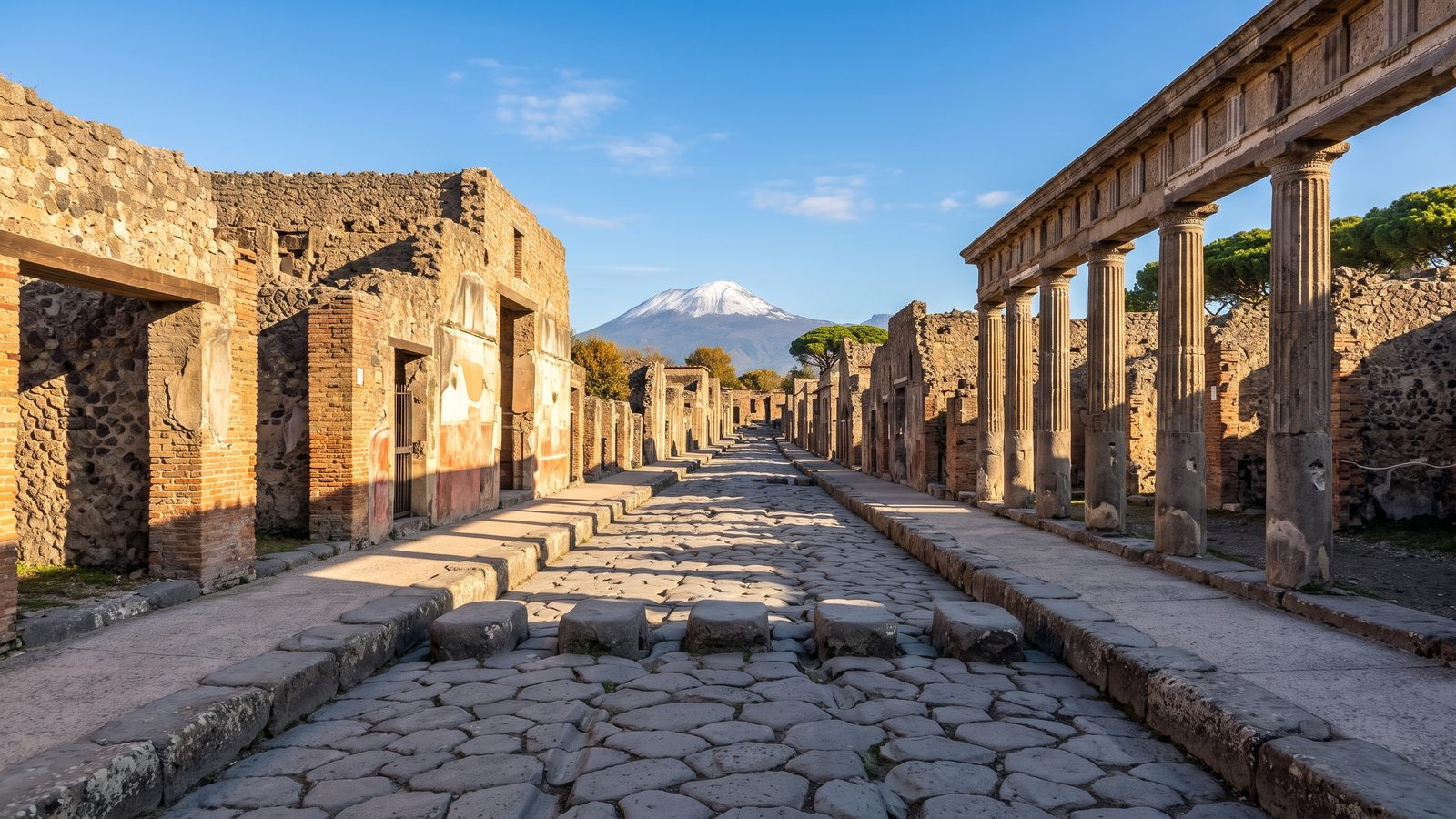
Welcome to Pompeii, an ancient Roman city frozen in time by the catastrophic eruption of Mount Vesuvius in 79 AD. As you walk down its remarkably preserved stone streets, you step directly into daily life from two millennia ago. Marvel at surviving grand public theaters, intricate home frescoes, and neighborhood markets. Nature preserved this vibrant trading hub, offering a unique, profound window into the Roman world's sights, architecture, and personal human stories.
This audio tour guides you through the city's rich history, from early Oscan origins and Samnite influences to its peak as a prosperous Roman colony. Discover impressive engineering, vibrant street culture, preserved artwork, and poignant personal moments left behind in the shadow of Mount Vesuvius.
Listen to a sample
The opening of this tour, exactly as AllTours narrates it on site.
What you'll hear on this tour
Stop 1. Vibrant Frescoes and Masterful Roman Mosaics
You step inside preserved Roman homes and encounter the vibrant artistic spirit of Pompeii. Notice how the famous glowing pigment known as Pompeian Red transforms flat walls into lush garden vistas and grand architectural views through clever trompe l'oeil effects. You observe the intricate Fourth Style wall paintings, where mythological tales and scenes of daily life intertw with delicate decorative frames. Look closely at detailed mosaics like the famous Battle of Issus from the House of the Faun, composed of thousands of tiny cut tesserae capturing intense historic drama. Even small household shrines, or lararia, showcase intimate painted portraits of protective spirits that enriched daily domestic life.
Stop 2. Bustling Streets, Fast Food, and Daily Life
Immerse yourself in the lively social fabric of ancient Pompeii. You walk past street-side thermopolia, the ancient fast-food counters where residents stop for hot wine and quick snacks. Imagine the daily gathering at the public thermae, where citizens meet not just to bathe, but to exercise, gossip, and conduct business. As you explore domestic spaces, you learn about family structures led by the authoritative pater familias, alongside humble terracotta toys left by playing children. You notice phallic symbols guiding visitors to local brothels and glance at ubiquitous wall graffiti. These scratched inscriptions reveal direct, witty voices of ordinary citizens expressing love, politics, and humor.
Stop 3. From Oscan Port to Roman Empire Sanctuary
You stand on ground first settled in the 7th century BC by the Oscan people, who established a thriving river port near the Sarno. By the 5th century BC, Samnite conquerors bring their own distinct culture, leaving architectural traces you can still see near the Triangular Forum. Your surroundings change dramatically after 89 BC, when Rome annexes Pompeii following a fierce siege during the Social Wars. Transformed into a Roman colonia, the city undergoes massive urban expansion, building the grand public monuments surrounding you today. Even after a devastating earthquake strikes in 62 AD, ambitious reconstruction continues until Vesuvius unexpectedly freezes the rising city in 79 AD.
Stop 4. Volcanic Tuff Walls and Atrium Designs
Look closely at the building techniques that allow these structures to endure for millennia. You see local volcanic tuff expertly cut into opus incertum pattern walls with irregular stones, as well as refined opus reticulatum featuring neat diagonal diamond nets under plaster. As you enter a traditional atrium house, you notice the clever compluvium roof opening angled to channel essential rainwater into the central impluvium basin while offering natural light. Nearby, elegant colonnaded peristyle gardens provide quiet sanctuary from bustling city streets. Beneath your feet, polygonal basalt paving blocks demonstrate advanced Roman urban planning, engineered for effective drainage and enduring wheeled carriage traffic.
Stop 5. Myths of Retribution and Poignant Plaster Casts
You encounter the captivating legends that emerged after Pompeii's rediscovery. Early scholars often viewed the disaster as divine retribution against a decadent society, misinterpreting sensual wall art as proof of a doomed city. You also confront tragic human stories behind famous plaster casts, such as the romanticized embrace of the two lovers. Modern research reveals these individuals were actually a young woman and an older man caught together during Vesuvius's final surge. Nearby, famous Cave Canem mosaics warning travelers to beware of the dog inspired tales of canine devotion, showing how we craft meaningful stories to comprehend an overwhelming historical tragedy.
Stop 6. Fertile Slopes of Mount Vesuvius and Gardens
You look toward Mount Vesuvius, the looming natural force that both sustained and ultimately destroyed this city. Rich volcanic soil on its slopes once nourished thriving vineyards producing famous Pompeian wine. As you walk through ruined domestic courtyards, you see evidence of ancient gardens where residents grew oleanders, roses, figs, pomegranates, and olive trees. Modern botanists analyze preserved root cavities to reconstruct these lush household plots and kitchen herb gardens filled with mint and thyme. You also trace the impact of the nearby Sarno River, whose alluvial plain provided essential fresh water and fertile land, creating a rich agricultural backdrop for daily urban survival.
Planning your visit
- Best time to go
- Early morning right at opening or late afternoon to avoid peak sun and tour crowds, especially during spring or autumn.
- Approximate duration
- about 2 to 3 hours
- Where to start
- Porta Marina Superiore main entrance gate.
Access and conditions change seasonally — check the official site before you go.
Frequently asked questions
Is Pompeii Archaeological Park worth visiting?
Yes, Pompeii offers an extraordinary, unparalleled look into ancient Roman daily life, complete with preserved streets, intact frescoes, public baths, and ancient shops preserved by volcanic ash.
How long do you need at Pompeii Archaeological Park?
Most visitors spend between 2 to 4 hours exploring the main ruins and highlights, though history enthusiasts can easily spend a full day exploring the expansive site.
What happened to Pompeii in 79 AD?
In 79 AD, Mount Vesuvius erupted catastrophically, burying the Roman city of Pompeii under meters of volcanic ash and pumice, preserving its buildings and artifacts until modern excavations.
Keep exploring
Header image is an AI-generated illustration of Pompeii Archaeological Park. AllTours.ai is an AI audio tour guide — point your camera at any landmark and hear its story.