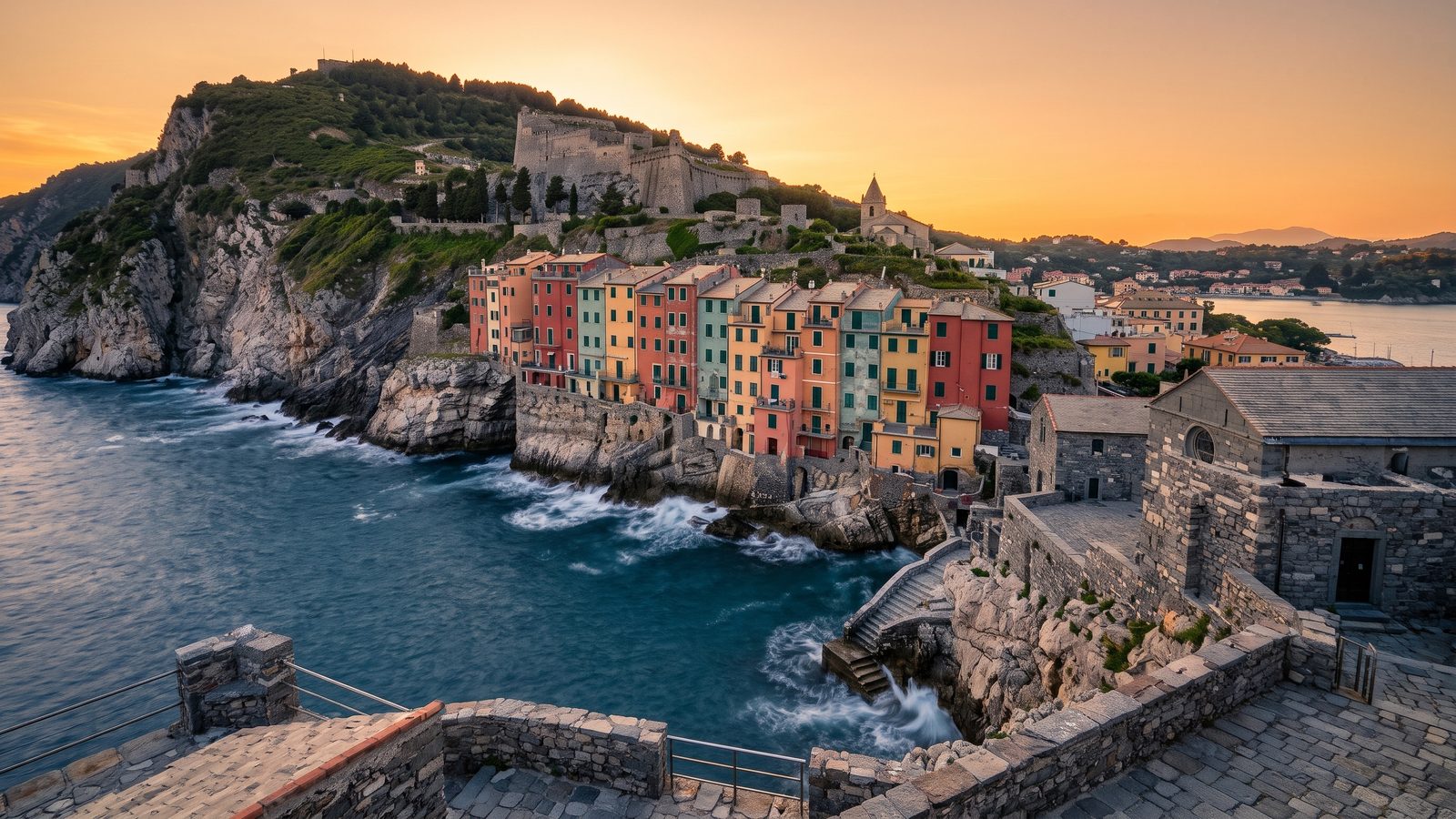
Welcome to Porto Venere, a dramatic UNESCO World Heritage site where ancient history, maritime legends, and vibrant Ligurian landscapes meet. As you walk along the sea, you uncover a strategic port rooted in Roman antiquity that later grew into a formidable outpost for the Republic of Genoa. High above the cliffs, the iconic Church of San Pietro and towering defensive structures showcase centuries of coastal resilience.
Wander through narrow medieval alleyways, admire colourful pastel case-torri built into the rock, and look out toward rugged islands. This audio tour invites you to experience Porto Venere at your own pace, soaking in the salt air, natural grottos, and deep maritime history that shaped this breathtaking sanctuary.
Listen to a sample
The opening of this tour, exactly as AllTours narrates it on site.
What you'll hear on this tour
Stop 1. The Guarded Heights of Doria Castle
You stand before Doria Castle, a formidable fortress perched dramatically above the village. As you trace its massive 12th-century stone walls, expanded by the Republic of Genoa, you uncover layers of military architecture designed for maritime defense. Notice the thick bastions and narrow arrow slits where sentinels once kept careful watch over potential invaders. This stronghold protected crucial sea lanes for centuries against rival powers like Pisa. Feel the ancient vigilance preserved in these quiet stones as you gaze across the open Ligurian waters. Today, the enduring stronghold stands as a powerful testament to medieval ingenuity, maritime dominance, and Porto Venere's strategic role in regional history.
Stop 2. Colorful Palazzata and Narrow Carrugi
You step directly into the heart of the village, surrounded by tall, narrow houses painted in bright Ligurian pastels. These striking buildings aren't merely decorative; together they form a defensive palazzata a mare that guarded the harbor against seaward attacks for centuries. As you wander deeper through the narrow alleyways known as carrugi, you feel the enduring rhythm of medieval coastal life. Each structure, built directly into the steep seaside rock, reflects the resilience of an ancient fishing community. The sea breeze follows you as you navigate these shaded stone passages, uncovering stories of local seafaring heritage embedded in every foundation.
Stop 3. Rugged Limestone Cliffs and Sheltered Grottos
You gaze along the dramatic coastline, where steep limestone cliffs plunge into the sapphire Ligurian Sea. Millennia of relentless wave action have carved intricate sea caves and hidden grottos into these sheer rock faces. As you take in the view, you realize these natural sanctuaries once sheltered ancient mariners, traders, and daring smugglers navigating unpredictable coastal waters. This formidable natural barrier does far more than create a picturesque landscape; it stands as a living testament to sheer geological power. Feel the sea spray on your face as you contemplate how these sculpted cliffs have acted as silent guardians for centuries.
Stop 4. Untamed Islands of the Regional Park
You look out beyond the harbor toward the three islands of Palmaria, Tino, and Tinetto, an essential part of this UNESCO World Heritage sanctuary. Their wild, rugged shorelines shelter rare colonies of seabirds, while crystalline waters beneath support vibrant marine life within the protected regional natural park. As you explore the coastal view, you notice unique geological formations sculpted by thousands of years of crashing waves. Fragrant Mediterranean maquis clings tenaciously to every stone crevice along the slopes. This protected ecosystem offers a rare glimpse into the untamed natural beauty that flourishes where rocky cliffs meet the rich Ligurian marine sanctuary.
Stop 5. From Roman Port to Genoese Stronghold
You trace Porto Venere's long lineage back to the ancient Roman outpost of Portus Veneris, originally dedicated to the goddess Venus. Over the centuries, Byzantine authority gave way to Lombard rule, until the Republic of Genoa acquired the strategic site in the 12th century. This critical acquisition transformed the quiet port into a vital defensive fortress against rival Pisa. As you walk among ancient stonework, you feel how centuries of naval ambition reshaped this rocky promontory into an unyielding stronghold. The layers of ancient governance and military strategy reveal why controlling this coastal gateway was paramount for dominant maritime powers.
Stop 6. Sapphire Depths and Seafaring Legends
You pause at the water's edge, taking in the deep sapphire hues of the Ligurian Sea. Beneath these waves lie ancient trade routes and thriving meadows of Posidonia seagrass, thriving in protected waters. Feel the invigorating salt spray, a constant presence for generations of local fishermen who rely on these generous yet treacherous waters. This open ocean holds countless maritime tales, including Lord Byron's legendary swims across the gulf. As you watch the tide crash against the rocks, you appreciate how this living aquatic canvas has shaped human adventure, local livelihood, and romantic poetry across centuries of Mediterranean seafaring history.
Planning your visit
- Best time to go
- Late spring to early autumn, preferably in the morning or late afternoon to catch gentle coastal sunlight.
- Approximate duration
- About 1.5 to 2 hours
- Where to start
- Start at the harborfront near the main entrance to the village palazzata.
Access and conditions change seasonally — check the official site before you go.
Frequently asked questions
Is Porto Venere worth visiting?
Yes, Porto Venere is a spectacular UNESCO World Heritage site featuring vibrant tower houses, medieval fortresses like Doria Castle, dramatic sea caves, and stunning coastal views without the heavy crowd density of the nearby Cinque Terre.
How long do you need at Porto Venere?
A visit of 2 to 4 hours is ideal to explore the village streets, visit Doria Castle, walk to San Pietro Church, and take in the seaside views, though a full day allows for boat trips around the adjacent islands.
What is the history behind Porto Venere?
Originally the Roman port Portus Veneris, named after Venus, Porto Venere grew into a strategic medieval stronghold when Genoa acquired it in the 12th century to defend against Pisa, constructing its iconic castle and fortified tower houses.
Keep exploring
Header image is an AI-generated illustration of Porto Venere. AllTours.ai is an AI audio tour guide — point your camera at any landmark and hear its story.