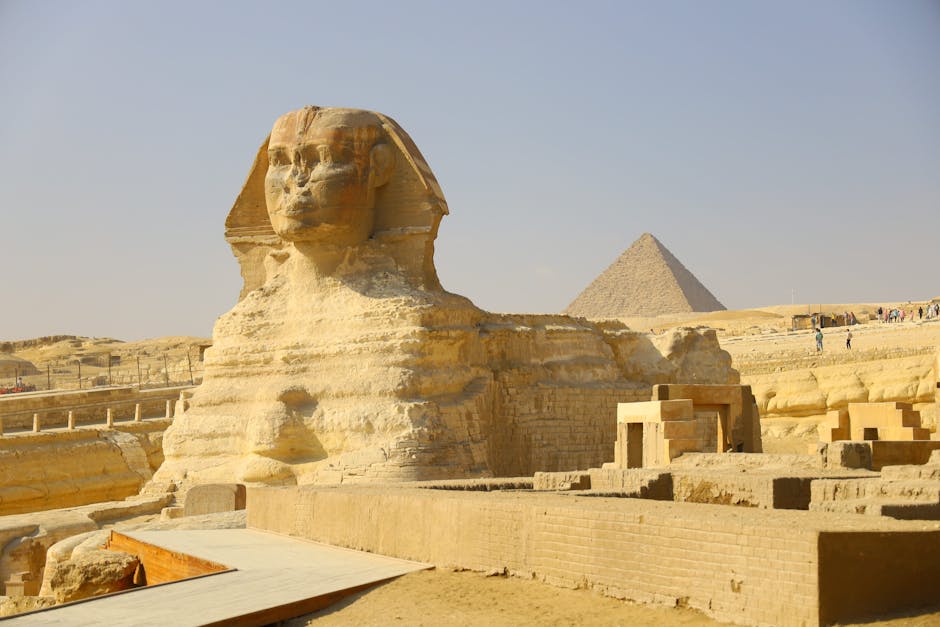
Welcome to the heart of ancient Egypt, where colossal stone giants rise from the desert sands. The Pyramids of Giza have stood for over 4,500 years, silent witnesses to millennia of history, pharaohs, and untold stories. With AllTours.ai, you're not just observing these monumental structures; you're stepping back in time, guided by the very stones themselves.
This self-guided audio tour invites you to explore the Giza Necropolis at your own pace. From the staggering scale of the Great Pyramid to the enigmatic gaze of the Sphinx, prepare to discover the engineering marvels, fascinating legends, and daily lives of the ancient Egyptians who built these awe-inspiring wonders.
What you'll hear on this tour
Stop 1. The Great Pyramid of Khufu
Imagine this pyramid, not as sandy brown, but gleaming white, encased in polished limestone that reflected the Egyptian sun like a colossal mirror. This was the original vision for Khufu's eternal tomb, a beacon visible for miles. Standing as the only ancient world wonder still intact, its sheer scale is mind-boggling. It took millions of precisely cut stones, each weighing tons, to construct this marvel without modern machinery. Delve into the theories of its construction, the purpose of its intricate internal chambers, and the incredible workforce that brought this monumental vision to life over 4,500 years ago.
Stop 2. The Great Sphinx of Giza
With the body of a lion and the head of a human, the Great Sphinx has guarded the Giza plateau for millennia, its enigmatic gaze fixed eastward. Carved from a single massive outcrop of limestone, this colossal statue is shrouded in mystery. Who does the face represent? Most scholars believe it's Pharaoh Khafre, builder of the second pyramid, but debate continues. Legend says it holds ancient secrets, and its weathered features tell tales of time, desert winds, and the reverence it commanded. Learn about its restoration efforts and the fascinating role it played in ancient Egyptian beliefs.
Stop 3. Pyramid of Khafre and its Apex
Often mistaken for the tallest due to its higher elevation, the Pyramid of Khafre is easily recognized by the smooth casing stones still visible near its apex. This is a rare glimpse into how all the pyramids originally appeared, shining brightly in the sun. Khafre, son of Khufu, aimed to rival his father's monumental achievement. Explore the mortuary temple ruins at its base, where rituals were performed for the deceased pharaoh, and consider the sophisticated planning involved in aligning these massive structures with astronomical precision, connecting the pharaohs to the cosmos.
Stop 4. Pyramid of Menkaure and the Queens' Pyramids
Though smaller than its neighbors, the Pyramid of Menkaure is equally significant. It was originally partially clad in granite, a much harder stone to work with than limestone, indicating a shift in construction techniques or resources. Surrounding Menkaure's pyramid are three smaller satellite pyramids, often referred to as the Queens' Pyramids. These were likely built for Menkaure's principal wife, Khamerernebty II, and possibly other royal family members. Discover the distinct architectural choices of this pyramid and the insights it offers into the evolving funerary practices of the Old Kingdom pharaohs.
Stop 5. Panoramic Viewpoint
From this elevated vantage point, the true scale and majesty of the Giza Necropolis truly come into focus. Witness all three great pyramids—Khufu, Khafre, and Menkaure—lined up across the desert landscape, framed by the modern city of Cairo in the distance. This perspective allows you to appreciate the deliberate alignment and the sheer human effort involved in creating such an enduring legacy. Imagine the vibrant city that once thrived around these tombs, a bustling hub of artisans, priests, and workers dedicated to securing the pharaohs' immortality. Capture the iconic postcard shot and reflect on millennia of history.
Planning your visit
- Best time to go
- Early morning or late afternoon during the cooler months (October to April) to avoid the intense desert heat and larger crowds.
- Approximate duration
- about 2-3 hours, depending on your pace and how much time you spend exploring each site.
- Where to start
- Begin your tour at the main entrance gate to the Giza Necropolis, clearly marked for visitors, near the Great Pyramid of Khufu.
Access and conditions change seasonally — check the official site before you go.
Frequently asked questions
Can I go inside the pyramids?
Yes, typically one or more of the pyramids are open for interior visits, though specific pyramids may rotate for conservation. There is usually an additional ticket required for entry, which you would purchase on-site. The experience inside is often about the narrow passages and chambers, rather than grand decorated rooms.
Is it possible to ride a camel or horse at Giza?
Yes, camel and horse rides are a popular way to experience the Giza plateau, offering unique photo opportunities and a different perspective of the pyramids. You'll find vendors offering rides around the site. Always agree on a price before starting your ride to ensure a clear understanding.
What should I wear when visiting the pyramids?
Wear comfortable walking shoes, as there is a lot of walking over uneven terrain. Lightweight, breathable clothing is recommended, especially for sun protection. While there's no strict dress code for modesty at the pyramids themselves, it's generally respectful to dress conservatively in Egypt, covering shoulders and knees. Don't forget a hat, sunglasses, and plenty of water!
Keep exploring
Photography via Pexels. AllTours.ai is an AI audio tour guide — point your camera at any landmark and hear its story.