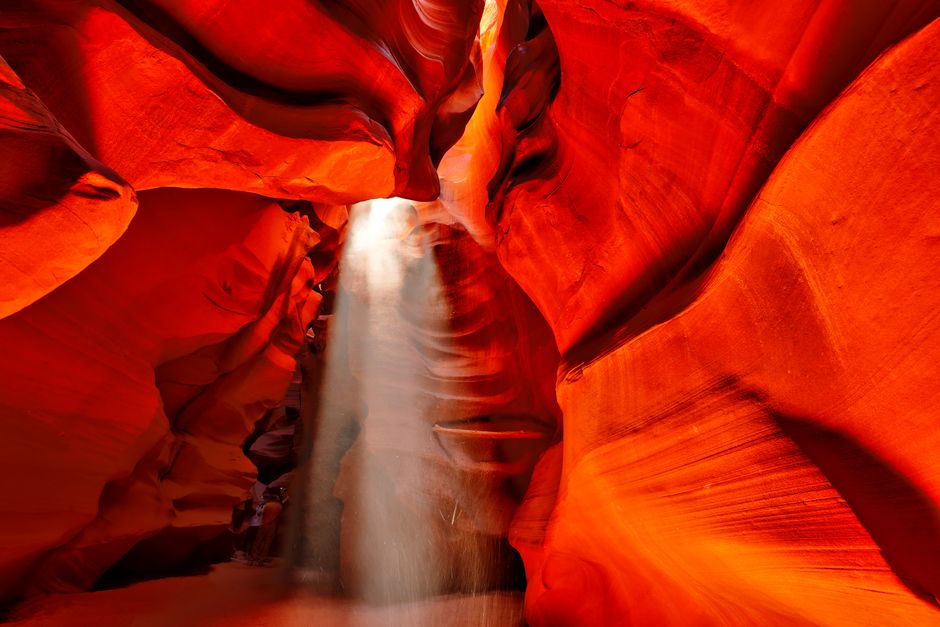
Step into the otherworldly beauty of Antelope Canyon, a natural masterpiece carved by water and time in the heart of the American Southwest. These iconic slot canyons, with their smooth, flowing sandstone walls, offer a breathtaking interplay of light and shadow, creating an unforgettable visual symphony that draws visitors from across the globe.
With AllTours.ai, your camera becomes your personal guide, narrating the fascinating geological history and cultural significance of Antelope Canyon as you explore. Uncover the secrets behind its mesmerizing formations, learn about the powerful forces that shaped it, and discover details often missed by the casual observer, all at your own pace.
Watch the 20-second tour
What you'll hear on this tour
Stop 1. Canyon Entrance Narrows
As you step into the narrow opening of Antelope Canyon, feel the immediate drop in temperature and the shift in light. This threshold marks your entry into a world sculpted by millennia of flash floods. The walls, initially rugged, begin to smooth and curve, hinting at the fluid artistry within. Imagine the immense power of water and sand funneling through this rock, slowly eroding and polishing the Navajo Sandstone into the mesmerizing forms you see today, a testament to nature's patient, persistent craft.
Stop 2. Shafts of Light
One of Antelope Canyon's most iconic sights is the ethereal light beams that pierce through the narrow openings above, illuminating the canyon floor. These shafts of light are most prominent during midday hours, especially from late spring to early fall, when the sun is directly overhead. They are created as sunlight filters through tiny gaps, scattering off dust particles in the air and casting a dramatic, almost spiritual glow. This ephemeral phenomenon transforms the canyon into a living canvas, constantly changing with the sun's movement.
Stop 3. The Flowing Walls
Look closely at the incredibly smooth, wave-like patterns on the canyon walls. These aren't wind-carved but are the result of powerful, sudden flash floods. Over countless millennia, water laden with abrasive sand has surged through these confined spaces, acting like liquid sandpaper to sculpt the Navajo Sandstone into these impossibly fluid shapes. Each curve and ripple tells a story of immense hydraulic pressure and the slow, persistent power of erosion, creating a geological masterpiece that appears to defy solid form.
Stop 4. Nature's Art Gallery
Every turn in Antelope Canyon reveals a new perspective, a fresh canvas of natural artistry. The walls showcase a spectrum of warm hues, from deep oranges and reds to soft purples and yellows, shifting with the angle of the sun. Notice the intricate patterns and textures, resembling everything from flowing fabric to ancient spirits or animal faces. This ever-changing gallery invites you to pause and appreciate the immense creativity of nature, where rock transforms into an organic sculpture garden, each form unique and captivating.
Stop 5. Echoes of Time
As you approach the canyon's exit, take a moment to reflect on the ancient forces that shaped this incredible place. The Navajo people, who consider this land sacred, know it as 'Tsé Bighánílíní,' meaning 'the place where water runs through rocks.' This canyon is not just a geological wonder but a site of deep cultural significance, reminding us of the enduring power of nature and the stories embedded in the land. Carry with you the serene beauty and the profound sense of time that Antelope Canyon imparts.
Planning your visit
- Best time to go
- Late spring to early fall, ideally around midday for the most dramatic light beams. Avoid peak summer heat if sensitive, but the canyon's interior remains cooler.
- Approximate duration
- About 60-90 minutes, depending on your pace and photo stops.
- Where to start
- The official entrance point to either Upper or Lower Antelope Canyon. You will typically meet your local guide at a designated staging area near Page, Arizona, before being transported to the canyon mouth.
Access and conditions change seasonally — check the official site before you go.
Frequently asked questions
Is a guide required to visit Antelope Canyon?
Yes, visiting Antelope Canyon is only permitted with an authorized Navajo guide. This policy helps preserve the delicate environment and ensures visitor safety, especially concerning flash flood risks.
What's the difference between Upper and Lower Antelope Canyon?
Upper Antelope Canyon is wider at the top and famous for direct light beams, while Lower Antelope Canyon is narrower, deeper, and requires climbing ladders. Both offer unique and stunning photographic opportunities.
What should I wear or bring for a visit?
Wear comfortable walking shoes with good grip, as surfaces can be uneven and sandy. Bring water, sun protection for outside the canyon, and your camera to capture the incredible light.
Keep exploring
Photography via Pexels. AllTours.ai is an AI audio tour guide — point your camera at any landmark and hear its story.