Welcome to Yosemite National Park, a land of unparalleled natural beauty where towering granite monoliths meet serene meadows and thundering waterfalls. This self-guided audio tour, powered by AllTours.ai, transforms your camera into a personal guide, narrating the stories behind the awe-inspiring landscapes as you point it at key landmarks. Prepare to be captivated by the geological wonders and rich history that define this iconic California wilderness.
From the sheer faces of El Capitan and Half Dome to the tranquil flow of the Merced River, our tour unveils the secrets of Yosemite Valley. You'll learn how massive glaciers sculpted this magnificent landscape, hear tales of early explorers and preservationists, and gain a deeper appreciation for the forces that continue to shape this natural masterpiece. Lace up your boots and let's embark on an unforgettable journey through one of America's most cherished national parks.
What you'll hear on this tour
Stop 1. El Capitan
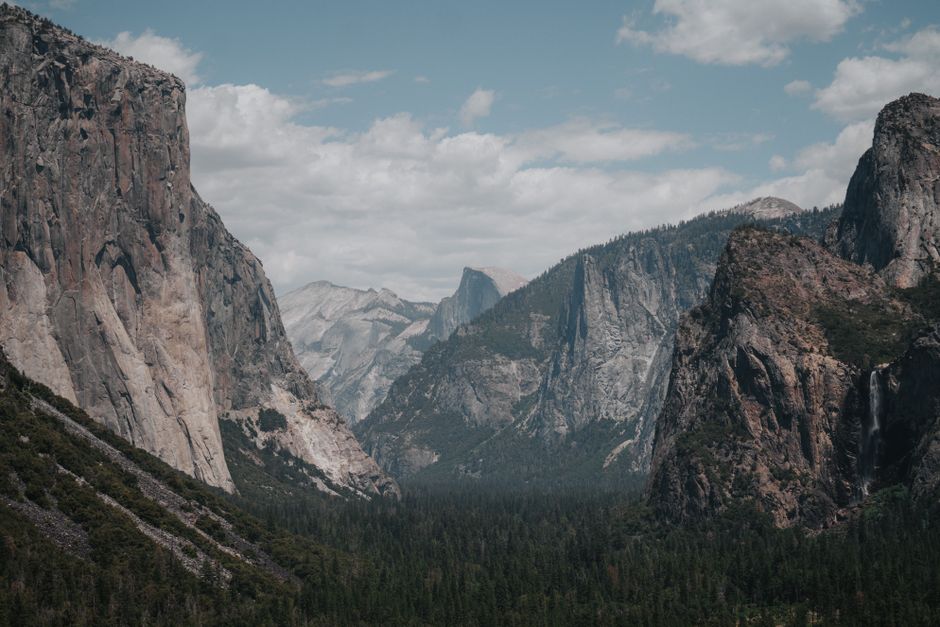
Standing nearly 3,000 feet from base to summit, El Capitan is one of the world's most famous rock formations and a mecca for big-wall climbers. Its sheer granite face, sculpted by ancient glaciers, challenges even the most experienced alpinists. Point your camera, and AllTours.ai will reveal stories of legendary ascents, like the first free climb of The Nose route in 1993, a feat that pushed the boundaries of human endurance. Beyond its climbing fame, "El Cap" (as it's affectionately known) is a powerful symbol of Yosemite's raw, untamed wilderness and geological grandeur, dominating the valley floor.
Stop 2. Half Dome
Half Dome, with its unmistakable rounded top and sheer vertical face, is perhaps Yosemite's most iconic landmark. Geologists believe this granite monolith was once a full dome, with its western half sheared off by glacial action over millions of years, leaving behind its dramatic profile. Each summer, adventurous hikers brave the famous Half Dome cables route to reach its summit, a challenging climb rewarded with breathtaking panoramic views. Legend says the Ahwahneechee people, Yosemite's original inhabitants, called it "Tis-sa-ack," the name of a weeping maiden whose tears formed Mirror Lake.
Stop 3. Yosemite Falls
Yosemite Falls is North America's tallest waterfall, cascading a staggering 2,425 feet from its upper fall to its base. This magnificent spectacle is actually composed of three sections: the Upper Fall, the Middle Cascades, and the Lower Fall. Its thunderous roar and misty spray are most powerful in late spring and early summer, fueled by melting snow from the Sierra Nevada. Point your camera to learn about the unique ecology surrounding the falls and how its seasonal flow has inspired countless artists and photographers, embodying the dynamic beauty of Yosemite.
Stop 4. Mariposa Grove
Step into the Mariposa Grove of Giant Sequoias, a living cathedral of ancient giants. These colossal trees, some over 2,000 years old, are among the largest and oldest living organisms on Earth. Witness the Grizzly Giant, one of the most massive trees in the grove, and marvel at the California Tunnel Tree, a sequoia carved in the 19th century that you can walk through. AllTours.ai will share stories of their incredible resilience to fire and their vital role in the ecosystem, offering a profound connection to nature's enduring power and majesty.
Stop 5. Tunnel View
Tunnel View offers one of the most famous and breathtaking panoramas in Yosemite National Park. From this vantage point, you're treated to an iconic sweep of Yosemite Valley, perfectly framing El Capitan, Bridalveil Fall, and Half Dome in a single, magnificent vista. It’s where countless first-time visitors gasp in awe, instantly understanding the park's grandeur. Point your camera here to hear about the pioneering photographers and artists, like Ansel Adams and Carleton Watkins, who immortalized this very scene, shaping public perception and ultimately aiding in the park's preservation.
Planning your visit
- Best time to go
- Spring or early summer for peak waterfalls and wildflowers, or fall for vibrant foliage and fewer crowds. Weekdays are generally less busy than weekends.
- Approximate duration
- about 3-4 hours, depending on how much time you spend at each stop and your pace.
- Where to start
- Begin at the Valley Visitor Center in Yosemite Valley. It's clearly marked on park maps and has ample parking and information to orient you.
Access and conditions change seasonally — check the official site before you go.
Frequently asked questions
Is Yosemite National Park accessible year-round?
Yosemite Valley is generally accessible year-round, though some roads, like Tioga Road and Glacier Point Road, close seasonally due due to snow, typically from November through late spring or early summer. Always check the official Yosemite National Park website for current road conditions and closures before your visit.
Do I need reservations to enter Yosemite?
While entrance to Yosemite National Park generally does not require reservations, specific peak seasons or popular areas might implement reservation systems to manage visitor volume. It's always best to check the official National Park Service website for Yosemite for the most up-to-date entry requirements, especially during holidays or summer months.
What wildlife might I see in Yosemite?
Yosemite is home to diverse wildlife. You might spot black bears, mule deer, coyotes, and various bird species. Remember to keep a safe distance, never feed animals, and store food properly to protect both yourself and the park's fauna.
Keep exploring
Photography via Pexels. AllTours.ai is an AI audio tour guide — point your camera at any landmark and hear its story.