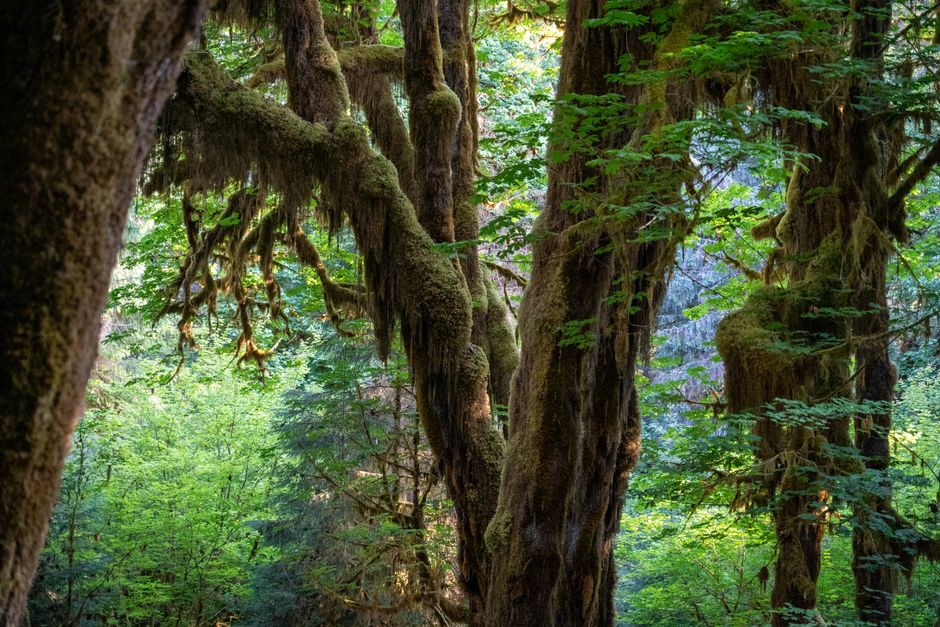
Welcome to the mystical rainforests of Olympic National Park, a place where time seems to slow amidst towering ancient trees and every surface shimmers with an emerald glow. This rare temperate rainforest, receiving over 140 inches of rain annually, creates an incredibly vibrant ecosystem unlike almost anywhere else on Earth. Prepare to be enchanted by its profound beauty and the silent stories held within its lush canopy.
With AllTours.ai, your camera becomes a window into this timeless world. As you wander through these verdant landscapes, simply point your device at landmarks and features to unlock fascinating narratives. Discover the secrets of nurse logs giving birth to new life, learn about the unique flora and fauna, and delve into the geological and ecological wonders that define Olympic National Park's rainforests.
Watch the 20-second tour
What you'll hear on this tour
Stop 1. Hall of Mosses (Hoh Rainforest)
Enter the iconic Hall of Mosses, a truly enchanting loop trail where bigleaf maples and Sitka spruces are draped in thick, velvety layers of mosses and ferns. This dense, hanging vegetation creates an otherworldly atmosphere, making you feel as if you've stepped into a fairytale. Learn how these epiphytes thrive in the constant moisture, drawing nutrients directly from the air and rain, contributing to the rainforest's incredible biodiversity.
Stop 2. Spruce Nature Trail (Hoh Rainforest)
The Spruce Nature Trail offers a different perspective on the Hoh Rainforest's vibrant life. Here, you'll witness the remarkable phenomenon of "nurse logs"—fallen giants that become cradles for new generations of trees. As these massive logs slowly decompose, they provide a nutrient-rich foundation for seedlings, creating distinct rows of trees that stand as living monuments to the cycle of life and death in this ancient forest.
Stop 3. Valley of the Giants (Quinault Rainforest)
Journey into the Valley of the Giants within the Quinault Rainforest, home to some of the largest trees in the world. Here, you can stand in awe beneath colossal Sitka spruces and Western red cedars that have stood for centuries, some reaching over 300 feet tall. Discover the conditions that allow these arboreal titans to flourish, and hear tales of the early explorers and loggers who first encountered these magnificent natural wonders.
Stop 4. Lake Quinault Lodge Area (Quinault Rainforest)
Explore the historic Lake Quinault Lodge area, where human history intertwines with the ancient forest. Built in 1926, this grand lodge offers a glimpse into the region's past as a destination for relaxation and exploration. Learn about the indigenous Quinault people who have called this area home for millennia, and how their traditions are deeply connected to the surrounding rainforest and the pristine waters of Lake Quinault.
Stop 5. Queets River Trail (Queets Rainforest)
Venture to the more remote Queets River Trail, offering a raw, untouched rainforest experience. This area is one of the least visited and most pristine parts of Olympic National Park's rainforest. Here, the Queets River carves its way through the ancient forest, supporting a rich salmon run that, in turn, fuels the entire ecosystem. Discover the delicate balance of life along the riverbanks and the profound silence of a truly wild temperate rainforest.
Planning your visit
- Best time to go
- Spring and Fall offer fewer crowds and beautiful lushness, though summer provides the warmest, driest weather. Be prepared for rain any time of year.
- Approximate duration
- About 2-3 hours, depending on how many trails and viewpoints you choose to explore within the various rainforest sections.
- Where to start
- We recommend starting your exploration at the Hoh Rainforest Visitor Center, where you'll find maps and initial guidance for trails like the Hall of Mosses.
Access and conditions change seasonally — check the official site before you go.
Frequently asked questions
What makes Olympic National Park's rainforest unique compared to other forests?
Olympic National Park is home to one of the world's finest examples of a temperate rainforest, not tropical. Its unique combination of high annual rainfall (over 140 inches) and moderate temperatures creates an incredibly dense, lush environment filled with towering trees, thick mosses, and an abundance of epiphytes. This ecosystem supports a distinct array of plant and animal life rarely seen elsewhere.
What kind of wildlife can I expect to see in the rainforest?
While wildlife can be elusive, the rainforest is home to many fascinating creatures. Keep an eye out for Roosevelt elk, especially in the Hoh and Quinault valleys, and various bird species, amphibians, and smaller mammals. Look closely at the forest floor and tree bark for insects and slugs, which play vital roles in the ecosystem.
Do I need special gear to visit the rainforest?
Given the high rainfall, waterproof rain gear (jacket and pants) and waterproof hiking boots are highly recommended, regardless of the season. Layers are also advisable as temperatures can vary. Bring water, snacks, and a camera to capture the stunning scenery. Always check the park's official website for current conditions and any specific recommendations before your visit.
Keep exploring
Photography via Pexels. AllTours.ai is an AI audio tour guide — point your camera at any landmark and hear its story.