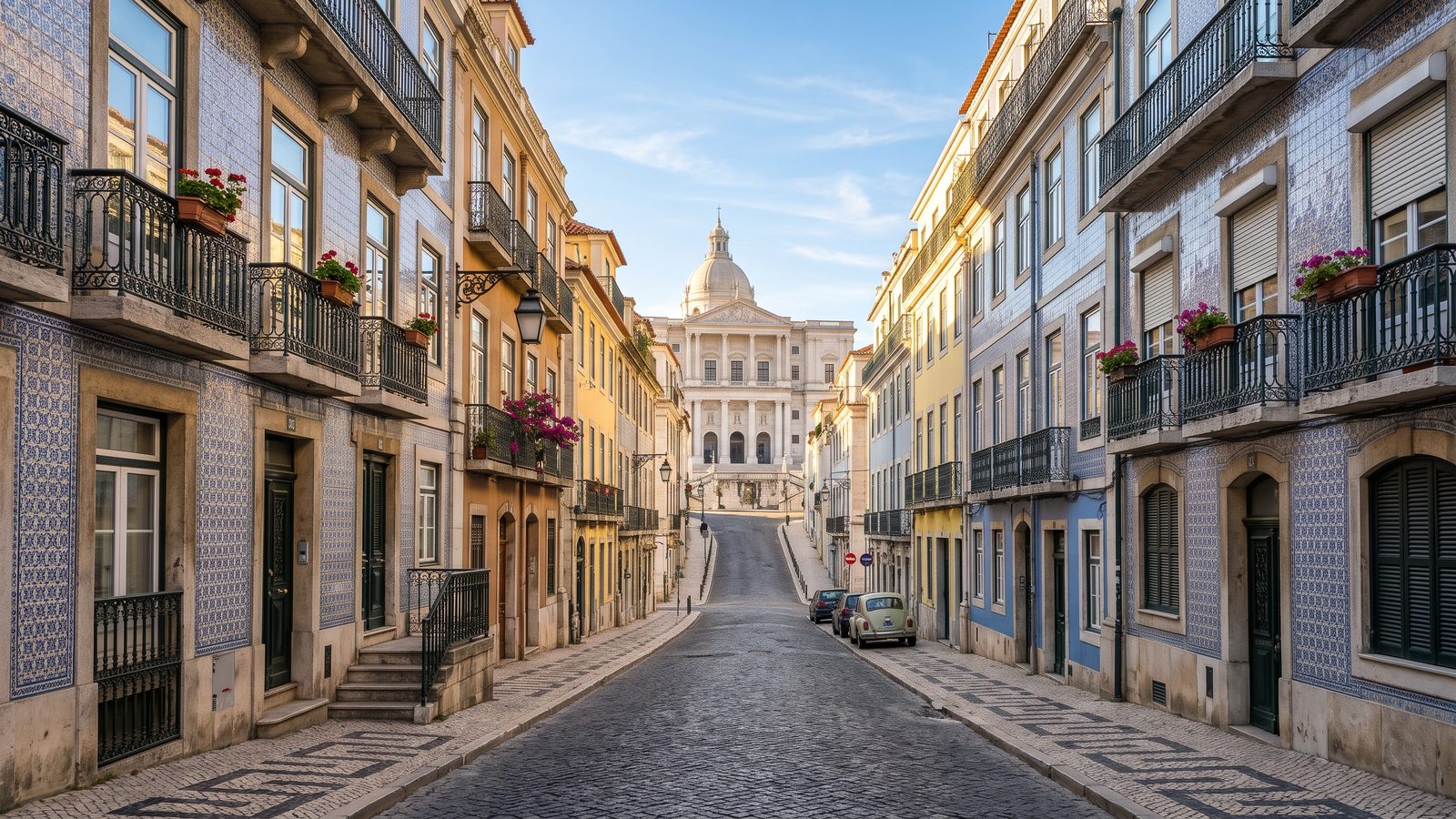
Step onto Rua de São Bento, one of Lisbon's most fascinating streets where centuries of history blend with vibrant local culture. Stretching toward Portugal's Assembly of the Republic, this historic corridor showcases elegant 18th and 19th-century architecture, classic azulejo tilework, and famous antique shops. As you wander past residential facades and traditional tascas, you experience an authentic slice of Lisbon where historic legacy meets bustling everyday neighborhood life.
On this self-guided audio tour, you walk in the footsteps of monks, parliamentarians, and local artisans. From the street's monastic origins to its status as a haven for antique collectors and food lovers, every block reveals stories of resilience, craftsmanship, and Portuguese heritage waiting to be discovered.
Listen to a sample
The opening of this tour, exactly as AllTours narrates it on site.
What you'll hear on this tour
Stop 1. From Monastic Haven to Political Powerhouse
You stand on historic ground established in the late 16th century when the Mosteiro de São Bento anchored this elevated district. As you look around, you realize this area was largely spared by the devastating 1755 earthquake, preserving much of its early layout. During the 19th century, you witness the grand monastery undergo a profound transformation into the Cortes Gerais, which serves as Portugal's parliament today. As you walk past these stately structures, you trace the nation's pivotal shift from religious authority to modern democratic governance. Every stone beneath your feet reflects this powerful evolution from monastic silence to political debate.
Stop 2. Unearthing Treasures in Traditional Antiquários
As you stroll along Rua de São Bento, the street reveals its retail heart as a world-renowned haven for antiquários. You discover exquisite 18th-century furniture, rare hand-painted azulejos, and vintage curiosities displayed in atmospheric shop windows. Each curated object whispers forgotten tales of Lisbon's noble past. You are not simply shopping; you are unearthing living history, often directly from family owners who have maintained these unique establishments across multiple generations. As you chat with local dealers, you discover salvaged tiles and intricate heirlooms that make every single find deeply personal and rich with genuine Portuguese story.
Stop 3. Earthquake Resilience and Elegant Ironwork
Look closely at the buildings lining the street to witness Lisbon's legendary architectural resilience. You notice uniform 18th and 19th-century facades, adorned with colorful azulejos that subtly conceal Pombaline principles of earthquake-resistant design. Inside these structures lies the flexible gaiola timber frame developed after the 1755 disaster. As you glance upward, you admire the delicate wrought-iron balconies that showcase exceptional 19th-century metalwork craftsmanship. Each facade you pass represents a harmonious blend of practical safety, post-earthquake urban renewal, and decorative flourish that defines the distinct visual character of this historic Lisbon thoroughfare.
Stop 4. Preserving Artistry Through Generations of Heritage
You immerse yourself in a vibrant culture dedicated to preserving curated Portuguese history along Rua de São Bento. Each antique store along your path tells a distinct story, reflecting the nation's deep appreciation for master craftsmanship and heritage. As you peer into glass cases and workshop corners, you discover everything from antique ceramic tiles rescued from forgotten palaces to delicate filigree gold jewelry. This street offers far more than commercial trade; it serves as an open-air museum where locals celebrate and safeguard centuries of Portuguese artistic traditions for future generations to treasure.
Stop 5. Traditional Tascas and Authentic Regional Flavors
As evening approaches, you are drawn into the warm, welcoming glow of traditional tascas tucked along Rua de São Bento. The appetizing aromas of grilled sardines and slow-cooked cozido à portuguesa float through unassuming doorways. You step inside these humble eateries where generations of culinary tradition unfold before you. Here, you sample authentic local dishes like rich duck rice—arroz de pato—or tender polvo à lagareiro roasted with garlic and olive oil. Paired with a crisp glass of local vinho verde, these hearty flavors offer you an unmistakable taste of genuine Portuguese hospitality.
Stop 6. Rhythm of Calçada and Changing Perspectives
As you walk along this historic artery, you feel the distinctive rhythm of your steps against the traditional calçada portuguesa, where every hand-laid cobblestone demonstrates Lisbon's unique paving artistry. The gentle incline of Rua de São Bento subtly alters your perspective with every stride, revealing fresh architectural details, ornate balcony railings, and inviting shop displays. Your gaze drifts toward glowing antique windows and quiet doorways, each providing a passing glimpse into the street's enduring soul. Walking here connects your path to generations of footsteps that have traversed this vibrant neighborhood throughout history.
Planning your visit
- Best time to go
- Late morning or early afternoon during daylight hours, when antique shops are open and street light illuminates the facades.
- Approximate duration
- About 1 to 1.5 hours
- Where to start
- Near the Assembly of the Republic (Palácio de São Bento) at the southern end of Rua de São Bento.
Access and conditions change seasonally — check the official site before you go.
Frequently asked questions
Is Rua de São Bento worth visiting?
Yes, Rua de São Bento is well worth visiting for its unique combination of political history, classic azulejo tilework, famous antique shops, and traditional Portuguese eateries.
How long do you need at Rua de São Bento?
Plan for about 1 to 2 hours to walk the street, explore the local antique shops, admire the Pombaline architecture, and stop at a traditional tasca.
What is the history of Rua de São Bento?
Established in the late 16th century around the Benedictine monastery of Mosteiro de São Bento, the street survived the 1755 earthquake and transformed in the 19th century when the monastery became Portugal's parliament building.
Keep exploring
Header image is an AI-generated illustration of Rua de São Bento. AllTours.ai is an AI audio tour guide — point your camera at any landmark and hear its story.