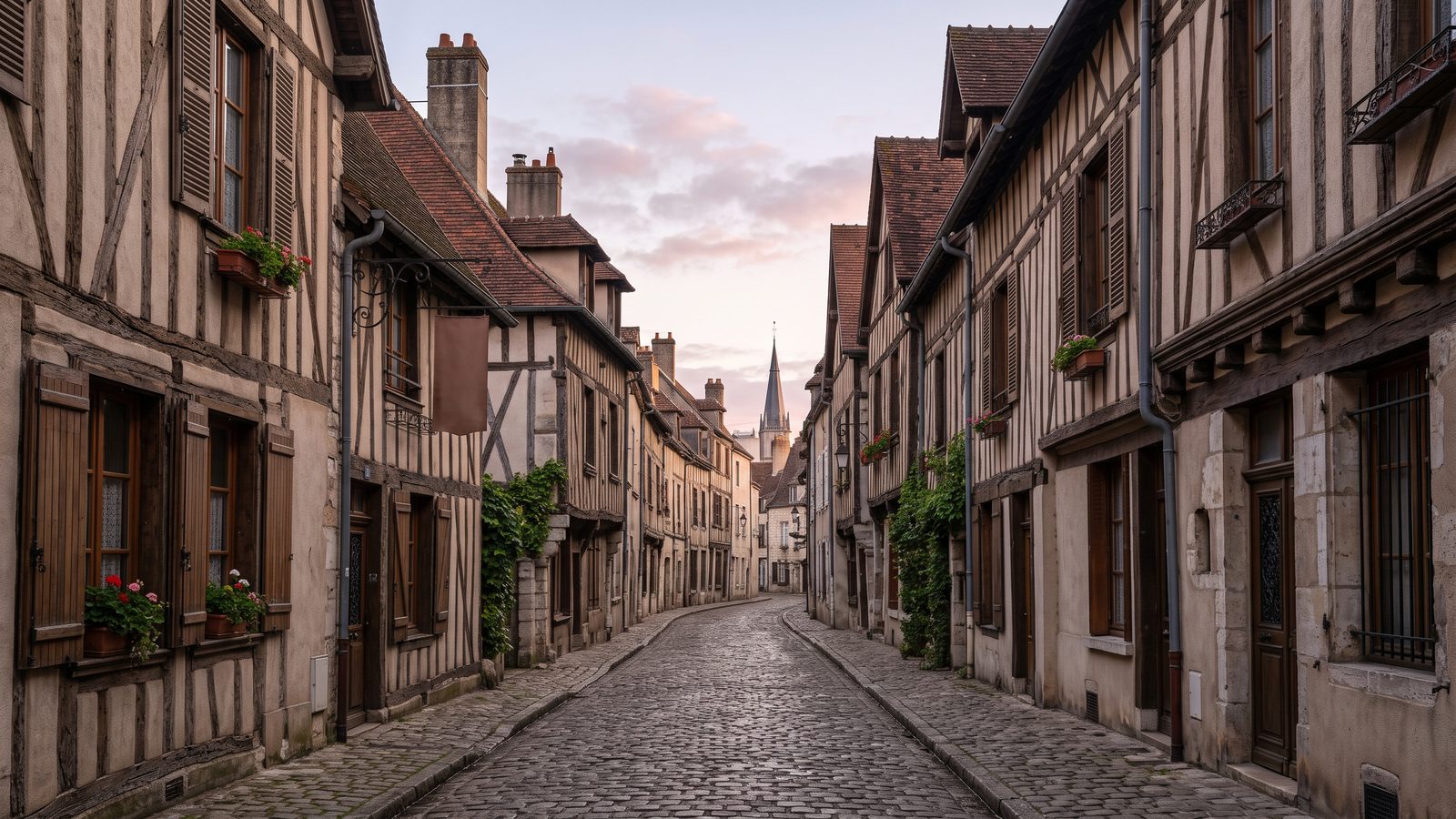
Step onto the ancient cobblestones of Rue des Tanneurs, the historic heart of medieval Beaune. As you stroll down this atmospheric lane, you follow in the footsteps of 13th-century tanners whose craftsmanship shaped the town's early economy. Lined with stunning half-timbered houses, stone foundations, and cozy local bistros, this charming street offers a quiet, sensory escape into Burgundy’s rich artisanal past, just steps away from Beaune’s world-famous wine culture.
This self-guided audio tour guides you through hidden architectural details, historic trade secrets, and local culinary traditions at your own pace. Immersed in centuries of authentic Burgundian history, you experience the sights, sounds, and flavors that make Rue des Tanneurs one of Beaune's most enchanting medieval lanes.
Listen to a sample
The opening of this tour, exactly as AllTours narrates it on site.
What you'll hear on this tour
Stop 1. The Pungent Legacy of Medieval Tanners
You stand at the historic center of medieval Beaune’s thriving economy. Beneath your feet lies a lane defined by the pungent, vital trade of tanning, which has flourished here since the 13th century. As you look around, you trace how tanners strategically settled along the nearby Bouzaise River to utilize its flowing waters for leather production. The powerful tanners' guild heavily shaped the street's economic prosperity and distinct architectural rhythm, leaving behind sturdy workshops and specialized drying lofts. You feel the deep roots of a hard-working community whose essential medieval craft laid the financial foundation for Beaune long before its famous vineyards took center stage.
Stop 2. Half-Timbered Facades and Cantilevered Roofs
You look up to admire the distinctive half-timbered facades lining Rue des Tanneurs. Notice the robust stone foundations at ground level, specially engineered to withstand the damp, harsh tanning process. As you trace the wooden beams upward, you see cantilevered upper floors, a clever medieval design engineered to maximize living space above the narrow public thoroughfare. Each steeply pitched roof features traditional Burgundian tiles that showcase centuries of regional craftsmanship. As you inspect the subtle variations in timber framing, you reveal the unique construction techniques of individual builders and witness how this historic lane evolved through the centuries.
Stop 3. Hidden Passages and Ancient Workshop Marks
You step deeper into the lane to uncover secrets hidden in plain sight. As your eyes trace subtle variations across the ancient walls, you locate narrow, inviting traboules—secret passages that once seamlessly linked bustling medieval workshops. You follow these narrow passageways to imagine the daily rhythms of medieval artisans moving between courtyard workspaces. Looking closely at the stone and timber, you spot faint marks left by generations of leather workers over hundreds of years. Every timber shift and hidden alleyway reveals how these historic structures evolved over time, offering you an intimate, authentic glimpse into Beaune’s living history.
Stop 4. Burgundian Flavors in Traditional Bouchons
As you continue your stroll down Rue des Tanneurs, rich aromas of classic Boeuf Bourguignon waft invitingly from traditional local bistros. You discover cozy, family-run establishments that still proudly honor time-tested regional recipes. Step inside a charming local bouchon to sample authentic Coq au Vin slow-cooked with rich local Pinot Noir, capturing the true culinary soul of Burgundy. You see locals lingering over plates of garlic-butter escargots and creamy regional cheeses. This street offers you more than just rich history; it invites you to sit down and savor centuries of authentic Burgundian food culture crafted with passion and local pride.
Stop 5. Hand-Hewn Stones Beneath Your Feet
You pause to look down at the ancient limestone cobblestones beneath your shoes. Each hand-hewn block of local Burgundy stone was meticulously laid centuries ago to serve a vital purpose beyond simple passage. You notice how the street gently undulates, expertly designed by medieval craftsmen to ensure proper drainage for the busy tanneries operating alongside the river. As you feel the smooth, worn grooves underfoot, you realize these stones have been polished by countless wooden carts, artisan boots, and centuries of foot traffic. You are walking directly on the durable, hand-carved foundation of Beaune's historic trade heartbeat.
Stop 6. Echoes of a Proud Artisan Guild
You listen closely to the quiet street and feel the enduring echoes of a proud artisan culture. The very name, Rue des Tanneurs, keeps alive the memory of generations who perfected their leatherworking craft along this corridor. You imagine the rhythmic thud of wooden mallets striking hides, a constant sound that once powered Beaune's economic heartbeat. In this tight-knit neighborhood, families passed down specialized trade secrets across centuries, forging a resilient community identity. Beyond Beaune’s world-renowned wine heritage, you experience here the working-class soul and craftsmanship that deeply shaped the cultural fabric of medieval Burgundy.
Planning your visit
- Best time to go
- Morning or late afternoon for calm walking conditions and soft lighting on the historic facades.
- Approximate duration
- about 30 to 45 minutes
- Where to start
- Rue des Tanneurs at the intersection near the Bouzaise River in central Beaune.
Access and conditions change seasonally — check the official site before you go.
Frequently asked questions
Is Rue des Tanneurs worth visiting?
Yes, Rue des Tanneurs is well worth visiting for anyone interested in medieval history, picturesque timbered architecture, and authentic Burgundian charm away from busy tourist hubs.
How long do you need at Rue des Tanneurs?
Plan for 30 to 45 minutes to complete the walking audio tour and explore the street's architecture. Allow extra time if you plan to stop at one of the local bistros for lunch or dinner.
What is the history of Rue des Tanneurs in Beaune?
Rue des Tanneurs developed in the 13th century as the center of medieval Beaune's leather tanning trade. Tanners settled along the Bouzaise River to use its water, forming a powerful guild that shaped the street's distinctive timber-framed buildings and limestone cobblestones.
Keep exploring
Header image is an AI-generated illustration of Rue des Tanneurs. AllTours.ai is an AI audio tour guide — point your camera at any landmark and hear its story.