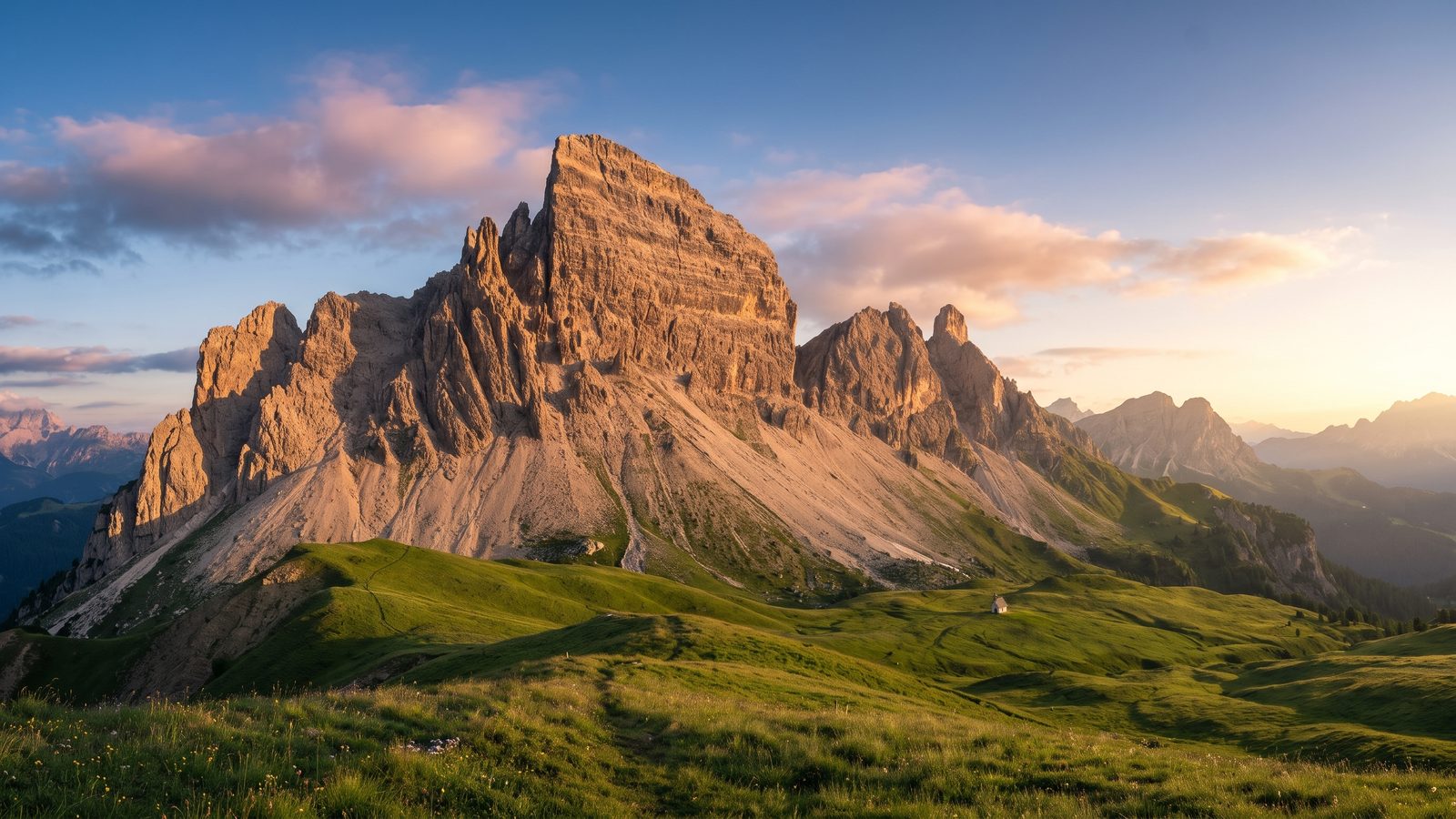
Welcome to Sas Rigais, the stunning 3,025-meter crown of the Geisler Group in South Tyrol's Puez-Geisler Nature Park. Formed from ancient ocean beds turned into majestic dolomite spires, this UNESCO World Heritage peak offers high-alpine scenery, rich Ladin traditions, and dramatic history. On this self-guided audio tour, you will discover vertical Via Ferrata routes, hidden World War I fortifications, and extraordinary alpine wildlife thriving in rugged limestone landscapes.
Whether you are tracing the steps of 19th-century mountain pioneers or admiring vibrant wildflowers among scree slopes, Sas Rigais delivers an unforgettable mountain adventure. Let the audio guide lead you through millions of years of earth history and deep Ladin culture high above the Val Gardena.
Listen to a sample
The opening of this tour, exactly as AllTours narrates it on site.
What you'll hear on this tour
Stop 1. Thrilling Ascents on the Via Ferrata
You approach the summit of Sas Rigais along its celebrated Via Ferrata, navigating iron rungs and fixed steel cables bolted directly into towering Dolomite cliffs. Cold metal fills your grip as you ascend vertical rock pitches, feeling immense exposure along the dramatic North Ridge. This route modernizes Paul Grohmann's pioneering path into a thrilling, protected climb where your boots find solid friction on ancient stone ledges. With each clipped carabiner, you push higher past walls shaped by ice and wind. Pushing through challenging stretches, you finally reach the summit cross to enjoy a magnificent sense of alpine triumph.
Stop 2. Ocean Beds Carved Into Mountain Spires
You stand upon stone that originated two hundred fifty million years ago at the bottom of the ancient Tethys Ocean. Rather than standard limestone, Sas Rigais consists of magnesium-rich dolostone from the Hauptdolomit Formation. This unique rock formed when magnesium-rich fluids percolated through ancient coral reefs and algal beds. Massive tectonic collisions between the African and European plates later thrust these sea floors thousands of meters into the sky. Glaciers and freeze-thaw cycles meticulously carved the spires you see today along bedding planes and fault lines. As you examine the layered cliff faces, you trace fossilized strata recording millions of years of Earth's ocean history.
Stop 3. Pioneers and the High-Alpine Front Line
You explore a peak shaped by pioneering ambition and wartime tragedy. In 1876, Paul Grohmann led the first recorded ascent up Sas Rigais without modern gear or maps, changing how people viewed these intimidating pale peaks. Decades later during World War I, these serene ridges transformed into a grueling front line between Italian and Austro-Hungarian forces. Soldiers carved complex trench systems, supply paths, and tunnels directly into the sheer cliffs at elevations exceeding three thousand meters. As you look across the lower slopes, you can still spot old barracks foundations, silent reminders of military conflict high above the clouds in this now tranquil sanctuary.
Stop 4. Resilient Life in the Alpine Realm
You discover an astonishing world of high-altitude life thriving in Sas Rigais's extreme environment. Purple cushion plants like Saxifraga oppositifolia cling tenaciously to frigid rock crevices, while bright blue Gentiana clusii blossoms in sparse alpine turf to lure high-elevation pollinators. Listening carefully across scree slopes, you hear the sharp alarm whistle of marmots standing guard outside intricate underground burrows. Above you, golden eagles ride warm thermal currents on outstretched wings, searching expansive valleys for movement. Down below, wind-twisted Swiss pines and larches anchor fragile mountain soils, demonstrating the extraordinary resilience required to survive in this dramatic landscape.
Stop 5. Deep Ladin Roots in the Pale Mountains
You gaze upon the cultural heartland of the Ladin people, one of Europe's oldest linguistic minorities. Their native name for this peak, Sas Rigais, translates directly to gray rock, highlighting a deep connection to their mountain surroundings. Looking down toward the Val Gardena, you envision traditional viles, or scattered farmsteads, alongside high alpine pasture huts known as malghe. For centuries, Ladin herders brought livestock here for seasonal grazing and cheesemaking, forging a unique way of life. Surrounding you, World War I combat trenches remain carved into stone, creating an open-air museum that balances cultural resilience with solemn historical memory.
Stop 6. A Majestic UNESCO World Heritage Peak
You stand before Sas Rigais, a magnificent peak soaring 3,025 meters high within South Tyrol's Puez-Geisler Nature Park. Recognized as part of a UNESCO World Heritage site since 2009, this dramatic landmark showcases extraordinary geological formations composed of ancient Dolomite rock. Striking gray spires and steep vertical cliffs rise dramatically above alpine meadows, drawing mountain enthusiasts from around the world. Ever since Paul Grohmann first reached the summit in 1876, adventurers have followed in his footsteps to experience raw natural power. As you take in the panoramic wilderness, you immerse yourself in an unforgettable high-alpine journey amidst these legendary grey peaks.
Planning your visit
- Best time to go
- Summer to early autumn (July to September) for snow-free trails and clear weather conditions.
- Approximate duration
- about 6 to 8 hours
- Where to start
- Santa Cristina Valgardena (Col Raiser cable car mountain station)
Access and conditions change seasonally — check the official site before you go.
Frequently asked questions
Is Sas Rigais worth visiting?
Yes, Sas Rigais offers breathtaking UNESCO-listed Dolomite scenery, exhilarating Via Ferrata routes, unique World War I history, and rich Ladin heritage in the heart of Puez-Geisler Nature Park.
How long do you need at Sas Rigais?
A full excursion or Via Ferrata climb to the summit of Sas Rigais typically takes between 6 and 8 hours round trip from the Santa Cristina Valgardena cable car access points.
Who first climbed Sas Rigais?
Pioneer climber Paul Grohmann led the first recorded ascent of Sas Rigais in 1876, helping transform public perception of the Dolomites from fearsome barriers into iconic alpine challenges.
Keep exploring
Header image is an AI-generated illustration of Sas Rigais. AllTours.ai is an AI audio tour guide — point your camera at any landmark and hear its story.