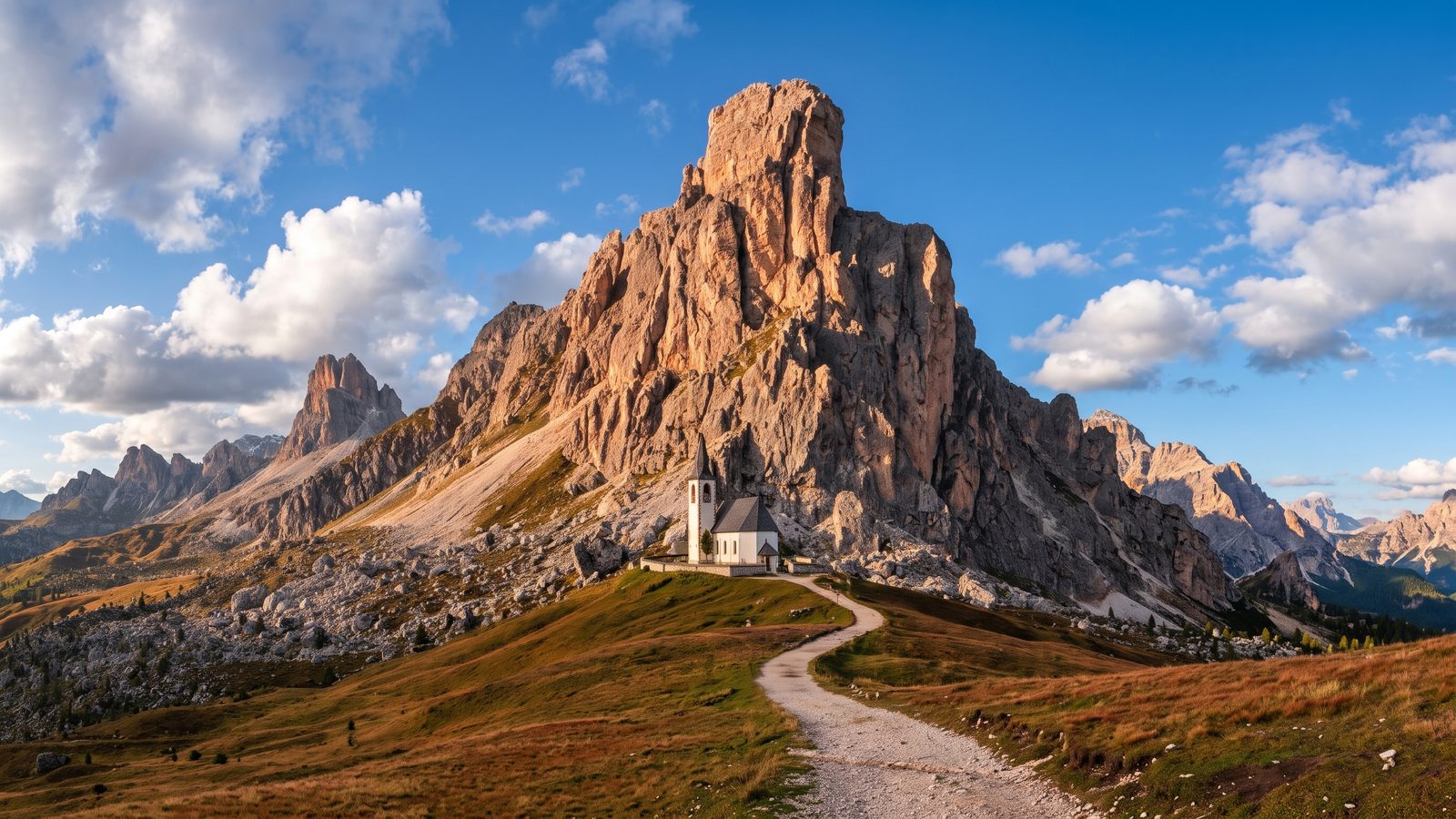
Soaring 2,907 meters above Italy’s Val Badia, Sasso di Santa Croce stands as one of the most iconic rock formations in the Dolomites. Born from ancient Triassic coral reefs in the Tethys Ocean, these vertical walls now showcase raw alpine beauty, rich history, and living culture. As you explore this UNESCO World Heritage landscape, you step into a world shaped by tectonic forces, devout pilgrimages, and mountain legends.
This self-guided audio tour takes you along scenic high-altitude paths beneath colossal limestone cliffs. You will hear stories of legendary mountaineers, ancient Ladin sagas, seven centuries of sacred pilgrimage, and hearty mountain gastronomy, offering an unmissable journey through the geological and spiritual heart of the Italian Alps.
Listen to a sample
The opening of this tour, exactly as AllTours narrates it on site.
What you'll hear on this tour
Stop 1. Fossilized Reefs of the Tethys Ocean
You stand before monumental rock faces that were once the floor of the ancient Tethys Ocean millions of years ago. These towering cliffs are not ordinary stone, but the fossilized remains of vibrant coral reefs and sponges that built up calcium and magnesium carbonates during the Triassic period. Tectonic collisions between the African and Eurasian plates later thrust these former seabeds thousands of meters into the sky, where glacial erosion sculpted their sharp spires. The distinct magnesium content defines dolomite rock, giving these mountains their remarkable hardness. When the sun sets, iron and magnesium oxides in the stone catch the light, turning the peak into a glowing masterpiece known as Enrosadira.
Stop 2. Seven Centuries at the Sacred Hospice
You gaze upon the Santa Croce Hospice, a living testament to over seven hundred years of continuous devotion. According to local legend, an 11th-century shepherd named Ursus discovered a hidden cross on this spot after following a miraculous light, inspiring the construction of a humble chapel. Over time, that original shrine blossomed into a revered sanctuary and refuge, welcoming pilgrims from distant valleys across the centuries. You follow in the footsteps of the indigenous Ladin people, who have trekked up these steep mountain trails for generations. Their enduring faith, songs, and prayers echo through these ancient stones, creating a profound continuum of human spirit set against a backdrop of eternal granite.
Stop 3. Panoramic Views Across the Val Badia
From this high vantage point, you take in a breathtaking sweep of the Dolomites. Below you, the emerald Val Badia stretches out like a vibrant mosaic of forests and meadows, punctuated by alpine villages thousands of meters below. To the east, sun-drenched peaks of the Fanes group rise, while the morning light paints the jagged spires of the Odle range in shades of orange, pink, and brilliant white. On clear days, you can spot the distant Marmolada glinting on the horizon with her glacial crown. Cloud and rock constantly interact here, creating ephemeral sky islands and shifting shadows that transform the wild landscape with every passing hour.
Stop 4. Scaling the Vertical Walls of Legend
Looking up at these colossal vertical cliffs, you see a legendary arena for world-class mountaineering. Pioneers like Angelo Dibona tackled the daunting south face in the early 20th century, negotiating treacherous overhangs using basic equipment and daring ambition. Today, you watch climbers tackle classic multi-pitch routes like the Via Dibona or ascending protected rungs along the Via Ferrata Sas dla Crusc. These sheer dolomite walls demand technical skill and courage as ascenders read every crack and pocket in the textured rock. Climbing here remains a intense high-altitude challenge, where precise movements and calculated risk bring an unmatched sense of accomplishment high above the valley floor.
Stop 5. Living Traditions of the Ladin People
As you look at Sas dla Crusc, you connect with the enduring heritage of the Ladin people, Europe's distinct ethno-linguistic group. Only around 30,000 native speakers remain today, preserving their ancient Raeto-Romanic language within this natural fortress of mountains. These peaks serve as a living backdrop for rich oral traditions passed down through countless generations. You can feel the resonance of epic sagas, such as the legendary Fanes kingdom and the warrior princess Dolasilla, whose stories are woven directly into the surrounding rock faces. This protective landscape nurtures a resourceful mountain culture, traditional alpine customs, and vibrant folk music deeply rooted in the soil.
Stop 6. Mountain Flavors of the High Pastures
Your alpine adventure opens a doorway into Ladin cuisine, a delicious blend of Tyrolean heartiness and Italian culinary finesse. High-altitude pastures supply rich cheeses like tangy Graukäse, served alongside crisp Schüttelbrot flatbread. You might sample Schlutzkrapfen, delicate half-moon pasta pockets filled with fresh spinach and ricotta, bathed in melted butter and Parmesan cheese. For high-energy sustenance, classic Speckknödel savory bacon dumplings offer centuries of mountaineering comfort in a rich broth. To finish, you taste regional history with warm Kaiserschmarrn, a fluffy shredded pancake served with sweet lingonberry jam that honors the region's Austrian roots and rich agricultural lifestyle.
Planning your visit
- Best time to go
- Late spring to early autumn for clear trail conditions, or late afternoon to experience the stunning Enrosadira alpenglow.
- Approximate duration
- About 2 to 3 hours
- Where to start
- Santa Croce Sanctuary (Heiligkreuz / Hospice) above Badia, accessible via chairlift or hiking paths.
Access and conditions change seasonally — check the official site before you go.
Frequently asked questions
Is Sasso di Santa Croce worth visiting?
Yes, Sasso di Santa Croce is famous for its dramatic Triassic rock faces, historical hospice sanctuary, rich Ladin heritage, and incredible panoramic views over the Val Badia.
How long do you need at Sasso di Santa Croce?
Most visitors spend 2 to 4 hours visiting the historical hospice, enjoying traditional Ladin cuisine at the mountain hut, and hiking along the high-altitude trails.
What is the history behind the Santa Croce sanctuary?
Legend says an 11th-century shepherd named Ursus found a cross here guided by a miraculous light, leading to a chapel and hospice that has sheltered pilgrims for over 700 years.
Keep exploring
Header image is an AI-generated illustration of Sasso di Santa Croce. AllTours.ai is an AI audio tour guide — point your camera at any landmark and hear its story.