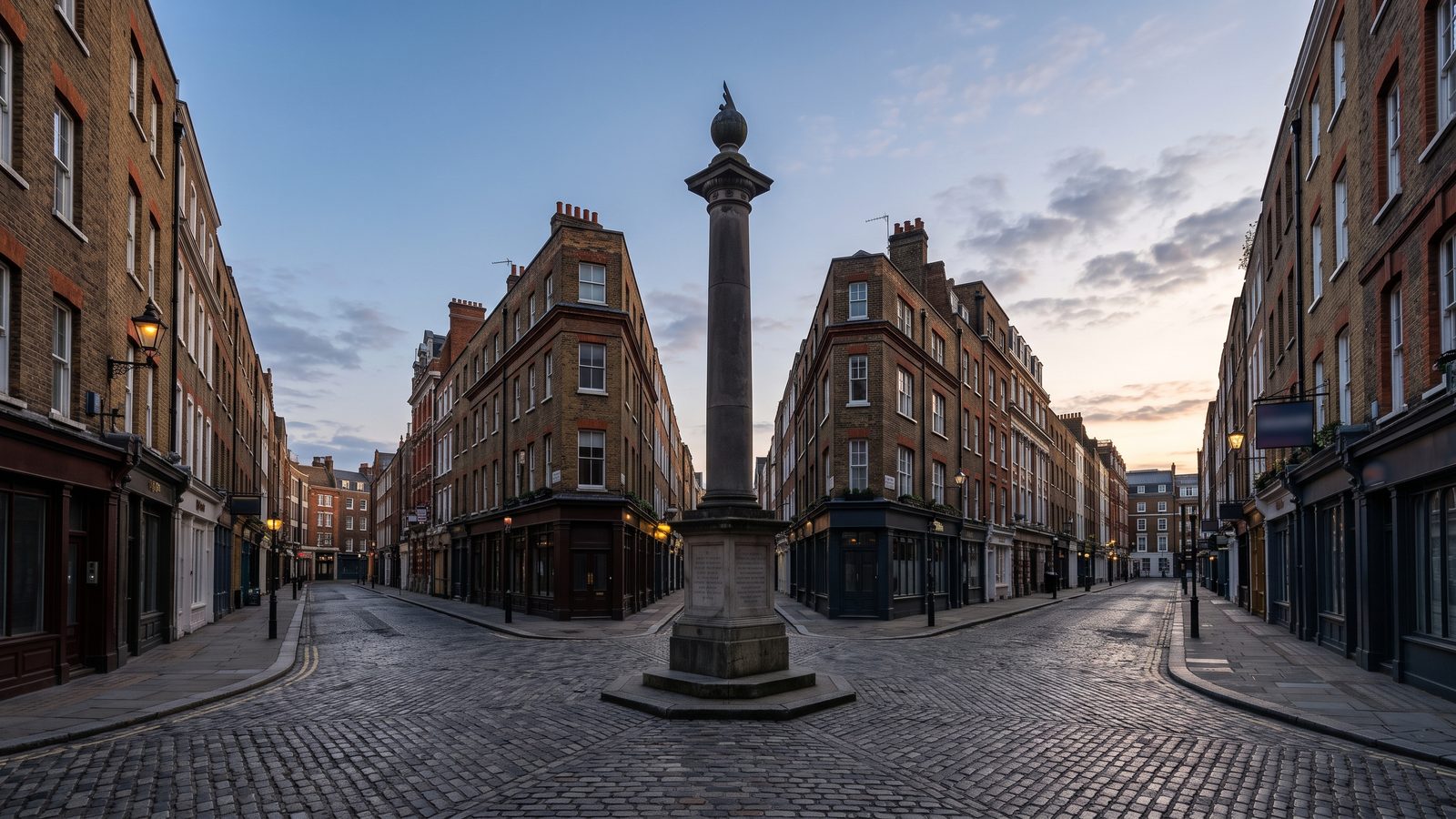
Welcome to the Seven Dials Monument, a striking Baroque sundial pillar rising above one of London's most unique urban intersections. Designed in the 1690s by Thomas Neale, this central hub features seven distinct streets radiating outwards like a brilliant starburst. As you stand beneath the Portland stone column, you are entering a historical tapestry woven with literary legends, architectural ambition, dramatic decay, and modern cultural vitality.
On this self-guided walking experience, you will uncover the secrets behind the sundials, trace the steps of Charles Dickens, and explore the vibrant shops and eateries framing these historic spokes. Immerse yourself in the story of a neighbourhood transformed from an infamous slum into a thriving West End cultural destination.
What you'll hear on this tour
Stop 1. A Sundial Column Restored
You stand before a Portland stone column designed in the 1690s by Thomas Neale. First erected in 1694, it originally featured six sundial faces positioned to catch sunlight from seven converging streets. As the neighbourhood slid into an infamous 18th-century slum, the Paving Commissioners dismantled the pillar in 1773 to prevent unwanted gatherings. Legend says the original column spent over two centuries hidden in a private garden. In 1989, the Seven Dials Trust meticulously reconstructed and reinstated the monument using original architectural plans. Today, you gaze upon a symbol of complete urban regeneration, bridging a notorious past with a vibrant present.
Stop 2. Baroque Geometry and Georgian Terraces
Look up at the fluted Portland stone column and its six intricate sundials—a common misconception is that it holds seven. You are standing at the center of a rare Baroque-inspired starburst layout, where seven distinct streets radiate outward. Scan the surrounding Georgian terraces to appreciate their classic London stock brick, symmetrical sash windows, and delicate doorway fanlights. These buildings originally balanced commercial storefronts with residential living, creating a harmonious streetscape. As you admire the wrought-iron balconies and varied cornices, you see how this cohesive architectural language frames the monument's precise geometry, offering dynamic sightlines from every converging angle.
Stop 3. Dickensian Echoes and Bohemian Spirit
As you absorb the lively energy of this famous crossroads, you feel the lingering presence of Charles Dickens, who immortalized its bustling characters and Victorian street life in his writing. Today, that dramatic spirit continues to thrive. You are surrounded by independent fashion boutiques, eclectic shops, and international dining spots that reflect London's global identity. The surrounding streets hum with theatre-goers heading into the West End, while spontaneous street performers often turn the pavement into an impromptu stage. You stand in a place where historic literary heritage blends seamlessly with modern creativity, keeping the area's original bohemian essence alive.
Stop 4. Coffee Houses, Historic Pubs, and Fine Dining
Step into a culinary tradition shaped by centuries of market traders, theater patrons, and local thinkers. You wander past independent cafes occupying sites where 18th-century coffee houses once hosted radical political debates. Notice how nearby Earlham Street and Monmouth Street host everything from quick pre-theatre bites to sophisticated Michelin-starred dining. The close connection to the former Covent Garden Market long guaranteed a steady flow of fresh, seasonal ingredients. As you explore, discover quiet courtyards ideal for open-air dining or step inside historic pubs like The Crown, where locals have gathered over hearty British comfort food and traditional ales for generations.
Stop 5. Artisanal Boutiques and Niche Finds
Turn your attention to the unique retail district fanning out around you along Monmouth and Earlham Streets. You will notice a distinct lack of major high-street chain stores, replaced instead by independent fashion houses and custom tailors. As you stroll, you discover niche beauty boutiques focusing on ethical ingredients, galleries displaying limited-edition prints, and specialist shops offering vintage watches or rare books. Homeware stores highlight handcrafted ceramics and sustainable designs. Every window display reflects local passion and bespoke craftsmanship, turning your casual walk into a series of rewarding discoveries in the heart of London's West End.
Stop 6. Navigating the Radial Street Network
As you step away from the base of the monument, feel the subtle gravitational pull of the seven radial streets. Conceived by Thomas Neale to encourage exploration, this network creates orchestrated sightlines down avenues like Monmouth Street and Neal Street. You follow historic routes that once connected the notorious St Giles Rookery with the bustling commerce of Covent Garden Market. With every stride, the monument acts as your central visual anchor and compass. As you move from the wide approach of Shaftesbury Avenue into narrower side passages, each turn opens up unexpected architectural vistas across this masterfully planned urban layout.
Planning your visit
- Best time to go
- Morning or early afternoon for daylight views of the architecture, or early evening for theatre-district atmosphere.
- Approximate duration
- About 45 minutes
- Where to start
- Directly at the base of the Seven Dials Monument at the central junction of Monmouth, Earlham, Mercer, and Shorts Gardens streets.
Access and conditions change seasonally — check the official site before you go.
Frequently asked questions
Is Seven Dials Monument worth visiting?
Yes, Seven Dials Monument is well worth visiting for its unique 17th-century Baroque radial street design, rich history, literary connections to Charles Dickens, and bustling surrounding district of independent boutiques, theatres, and restaurants.
How long do you need at Seven Dials Monument?
You need about 30 to 45 minutes to inspect the monument, appreciate the unique seven-street starburst architecture, and enjoy a short walking exploration of the surrounding historic avenues.
Why does Seven Dials Monument only have six sundial faces?
Although seven streets converge on the monument, Thomas Neale designed the central pillar with six sundial faces because the layout shared dial angles, making six dials sufficient to catch sunlight across all seven converging streets.
Keep exploring
Header image is an AI-generated illustration of Seven Dials Monument. AllTours.ai is an AI audio tour guide — point your camera at any landmark and hear its story.