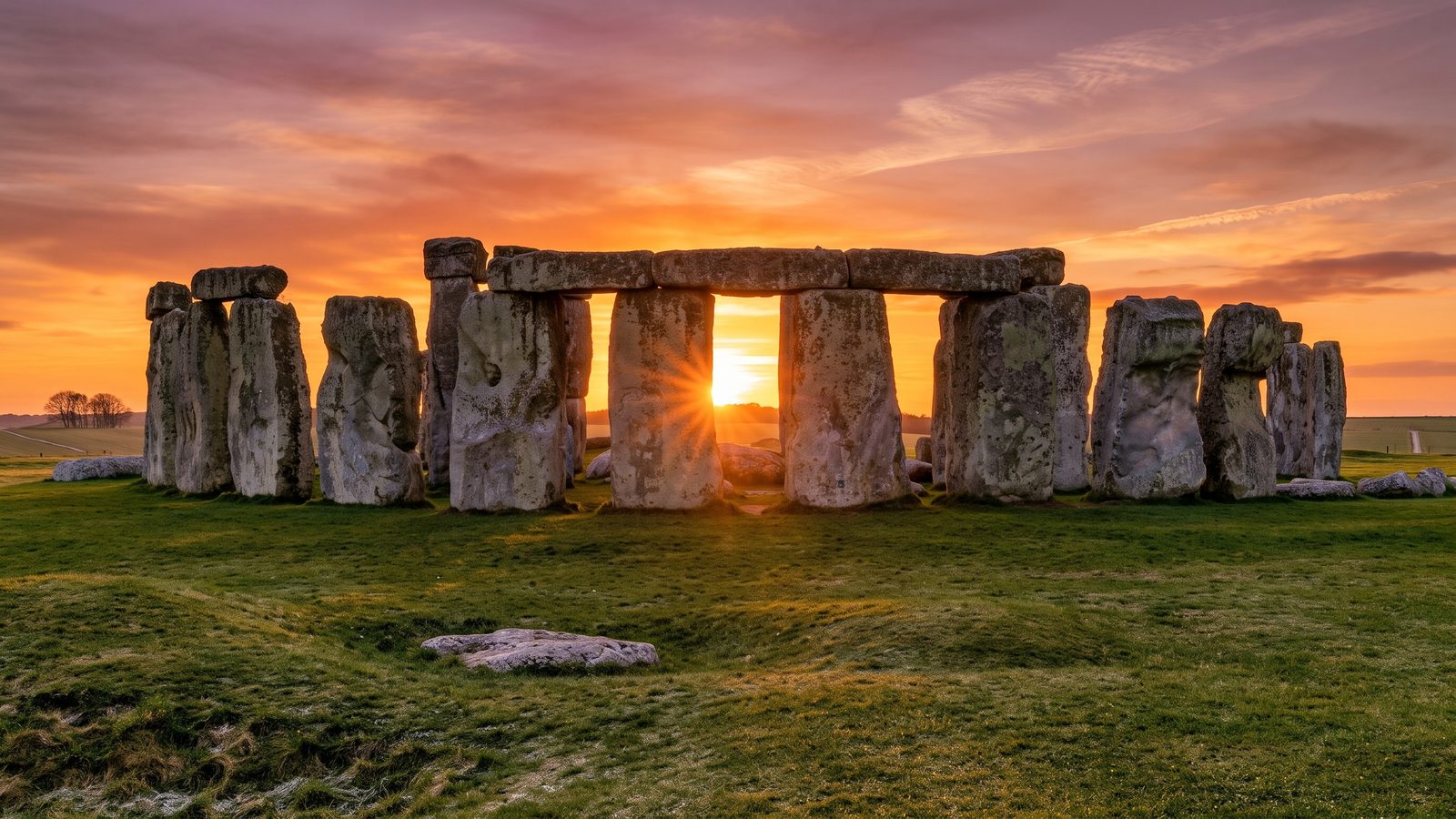
Step onto Salisbury Plain and immerse yourself in thousands of years of human history. This self-guided Stonehenge audio tour leads you around the world's most famous prehistoric monument, from the outer earthworks to the towering sarsen trilithons and ancient bluestones. Discover how Neolithic builders transported massive megaliths across vast distances, aligned the circle with solar solstices, and created an enduring sacred landscape.
As you walk the perimeter, listen to captivating stories of ancient ceremonies, archaeological discoveries, and the surrounding ritual landscape. Feel the mystery that continues to draw visitors from across the globe, and experience this iconic ancient wonder at your own pace through immersive audio commentary.
Listen to a sample
The opening of this tour, exactly as AllTours narrates it on site.
What you'll hear on this tour
Stop 1. Solstice Light and Ancient Shadows
As the sun begins its slow descent, you watch the landscape transform before your eyes. A warm golden glow ignites the colossal sarsen stones and bluestones, revealing rough contours and textures missed during bright daylight. During the winter solstice, you see the setting sun dip precisely between the towering uprights of the Great Trilithon, highlighting the builders' deep astronomical knowledge. The sky shifts through vibrant shades of orange, purple, and soft pink. Standing here, you feel a moment of quiet introspection, connecting directly to ancient ancestral rituals marking the passage of time as daylight fades into night across this sacred Wiltshire landscape.
Stop 2. Beyond the Sacred Stone Circle
Look beyond the central stones to explore a vastly interconnected landscape. You trace the processional Avenue, an ancient path guiding past pilgrims from the River Avon to the circle. To the north lies the colossal Stonehenge Cursus, a mile-and-a-half earthwork whose purpose remains debated. Nearby, you find Woodhenge, a timber circle contrasting with Stonehenge's stone monuments, and Durrington Walls, where thousands once feasted and prepared for sacred journeys. Outside the main entrance stands the solitary Heel Stone, positioned precisely to mark the summer solstice sunrise. Each surrounding monument reveals another chapter of this monumental landscape.
Stop 3. Unearthing Millennia of Sacred History
Beneath your feet lies evidence meticulously uncovered by archaeological excavation. You learn that Stonehenge was built in distinct phases starting around 3000 BC, revealed by radiocarbon dating of discarded antler picks. Ancient builders used these humble antler tools to dig the massive ditch and bank, alongside heavy fifty-pound sarsen hammerstones to shape the megaliths. You stand near the Aubrey Holes, where numerous cremation burials indicate this site served as a sacred resting place for an elite class. Archaeology links this monument to the nearby Durrington Walls settlement via the ceremonial Avenue, painting a picture of an interconnected ritual world.
Stop 4. Cosmic Beliefs and Communal Identity
You stand at the vibrant heart of an ancient culture deeply attuned to the cosmos. The precise alignments with the sun and moon show you how celestial cycles guided their worldview and spiritual festivals. Constructing these massive stone arrangements required extraordinary collective effort, reflecting a shared identity and spiritual purpose. Burials found nearby hint that ancient visitors revered their ancestors and perhaps sought healing power within this hallowed precinct. Today, modern druids and neo-pagans still gather here during solstices, keeping these ancient traditions alive. You feel how Stonehenge remains a living monument to human connection, community, and worship.
Stop 5. Thousands of Years in the Making
You walk on ground that has witnessed human activity since 8500 BCE, starting with Mesolithic hunter-gatherers. Around 3000 BCE, early builders construct the circular ditch, bank, and fifty-six mysterious Aubrey Holes. Roughly four hundred years later, you witness the incredible arrival of bluestones hauled one hundred fifty miles from Wales' Preseli Hills. By 2500 BCE, giant sarsen stones weighing up to fifty tons arrive from Marlborough Downs, twenty miles away, to form the outer circle and inner trilithons. You realize this sacred landscape evolved continuously across centuries, reflecting a sustained effort spanning millennia rather than a single generation's work.
Stop 6. Standing Before the Great Trilithons
You stand before a colossal engineering marvel carved from the Wiltshire earth over 4,500 years ago. As you look closer, you see the massive outer Sarsen stone circle and iconic trilithons—two upright megaliths capped by a horizontal lintel. Beside them rest smaller bluestones transported over 150 miles from Wales, presenting one of history’s greatest puzzles. Whether designed as an ancient astronomical calendar, a sacred burial site, or a celestial temple, the mystery captivates you. You feel the palpable energy of this place, where thousands still gather during solstices to watch the sun dance with these ancient standing stones.
Planning your visit
- Best time to go
- Early morning or late afternoon for fewer crowds and warm lighting, especially during solstice periods.
- Approximate duration
- About 2 hours
- Where to start
- Stonehenge Visitor Centre, Amesbury, Wiltshire
Access and conditions change seasonally — check the official site before you go.
Frequently asked questions
Is Stonehenge worth visiting?
Yes, Stonehenge is one of the world's most famous prehistoric monuments, offering a fascinating look into Neolithic engineering, ancient astronomy, and thousands of years of mystery.
How long do you need at Stonehenge?
Most visitors spend around 2 hours exploring the main stone circle, walking along the surrounding landscape pathways, and visiting the visitor centre exhibits.
How were the stones transported to Stonehenge?
The smaller bluestones were transported over 150 miles from the Preseli Hills in Wales, while the larger sarsen stones were hauled roughly 20 miles from Marlborough Downs using prehistoric sledges, ropes, and rollers.
Keep exploring
Header image is an AI-generated illustration of Stonehenge. AllTours.ai is an AI audio tour guide — point your camera at any landmark and hear its story.