Welcome to the Tanaro River, the vital artery flowing through Alba in the heart of Piedmont, Italy. For thousands of years, this powerful river has shaped the city's destiny, providing fertile soil for world-renowned vineyards while challenging residents with its unpredictable floods. As you walk along its scenic banks, you connect with a landscape rich in Roman heritage, medieval defense, and unparalleled culinary tradition.
This self-guided audio tour leads you through the defining stories of the Tanaro and Alba. You will discover how ancient trade routes, resilient engineering, and alluvial soils created the world of Barolo, white truffles, and historic towers. Simply press play and immerse yourself in the living spirit of Piedmont.
Listen to a sample
The opening of this tour, exactly as AllTours narrates it on site.
What you'll hear on this tour
Stop 1. The Lifeblood of Piedmont Gastronomy
As you stand near the riverbank, you appreciate how the Tanaro feeds Alba's culinary soul. Its rich alluvial soils nurture the prestigious vineyards producing Barolo and Barbaresco wines, deeply defining local culture. Beneath the surface of this lush valley lies another culinary treasure: the elusive white truffle. You learn how the surrounding terroir inspires passionate local trifolau and annual food festivals. As you gaze across the landscape, you realize that every world-class bottle and exquisite dish born in Alba traces its roots directly back to the nourishing waters of the Tanaro River flowing quietly before you today.
Stop 2. Guardian Across the River
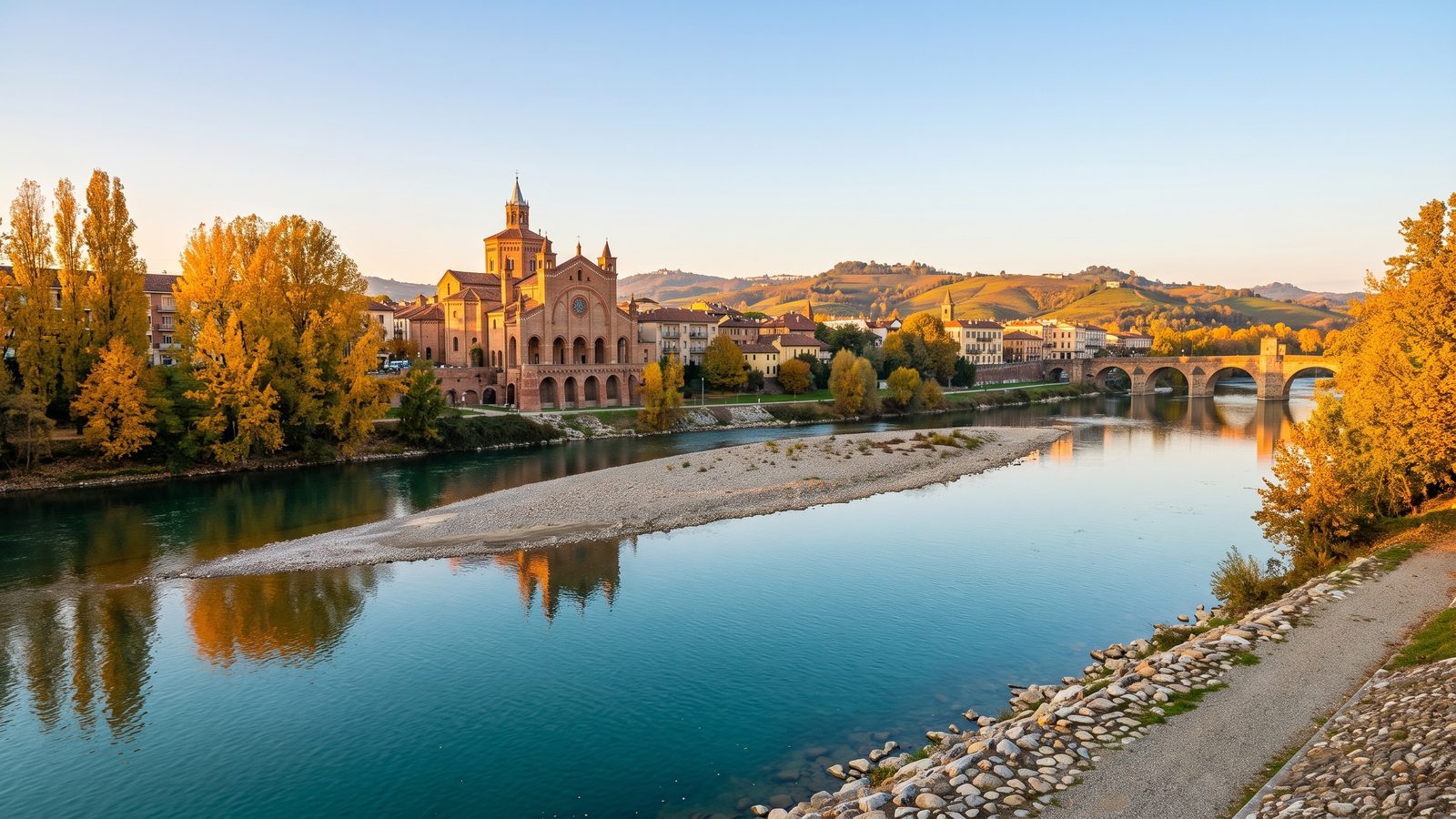
You stand before the magnificent stone bridge, an engineering marvel spanning the powerful Tanaro. Observe its robust arches, each serving as a silent witness to centuries of rebuilding after devastating river floods. Legend holds that the central arch contains a preserved Roman keystone salvaged from an ancient predecessor. You imagine merchants, pilgrims, and marching armies treading across these exact stones throughout history. As you cross or view this formidable structure, you experience a vital artery of communication and trade that continues to safeguard Alba's enduring spirit against the forces of nature.
Stop 3. Currents of History and Resilience
Looking out over the water, you observe the Tanaro's majestic yet unpredictable nature. In ancient times, Roman barges navigate these currents, connecting local markets to vital empire-wide trade routes that fuel Alba's early prosperity. Yet this river demands respect; its raw force, demonstrated by catastrophic events like the 1994 flood, constantly tests the community. You feel the resilient spirit of the Albesi, who continue to adapt and thrive alongside their formidable waterway. Every bend in the river carries tales of hardship and triumph, shaping the unbreakable bond between the people and their river.
Stop 4. Shimmering Waters and Vine-Clad Hills
You gaze across the sparkling emerald waters of the Tanaro as they mirror the undulating Langhe hills. Before you lies a vibrant tapestry of neatly tended vineyards, showcasing a subtle interplay of deep viridian and warm ochre tones across the slopes. Graceful poplars and weeping willows fringe the peaceful riverbanks, creating a serene, green corridor that draws your eyes toward Alba's distant skyline framed by a soft horizon. As you take in this breathtaking vista, you experience the harmonious union of natural river landscapes and world-famous wine country.
Stop 5. Ancient Arteries of Empire and Defense
Tracing the ancient course of the Tanaro, you discover how Roman Alba Pompeia flourishes directly because of these navigable waters. The river forms a vital commercial conduit connecting the Ligurian coast to the vast Po Valley, driving economic expansion. Centuries later, during the medieval era, you see how Alba transforms the waterway into a natural defensive barrier. The riverbanks witness countless skirmishes and territorial rivalries between regional powers. As you explore, you trace the profound ways this single river served as both an engine of commerce and a fortress wall throughout antiquity.
Stop 6. Towers of Roman and Medieval Heritage
Stepping away from the water into Alba, you walk upon centuries of layered history. You explore foundations dating to Roman Alba Pompeia and envision the medieval city famous as the city of a hundred towers. Powerful noble families construct towering stone skyscrapers to display their wealth and prestige. Today, impressive surviving structures like the Torre di Barbaresco stand tall above the streetscape. As you look up at these ancient stones, you sense the fierce independence and enduring character that define this historic town from its river origins to the present day.
Planning your visit
- Best time to go
- Spring through autumn, especially during late afternoon for golden light over the Langhe hills.
- Approximate duration
- About 1 hour
- Where to start
- Alba's riverbank promenade near the main Tanaro bridge.
Access and conditions change seasonally — check the official site before you go.
Frequently asked questions
Is Tanaro River in Alba worth visiting?
Yes, visiting the Tanaro River offers a peaceful walk with scenic views of the Langhe hills while learning about Alba's Roman origins, wine terroir, and medieval history.
How long do you need at Tanaro River in Alba?
You typically need about 45 to 60 minutes to walk along the river promenade, enjoy the views, cross the bridge, and listen to the audio tour.
What is the historical significance of the Tanaro River in Alba?
The Tanaro River served as a vital Roman shipping route connecting Liguria to the Po Valley, provided medieval defenses for Alba Pompeia, and enriched the soils that sustain the region's famous wines and white truffles.
Keep exploring
Header image is an AI-generated illustration of Tanaro River in Alba. AllTours.ai is an AI audio tour guide — point your camera at any landmark and hear its story.