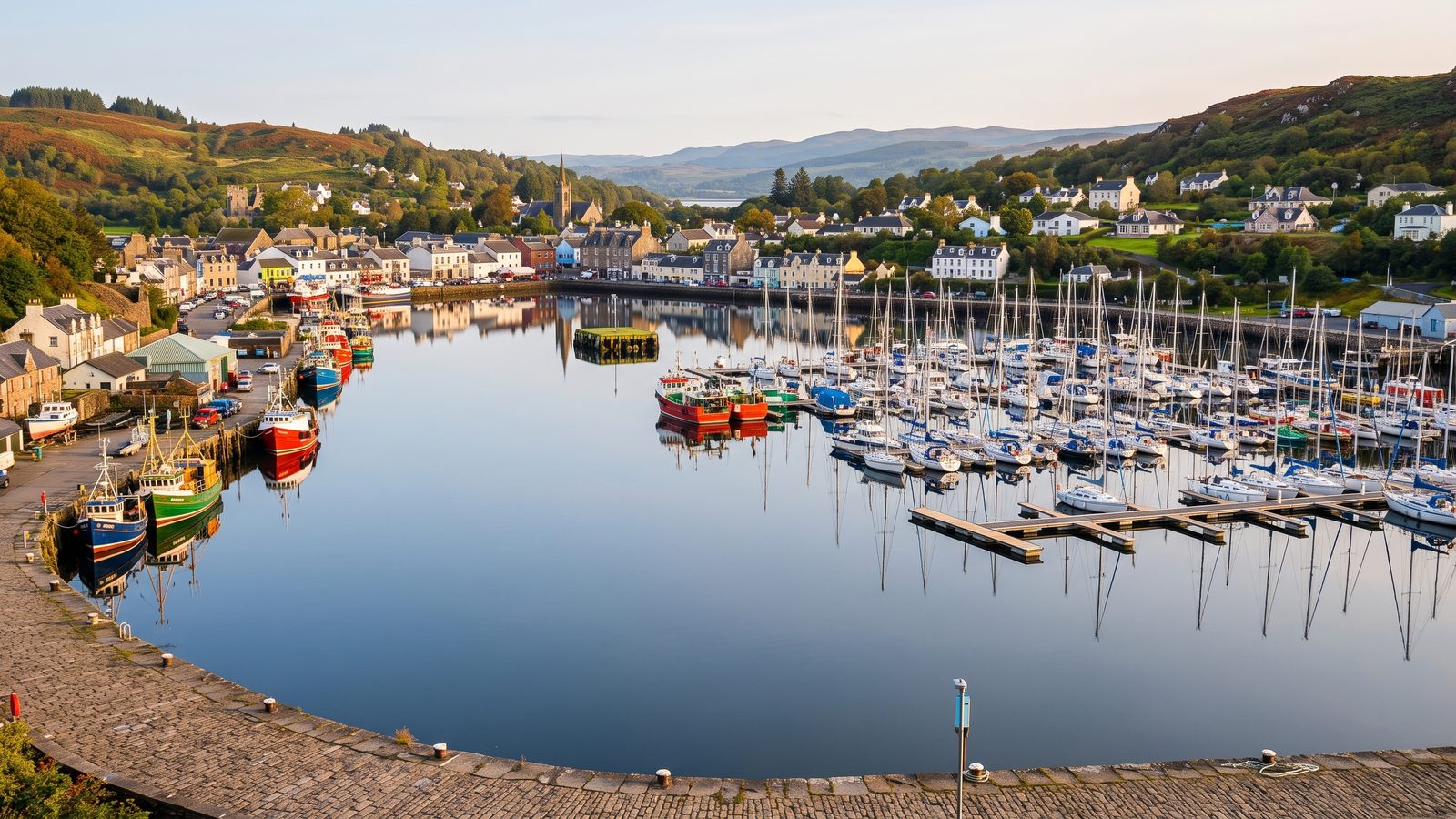
Welcome to Tarbert Harbour, a breathtaking natural haven nestled on the shores of Loch Fyne on Scotland's Kintyre peninsula. Known historically as a vital 'portage' site where ancient Norsemen and Scots dragged longboats across the narrow neck of land, this vibrant fishing village blends deep maritime heritage with stunning coastal scenery. Above the harbor's crescent of traditional stone buildings rest the historic ruins of Tarbert Castle.
Today, Tarbert Harbour serves as the beating heart of Kintyre. As you explore the harbour's edge, you will experience the living connection between centuries of commercial fishing, modern leisure boating, and the welcoming spirit of a traditional Scottish seaside village surrounded by sea lochs and heather-covered hillsides.
Listen to a sample
The opening of this tour, exactly as AllTours narrates it on site.
What you'll hear on this tour
Stop 1. Gateway to Kintyre and Castle Ruins
You stand at a historic portage point where ancient Norsemen and Scots once hauled their longboats across this narrow neck of land, giving Tarbert its very name. As you gaze across the harbor, you observe a charming crescent of traditional stone buildings hugging the water, reflecting centuries of maritime life. Above the village, the ancient ruins of Tarbert Castle whisper tales of King Robert the Bruce. Breathing in the crisp, salty air, you feel an immediate, living connection to the village's enduring fishing heritage. This picturesque harbour serves as the beating heart of the Kintyre peninsula, welcoming travelers and adventurers throughout the ages.
Stop 2. Loch Fyne Oysters and Coastal Wildlife
You feel the crisp sea air as you stand beside Loch Fyne, Scotland's longest glacial sea loch. Its cold, nutrient-rich currents nurture the famous, succulent Loch Fyne oysters that thrive in these pristine waters. As you scan the loch, you keep your eyes peeled for common seals basking lazily on distant rocks or porpoises breaking the glassy surface while hunting for herring. All around you, the surrounding hillsides are cloaked in vibrant heather and gorse, offering a protected habitat for diverse wild birdlife. You take a deep breath and connect with the thriving natural ecosystem that surrounds this historic harbour village.
Stop 3. Panoramic Views over Loch Fyne
You let your gaze sweep across a breathtaking panorama of sky, land, and water. The glassy surface of Loch Fyne mirrors an ever-changing Scottish sky filled with shifting blues and greys. You feel the crisp air carrying the rich scents of salt water and heather from the ancient, rugged hillsides that cup the harbour below. Notice how the changing light illuminates the vibrant colors of the docked fishing boats and highlights the verdant slopes of the surrounding Kintyre peninsula. Standing here, you absorb a visual harmony of rugged Scottish landscape and peaceful coastal life that defines this historic haven.
Stop 4. The Rhythm of Yachts and Trawlers
You observe elegant yachts swaying gently in their berths, their tall masts creating a delicate forest against the sky. This graceful scene contrasts with robust prawn trawlers returning from the loch with their fresh daily catches. You listen to the rhythmic clinking of halyards against aluminium masts, a constant nautical melody unique to a bustling marina. This active harbour seamlessly blends modern leisure sailing with the industrious, enduring rhythm of commercial fishing. You witness a dynamic daily maritime ballet that reflects centuries of seafaring traditions, demonstrating how the harbour remains vital to both local workers and visiting sailors.
Stop 5. Enduring Legacy of Loch Fyne Langoustines
You look out over the working fleet to witness the enduring legacy of Tarbert's fishing industry. These sturdy creel boats head out daily to target prized Loch Fyne langoustines, a celebrated local delicacy that frequently ends up on dinner plates nearby. In past generations, vast shoals of silver herring served as the community's primary lifeblood, shaping the harbour's physical design and defining local family traditions. As you watch the boats unload, you feel the daily rhythm dictated by tides and catches, standing as a clear testament to the community's unwavering maritime spirit and hard-working heritage.
Stop 6. Whitewashed Cottages and Stone Lanes
As you wander through the village, you notice whitewashed cottages with traditional slate roofs nestling tightly into the hillside, almost embracing the peaceful water below. You feel the enduring spirit of generations of fishing families etched into every narrow lane, weathered stone wall, and historic building. Exploring further, you discover the vibrant pulse of local community life within welcoming pubs and artisan shops. Here, the local stories shared by residents are as rich as the fresh seafood served daily. You absorb the authentic character of a Scottish harbour town where maritime history lives on around every corner.
Planning your visit
- Best time to go
- Spring through autumn, ideally during morning hours when fishing boats return with their daily catch.
- Approximate duration
- about 1 hour
- Where to start
- Tarbert Harbour waterfront near the main pier.
Access and conditions change seasonally — check the official site before you go.
Frequently asked questions
Is Tarbert Harbour worth visiting?
Yes, Tarbert Harbour is well worth visiting for its rich Viking history, scenic views over Loch Fyne, vibrant marina life, fresh local seafood, and historic ruined castle.
How long do you need at Tarbert Harbour?
Most visitors spend around 1 to 2 hours exploring the harbour waterfront, walking through the village lanes, and viewing Tarbert Castle.
What is the history of Tarbert Harbour?
Tarbert Harbour takes its name from the Gaelic word for portage, as ancient Norsemen and Scots dragged longboats across the narrow isthmus. It later grew into a major Scottish herring fishing port and strategic location associated with Robert the Bruce.
Keep exploring
Header image is an AI-generated illustration of Tarbert Harbour. AllTours.ai is an AI audio tour guide — point your camera at any landmark and hear its story.