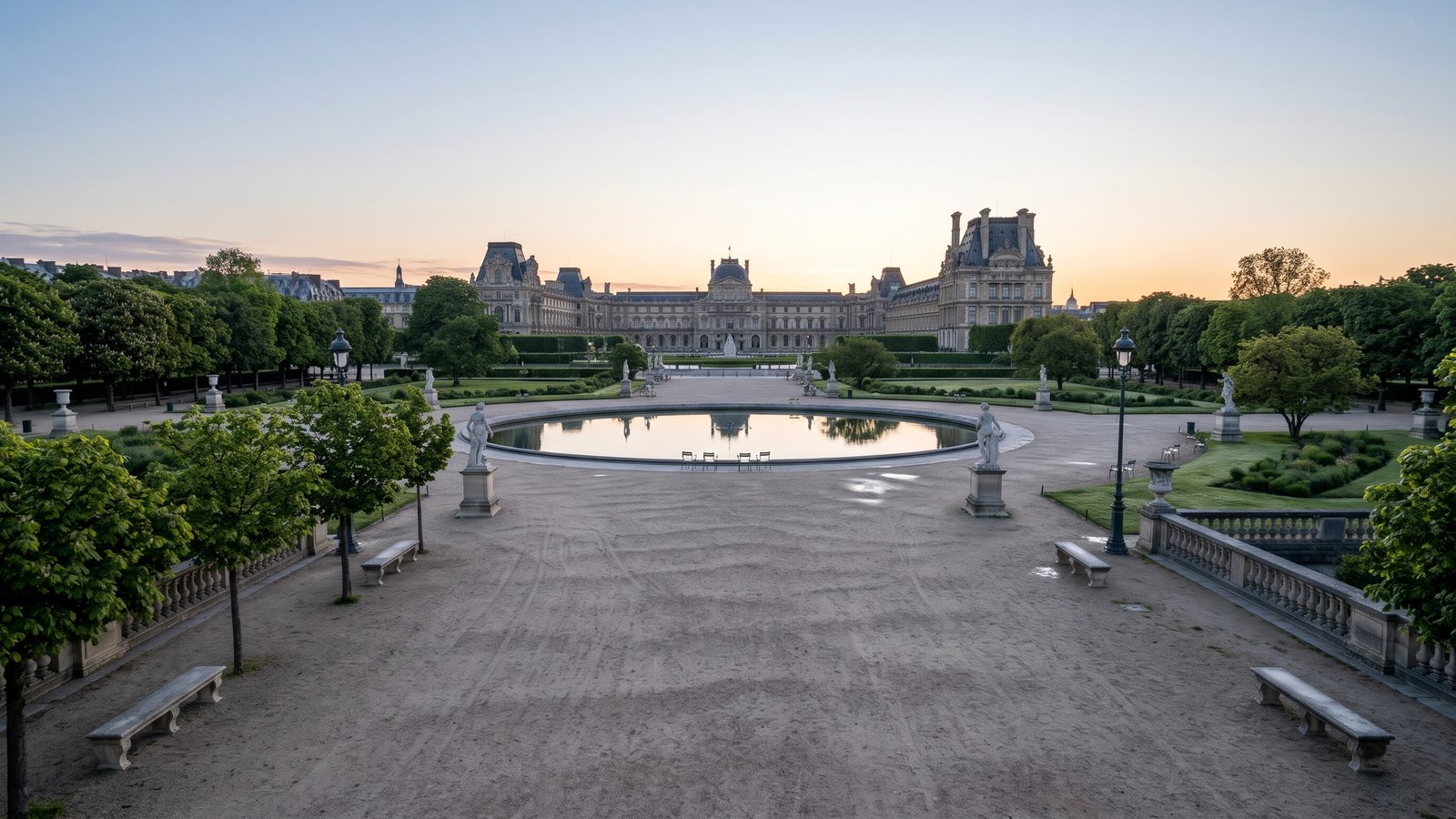
Welcome to the Tuileries Garden, a grand verdant masterpiece stretching elegantly between the Louvre Museum and the Place de la Concorde in the heart of Paris. Commissioned in the 16th century by Catherine de' Medici and later redesigned into a classical French formal garden by André Le Nôtre, this historic haven offers a breathtaking blend of royal heritage, Baroque symmetry, and vibrant open-air culture.
As you follow this self-guided audio tour, you will walk in the footsteps of kings, artists, and revolutionaries. From admiring famous sculptures to practicing the quintessential Parisian art of flânerie, get ready to experience the timeless allure of Paris’s most iconic public garden.
Listen to a sample
The opening of this tour, exactly as AllTours narrates it on site.
What you'll hear on this tour
Stop 1. The Art of Parisian Relaxation
You take a seat in one of the iconic green metal chairs scattered democratically around the Grand Bassin. As you recline beside the gently shimmering water, the bustling energy of Paris softens into a soothing background hum. You watch locals and travelers alike floating past, adopting a timeless Parisian ritual. Here, you master the art of flânerie and doing nothing beautifully, letting the warm breeze carry away your worries. Surrounded by manicured lawns and historic statues, this tranquil spot invites you to slow down, observe the city's gentle rhythms, and experience pure repose right in the center of the French capital.
Stop 2. An Open Air Sculptural Gallery
You step into a sprawling open-air gallery where art and landscape seamlessly intertwine. As you wander along the gravel paths, you encounter robust bronze nudes by Aristide Maillol, their dramatic curves providing a striking contrast to the surrounding greenery. Look closer to spot Coysevox’s exquisite mythological figures, carefully positioned across the grounds to draw your eye through the landscape. Every statue tells an ancient tale while highlighting the grand Baroque symmetry envisioned by André Le Nôtre. You are experiencing centuries of artistic patronage, where legendary sculptures stand under the open Parisian sky for everyone to admire and contemplate.
Stop 3. From Royal Palace to Revolution
You stand upon historic ground where Catherine de' Medici first created her private Italianate oasis beside the Tuileries Palace in 1564. Decades later, King Louis XIV's master landscape architect, André Le Nôtre, transformed the space into a grand French formal garden to reflect royal order and majesty. However, this serene setting also bore witness to intense political upheaval. During the French Revolution, these very avenues became a dramatic stage for public fury, highlighted by the historic storming of the palace in 1792. As you look across the sweeping vistas today, you feel the weight of centuries where royal ambition directly collided with revolutionary change.
Stop 4. The Living Canvas of Parisian Life
You immerse yourself in the vibrant cultural heartbeat of Paris. For centuries, this historic garden has served as an inspiring canvas for creative giants like Claude Monet and Marcel Proust, who sought out its unique play of light and lively social atmosphere. As you stroll, you witness the enduring art of flânerie, where people-watching becomes a refined pastime. Children push colorful toy sailboats across the basins, intellectuals gather for lively discussions, and subtle fashion trends quietly emerge along the paths. You are not just visiting a park; you are actively participating in an ever-evolving tapestry of authentic Parisian life.
Stop 5. Footsteps Along the Historic Axis
You feel the satisfying crunch of gravel beneath your shoes as you follow the grand promenade designed by André Le Nôtre. Walking along these historic axes, you follow paths where French royalty and revolutionary crowds once trod. Each step opens up dramatic visual perspectives, framing the majestic façade of the nearby Louvre Museum alongside classical statues and formal tree-lined avenues. This carefully orchestrated layout turns your walk into an immersive journey through time. You become part of a living theatrical stage, where centuries of Parisian history, architectural splendor, and everyday life unfold gracefully around you with every step you take.
Stop 6. Masterpiece of Classical French Landscape
You traverse meticulously designed avenues that represent the definitive blueprint of the French formal garden. Here, Catherine de' Medici’s original 16th-century layout was transformed into a symmetrical Baroque masterpiece under the vision of André Le Nôtre. As you gaze down the central vistas, notice the precise alignment of towering chestnut trees and elegant parterres. Every botanical element and gravel walkway is arranged with deliberate mathematical harmony to guide your eye across the landscape. What began as an exclusive royal sanctuary has evolved into a magnificent public promenade, offering you an uplifting sense of order, grandeur, and natural beauty.
Planning your visit
- Best time to go
- Morning or late afternoon on a sunny day for lower crowds and pleasant light over the basins.
- Approximate duration
- About 1 to 1.5 hours
- Where to start
- At the garden entrance near the Louvre Museum or Place de la Concorde.
Access and conditions change seasonally — check the official site before you go.
Frequently asked questions
Is Tuileries Garden worth visiting?
Yes, Tuileries Garden is a must-visit Parisian landmark featuring grand French landscape design, historic sculptures, iconic green lounge chairs, and central views connecting the Louvre to Place de la Concorde.
How long do you need at Tuileries Garden?
Most visitors spend between 1 and 2 hours strolling through the central avenues, viewing the open-air sculptures, and relaxing by the Grand Bassin.
What is the history of Tuileries Garden?
Originally commissioned in 1564 by Catherine de' Medici as an Italianate royal garden, it was redesigned in the 17th century by André Le Nôtre into a classical French formal garden and later played a central role during the French Revolution.
Keep exploring
Header image is an AI-generated illustration of Tuileries Garden. AllTours.ai is an AI audio tour guide — point your camera at any landmark and hear its story.