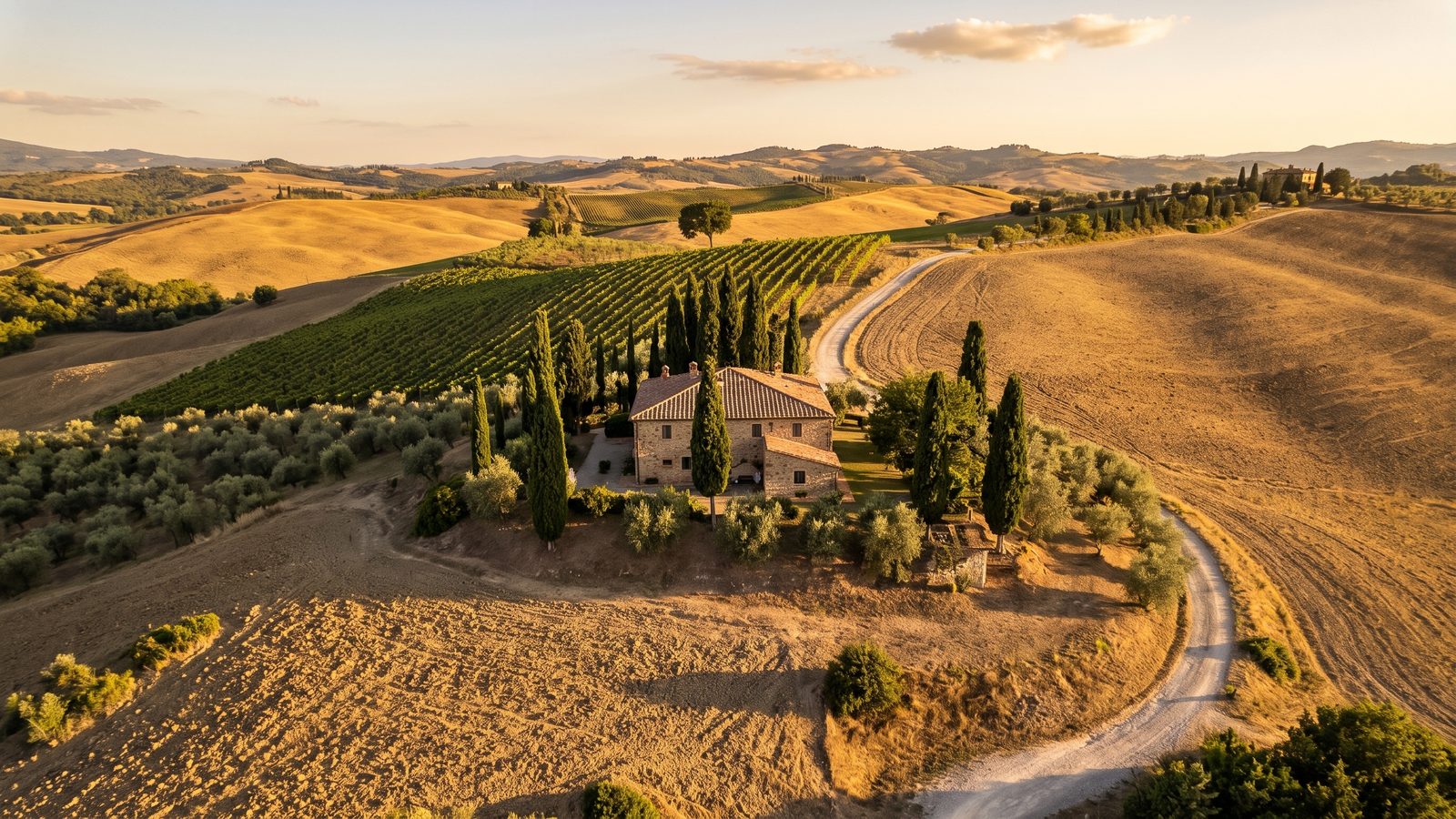
Welcome to the Tuscan Countryside, a serene landscape defined by gentle hills, ancient cypress trees, and terracotta-roofed farmhouses. Steeped in history from Etruscan pioneers to Renaissance masters, this region showcases a harmonious balance between human ingenuity and natural grandeur. As you explore the roads around Siena, you witness centuries of viticulture, olive harvesting, and enduring artisan traditions that continue to shape Italy's culinary and artistic soul.
This self-guided audio tour leads you past medieval borghi, sweeping vineyards, and sun-drenched groves. Discover how centuries of agricultural devotion, artistic expression, and unhurried living created one of the world's most cherished landscapes. Let the stories of the land guide your journey through this timeless Italian countryside.
Listen to a sample
The opening of this tour, exactly as AllTours narrates it on site.
What you'll hear on this tour
Stop 1. Golden Light Over Rolling Hills
As you gaze out over the horizon, you notice how the elevated landscapes chosen by ancient Etruscans and Romans now form a seamless patchwork quilt of vineyards and olive groves. The subtle contours around you are deliberately shaped by centuries of viticulture. Watch how the golden hour, or ora dorata, bathes distant medieval borghi and cypress avenues in a luminous glow. This exact interplay of light and landscape inspired Renaissance masters like Leonardo da Vinci, who incorporated these rolling horizons into their paintings. Every turn along the path unveils a breathtaking, living canvas where human tradition and natural beauty exist in perfect harmony.
Stop 2. The Culinary Art of Cucina Povera
Here, you encounter cucina povera, a living culinary art that transforms simple, local ingredients into extraordinary meals. You taste peppery extra virgin olive oil pressed from nearby slopes and sample cave-aged Pecorino Toscano. Notice how traditional dishes like Ribollita repurpose bread into a hearty vegetable soup, reflecting generations of resourcefulness. Nearby, Chianina beef yields the famous Bistecca alla Fiorentina, while local forests produce prized wild truffles that elevate simple pasta. From vibrant market produce to slow-cooked wild boar ragù, every flavor you experience reflects a profound respect for the land and a long legacy of authentic, unpretentious dining.
Stop 3. Millennia Etched into the Landscape
You stand on land etched by thousands of years of human effort. Long before the Romans arrived, the Etruscans cultivated these hills, pioneering viticulture and laying the groundwork for hilltop settlements. Roman conquerors expanded these farms and established intricate road networks, embedding wine and olive oil into Tuscan identity. Later, rival medieval city-states like Florence and Siena constructed fortified hill towns to protect their sovereignty. During the Renaissance, wealthy merchant families like the Medici invested their fortunes into rural villas and farms. As you walk, you trace an unbroken lineage of agricultural innovation and strategic settlement across these green slopes.
Stop 4. Living Traditions and Tuscan Heritage
You breathe in an atmosphere steeped in Italian heritage, where the local Tuscan dialect helped shape the modern Italian language spoken today. Around you, master artisans practice centuries-old crafts, from shaping Impruneta terracotta to hand-carving fine leatherwork in quiet workshops. In every village square, or borgo, community life thrives during local sagre festivals celebrating patron saints and seasonal harvests. You observe an unhurried lifestyle focused on bellezza—finding beauty in everyday moments, whether in roadside shrines or shared meals. This outward-looking culture connects you deeply to the soil, where craftsmanship, spiritual reverence, and neighborly warmth remain central to daily life.
Stop 5. Untamed Flora and Ancient Groves
Beyond the neat rows of crops, you experience the untamed pulse of Tuscan nature. In summer, the rhythmic hum of cicadas fills the warm air, carrying scents of wild rosemary and thyme from the Mediterranean scrub. You stand before gnarled olive trees, some living for over a thousand years, their silvery leaves shimmering in the breeze. Tall cypress trees stand like ancient sentinels, holding the earth firm against strong winds. Beneath evergreen holm oak forests, wild boar root through rich soil while elusive roe deer move through the shadows. Even the unique clay soil reveals dramatic, moon-like calanchi erosion, showing nature's raw artistry.
Stop 6. Frescoes and Terracotta Beyond Galleries
Step inside a rural pieve, or parish church, and you discover vibrant frescoes painted by Sienese and Florentine masters. These sacred artworks weave local flora and fauna directly into biblical scenes, capturing daily agrarian life from centuries past. Outside, you admire Della Robbia glazed terracotta reliefs adorning chapel entrances and elegant clay vessels drying in the sun. This enduring craftsmanship transforms the very earth beneath your feet into functional art. Rather than being confined within museum walls, artistic expression surrounds you in the countryside, enriching farmhouses, chapels, and quiet village paths with timeless grace and creative devotion.
Planning your visit
- Best time to go
- Spring or autumn during the late afternoon golden hour for optimal light and mild temperatures.
- Approximate duration
- About 2 to 3 hours
- Where to start
- The scenic countryside roads surrounding Siena, Tuscany.
Access and conditions change seasonally — check the official site before you go.
Frequently asked questions
Is Tuscan Countryside worth visiting?
Yes, the Tuscan Countryside offers world-renowned scenic rolling hills, historic olive groves, iconic cypress-lined roads, and rich culinary and artistic heritage.
How long do you need at Tuscan Countryside?
A typical self-guided tour takes 2 to 3 hours for scenic viewpoints and stories, though spending a full day allows you to enjoy local villages, churches, and dining.
Who originally cultivated the Tuscan Countryside?
The Etruscans first transformed the region's forests into fertile agricultural fields and pioneered viticulture, followed later by Roman estate builders and Renaissance landowners.
Keep exploring
Header image is an AI-generated illustration of Tuscan Countryside. AllTours.ai is an AI audio tour guide — point your camera at any landmark and hear its story.