Escape the bustling streets of Rome and step into Villa Borghese, an 80-hectare park combining natural beauty with world-class art. Originally created in the early 17th century as Cardinal Scipione Borghese's private retreat, this former aristocratic vineyard is now the city's cherished public garden. As you stroll along shady paths, you encounter masterpieces by Bernini and Caravaggio, charming classical temples, and serene vistas across Rome.
With this self-guided audio tour, you set your own pace while exploring centuries of history, architectural marvels, and peaceful landscape gardens. Whether viewing renowned Baroque sculptures inside the Borghese Gallery or gliding on the tranquil lake, Villa Borghese offers an unforgettable blend of art, nature, and relaxation.
Listen to a sample
The opening of this tour, exactly as AllTours narrates it on site.
What you'll hear on this tour
Stop 1. Baroque Masterpieces and Renaissance Genius
You step inside the magnificent Galleria Borghese, the artistic heart of the villa. Here, you admire the priceless collection gathered by Cardinal Scipione Borghese in the 17th century. You stand before Gian Lorenzo Bernini's dramatic marble sculptures, including Apollo and Daphne, The Rape of Proserpina, and David, each brimming with Baroque movement and energy. You also view Antonio Canova's neoclassical Paolina Borghese as Venus Victrix, sculpted in the early 19th century. As you wander through the gallery, evocative paintings by Caravaggio, such as Boy with a Basket of Fruit, captivate your attention alongside famous works by Raphael and Titian.
Stop 2. From Papal Vineyard to Public Park
You trace the origins of Villa Borghese back to the early 17th century. Cardinal Scipione Borghese, nephew of Pope Paul V, transforms humble vineyards into a grand pleasure estate. Architects Flaminio Ponzio and Giovanni Vasanzio design the iconic Casino Nobile around 1620 specifically to display Scipione's vast art collection and excavated ancient Roman sculptures. For over three centuries, the Borghese family cultivates these grounds. A monumental shift occurs in 1902 when the Italian State purchases the entire 80-hectare property for 3.6 million lire. Today, you freely roam what was once a private aristocratic paradise, now preserved as Rome's beloved municipal haven.
Stop 3. Serene Waters and Classical Reflection
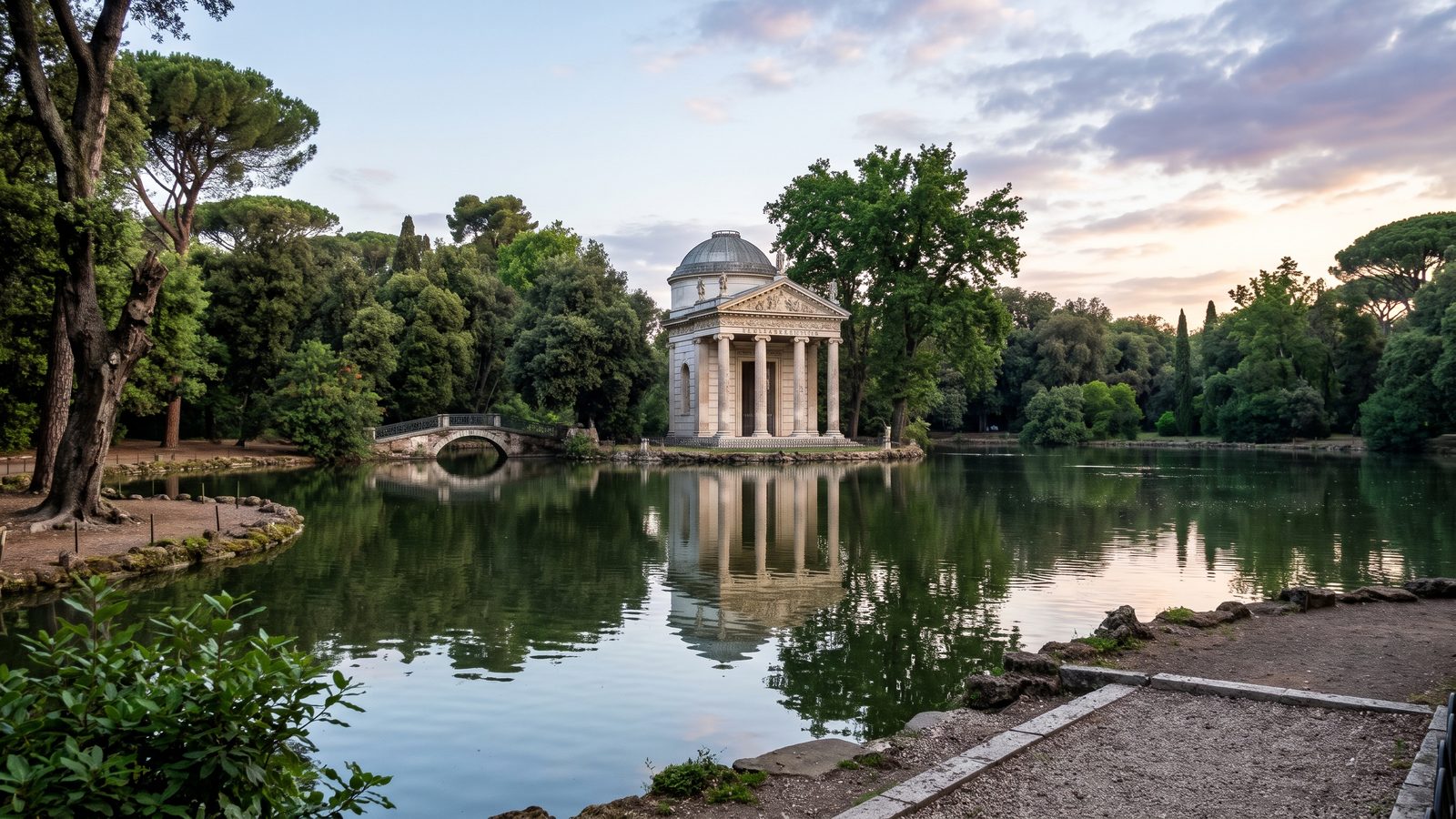
You arrive at the park's tranquil artificial lake, created during the late 18th-century transformation into an English-style landscape garden. In the center of the water sits the charming Temple of Asclepius, built between 1785 and 1792 by Antonio Asprucci and Cristoforo Unterberger. You observe its gleaming white marble Ionic columns reflecting off the gentle surface. Dedicated to the Greek god of medicine, the temple houses an ancient statue of Asclepius originally unearthed at the Mausoleum of Augustus. As you watch rowboats glide across the water, you take in the peaceful atmosphere and unique views of this classical architectural jewel.
Stop 4. Architectural Evolution Through the Ages
You marvel at the striking architectural contrast scattered across the villa grounds. At the park's core stands the Casino Nobile, an early Baroque masterpiece commissioned by Scipione Borghese. Built from travertine and stucco, its facade displays intricate niches and balustrades designed to highlight antique sculptures. As you explore further, you discover the late 18th-century Temple of Aesculapius, designed by Antonio Asprucci and Cristoforo Unterperger. Its elegant Ionic columns showcase a shift toward Neoclassicism. From 17th-century Baroque grandiosity to refined late 18th-century classical follies, you witness a fascinating timeline of design embodied in the park's gates, fountains, and grand villas.
Stop 5. From Formal Parterres to English Landscapes
You discover a rich evolution of landscape design as you walk through the gardens. Originally laid out in the 17th century for Scipione Borghese, the grounds featured structured Italianate geometric parterres. In the late 18th century, Prince Marcantonio IV Borghese reimagined the space with architects Antonio Asprucci and Jacob More, adopting a naturalistic English landscape style. You pass the picturesque Giardino del Lago and encounter the formal Giardini Segreti near the Casino Borghese, where citrus trees still recall the early aesthetic. Elegant fountains, including the 1791 Fontana dei Cavalli Marini, decorate your path, perfectly blending formal symmetry with romantic nature.
Stop 6. A Legacy of Leisure and Modern Enjoyment
You experience a space shaped by family history, from aristocratic roots to modern leisure. In the early 17th century, Cardinal Scipione Borghese established this country estate as a private retreat for his prominent papal family and honored guests. Centuries later, the grounds welcome modern families from around the world. You see children playing, parents guiding pedal boats across the lake, and visitors picnicking beneath ancient umbrella pines. You can also visit the Bioparco, Rome's zoo located right within the park boundaries. The spirit of togetherness remains vibrant here, connecting the powerful Borghese family legacy with everyday moments of relaxation and fun.
Planning your visit
- Best time to go
- Morning or late afternoon in spring or autumn for pleasant weather and gentle lighting.
- Approximate duration
- About 2 to 3 hours
- Where to start
- Near the entrance of the Borghese Gallery or at the Pincio Terrace.
Access and conditions change seasonally — check the official site before you go.
Frequently asked questions
Is Villa Borghese worth visiting?
Yes, Villa Borghese is one of Rome's top attractions. It combines an 80-hectare landscape park featuring rowboat lakes and city panoramas with the world-renowned Borghese Gallery, home to iconic works by Bernini, Caravaggio, and Canova.
How long do you need at Villa Borghese?
Most visitors spend about 2 to 3 hours touring the gardens, lake, and outdoor monuments. If you also plan to explore inside the Borghese Gallery museum, plan for an extra 2 hours.
Who created Villa Borghese and why?
Cardinal Scipione Borghese, nephew of Pope Paul V, created Villa Borghese in the early 17th century. He transformed former vineyards into a lavish country villa to display his vast art collection and host distinguished guests.
Keep exploring
Header image is an AI-generated illustration of Villa Borghese. AllTours.ai is an AI audio tour guide — point your camera at any landmark and hear its story.