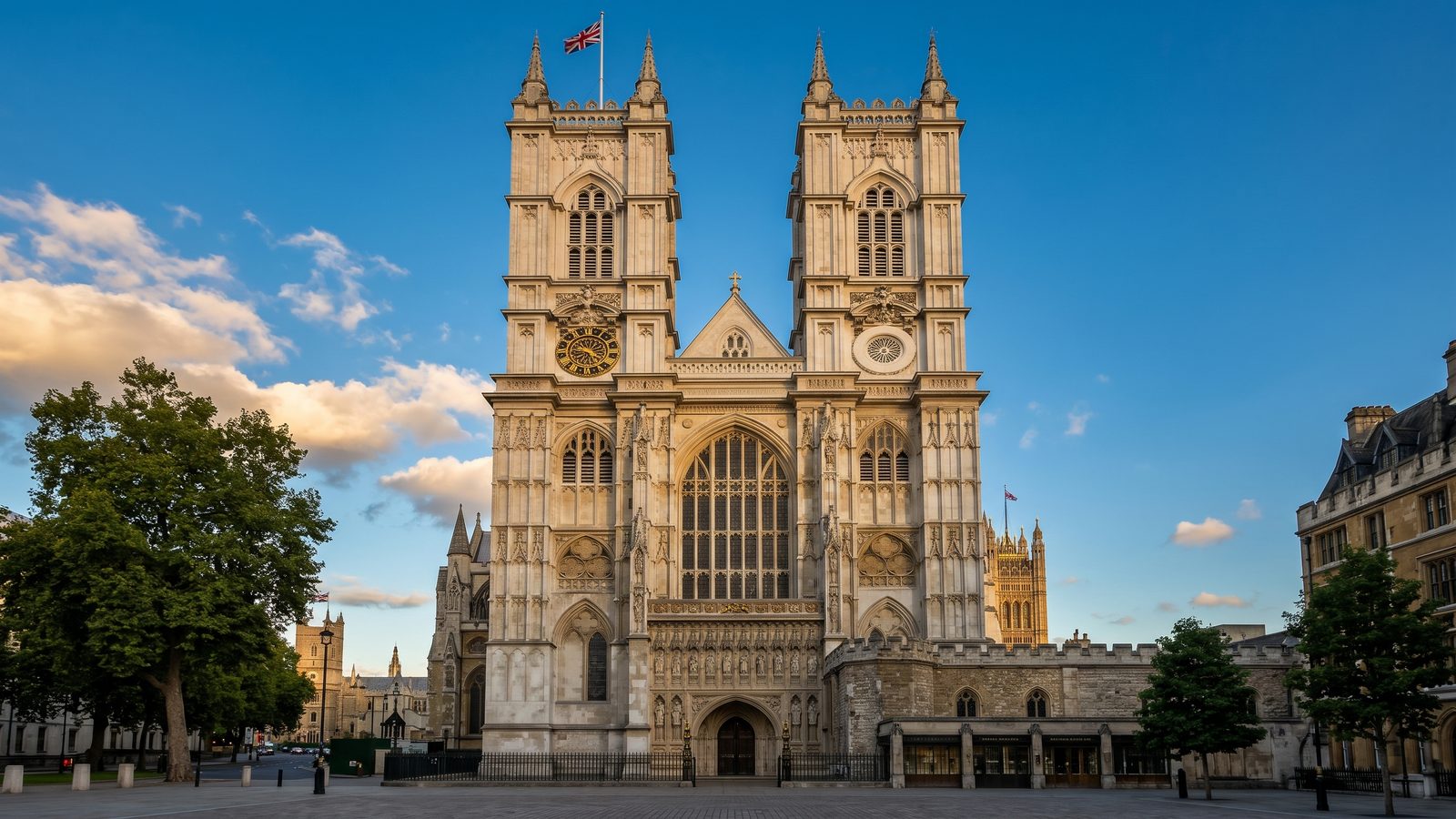
Welcome to Westminster Abbey, the royal church and national pantheon at the heart of British history. Step inside this stunning Gothic masterpiece to trace nearly a thousand years of royal coronations, weddings, and state occasions. From Anglo-Saxon origins under Edward the Confessor to grand architectural redesigns by Henry III, every stone tells a story of monarchical power, religious faith, and national identity.
This self-guided audio tour leads you past soaring vaults, sacred shrines, and intricate mosaics. Discover famous resting places in Poets' Corner, admire exquisite royal effigies, and experience the cultural heritage of a sanctuary that has shaped London for centuries.
What you'll hear on this tour
Stop 1. Soaring Arches and Stone Lacework
As you gaze up, you take in the soaring High English Gothic architecture that defines Westminster Abbey. Pointed arches and intricate ribbed vaults draw your eyes skyward toward clerestory windows designed to flood the space with light. Moving east, you step into the magnificent Henry VII Lady Chapel, where Perpendicular Gothic fan vaulting displays delicate stone lacework and hanging pendants that seem to defy gravity. Every carved boss tells a silent story, revealing medieval engineering at its peak. Finally, you admire the twin western towers, which complete a grand silhouette that has dominated London's visual landscape for centuries.
Stop 2. Tales of Literary and Scientific Genius
You stand in Poets' Corner inside the South Transept, a sacred pantheon honoring Britain's creative geniuses. This literary tradition begins in 1400 with the tomb of Geoffrey Chaucer, drawing centuries of writers to be buried or memorialized alongside him. As you walk through, you discover memorials dedicated to William Shakespeare, Jane Austen, and the Brontë sisters, whose stories shaped the English language. Looking beyond literature, you observe tributes to visionary scientists like Sir Isaac Newton and Charles Darwin, alongside master musicians like George Frideric Handel. This space offers a profound national reflection on intellectual achievement and artistic legacy.
Stop 3. Mosaics, Effigies, and Luminous Glass
Your eyes feast upon an extraordinary gallery of sacred art. Below your feet lies the breathtaking 13th-century Cosmati pavement, an intricate mosaic of thousands of tiny colored stones crafted by Italian artisans to serve as the historic stage for royal coronations. Nearby, you examine delicate medieval effigies gracing royal tombs, such as the gilded bronze portrait of Eleanor of Castile, which showcases an evolving mastery of funerary sculpture. Radiant stained glass panels above filter incoming light into vivid hues, transforming history and faith into glowing narrative art. Every surface reflects centuries of human artistic devotion.
Stop 4. A Millennium of Royal Tradition
You trace the abbey's foundations back to the 11th century, when Edward the Confessor visions a grand Romanesque church, consecrated in 1065. Following his death, William the Conqueror chooses this sacred sanctuary for his coronation in 1066, establishing an unbroken royal tradition lasting nearly a millennium. In the 13th century, King Henry III tears down much of the original structure to erect the soaring Gothic cathedral you see today, drawing inspiration from France's great churches. Through these historic stones, you stand at the spiritual heart of the British monarchy, where kings and queens are crowned, married, and laid to rest.
Stop 5. A Pantheon of National Heroes
As you explore these hallowed halls, you experience a national pantheon honoring Britain's most influential figures. In Poets' Corner, you see memorials to literary icons like Shakespeare, alongside the actual resting places of Charles Dickens and Lord Tennyson. Continuing into the Nave, you discover the dramatic tomb of Sir Isaac Newton, depicting him reclining above allegorical sculptures of scientific discovery. Nearby, you find the grave of Charles Darwin, buried here in 1882 following his revolutionary scientific insights. You observe how funerary styles evolve across centuries, moving from simple medieval stone carvings to theatrical Baroque monuments that celebrate historic lives.
Stop 6. Monastic Feasts and Daily Rhythms
You step back into medieval monastic life, where Benedictine monks follow daily rhythms closely tied to sustenance and devotion. In their vanished kitchens, workers prepare simple pottage from garden vegetables and fresh bread from the abbey bakehouse. Following the strict liturgical calendar, monks consume fish on fast days, caught directly from the nearby River Thames or raised in local ponds. You visualize silent meals in the Refectory accompanied by sacred readings, contrasting with the more lavish feasts served at the Abbot’s table for distinguished guests. This culinary network reflects the comprehensive self-sufficient economy of medieval abbey life.
Planning your visit
- Best time to go
- Early weekday mornings right at opening to avoid peak crowds.
- Approximate duration
- about 1.5 to 2 hours
- Where to start
- North Door entrance of Westminster Abbey.
Access and conditions change seasonally — check the official site before you go.
Frequently asked questions
Is Westminster Abbey worth visiting?
Yes, Westminster Abbey is one of London's most historic landmarks, featuring magnificent High Gothic architecture, centuries of royal coronation history, and the resting places of legendary writers, monarchs, and scientists.
How long do you need at Westminster Abbey?
Most visitors spend between 90 minutes and 2 hours exploring the main nave, royal chapels, Cosmati pavement, and Poets' Corner with an audio tour.
When was Westminster Abbey built and who founded it?
Edward the Confessor founded the original Romanesque abbey, which was consecrated in 1065. King Henry III later rebuilt it in the soaring High English Gothic style during the 13th century.
Keep exploring
Header image is an AI-generated illustration of Westminster Abbey. AllTours.ai is an AI audio tour guide — point your camera at any landmark and hear its story.