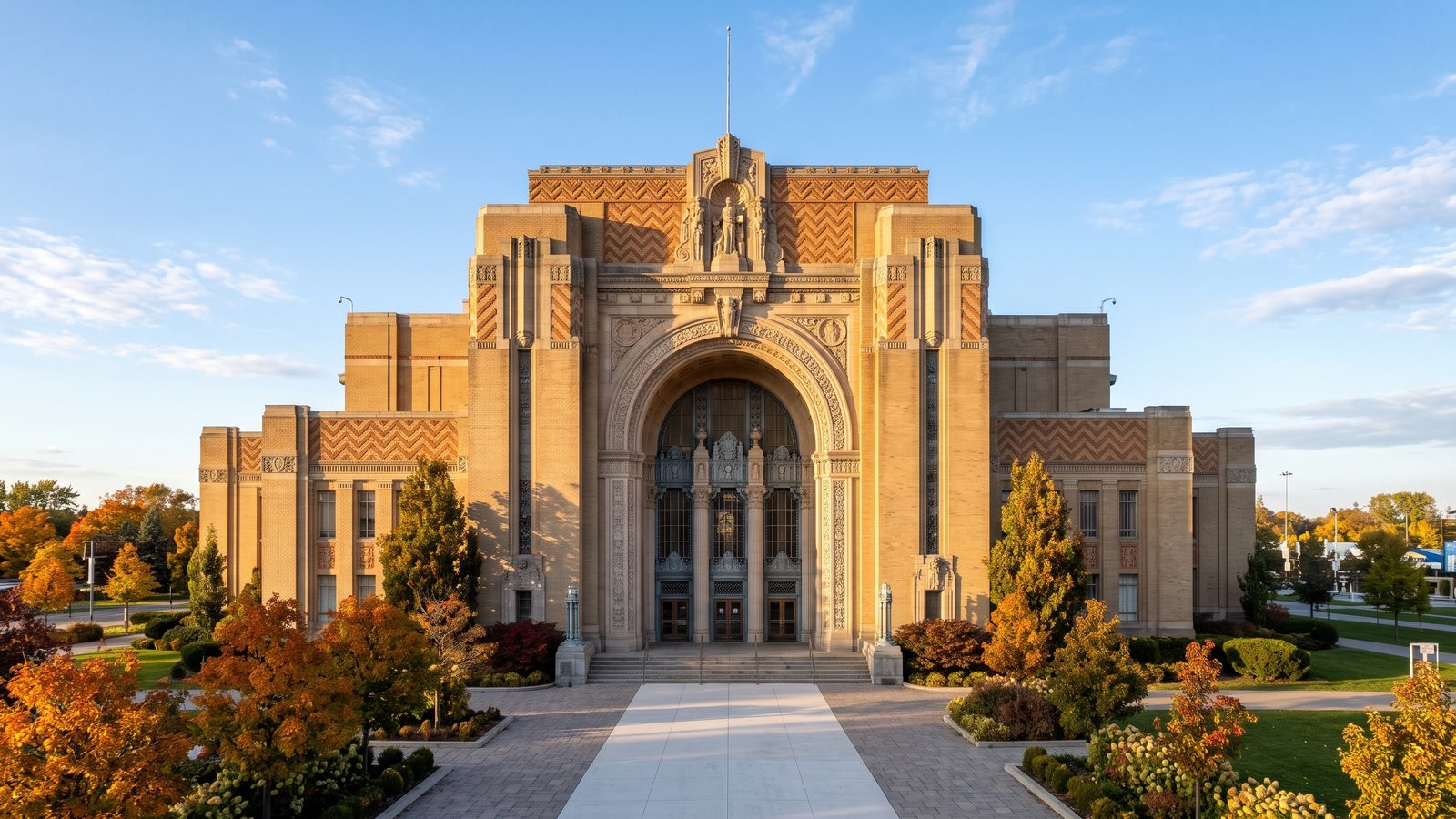
Welcome to Toronto's iconic Automotive Building at Exhibition Place. Designed by architect Douglas Kertland and erected in 1929, this 150,000-square-foot Art Deco landmark originally showcased the latest motorcar innovations for the Canadian National Exhibition. Today, its expansive halls host vibrant modern trade shows, cultural gatherings, and art exhibitions, serving as a vital link between Toronto's rich past and its ever-evolving present event landscape.
As you walk around its monumental exterior, observe its buff-coloured brickwork, detailed terracotta panels, and sweeping clear-span steel architecture. At night, striking green illumination lights up the central entrance. Step inside to discover how a building designed for dream cars adapted to house wartime troops and host major international shows.
Listen to a sample
The opening of this tour, exactly as AllTours narrates it on site.
What you'll hear on this tour
Stop 1. Art Deco Elegance and Engineering Feats
You stand before a brilliant display of Art Deco design crafted from robust buff-coloured brickwork. Look closely at the terracotta ornamentation featuring geometric motifs, streamlined chevrons, and speed lines that honor the machine age. Powerful vertical pilasters frame the central pavilion, lifting your eyes upward. When you step inside, you experience an engineering marvel: a clear-span steel truss system arching gracefully overhead. This design completely eliminates internal columns, creating massive, unobstructed exhibition space tailored specifically for displaying large automobiles without visual distraction. Even the multi-pane steel sash windows reflect an industrial elegance that complements this grand structure.
Stop 2. From Optimistic Showroom to Wartime Barracks
You gaze upon a landmark born in an era of industrial optimism, symbolizing Canada's rapid forward momentum. Built to showcase a speeding future, this grand stage soon faced unexpected history. With the outbreak of the Second World War, the roar of new car engines gives way to military duty. The building transforms into a vital cog in the war effort, serving as massive barracks for Canadian soldiers, a training ground, and a storage facility for critical supplies. As you walk these halls, you can picture troops drilling where excited crowds once admired shiny automobiles, demonstrating the building's remarkable resilience before it gracefully returns to its exhibition roots.
Stop 3. Debuting Dream Machines of a Generation
You step into the vibrant atmosphere of autumns past, when this vast hall pulses with the excitement of annual Canadian debuts. Imagine the eager crowds surrounding sleek models like the elegant Auburn Speedster or sturdy new Chevrolet series as they roll onto polished floors. Here, you examine ground-breaking features shifting from luxury to everyday life, including advanced hydraulic brakes, synchromesh transmissions, and built-in car radios. As you wander through the space, you feel how these dream machines ignited the public imagination. You visualize family road trips and a mobile future, witnessing the very vehicles that propelled a nation forward on four wheels.
Stop 4. Adaptable Halls for Duty and Design
You explore an immense exhibition space renowned for its incredible adaptability throughout Toronto's history. During World War II, these walls buzz with intense military purpose as the Royal Canadian Air Force Number 2 Equipment Depot, where recruits drill where trade booths stand today. Fast forward to the present, and you see this flexibility in action. Luxury yachts are intricately navigated through these doors for the Toronto International Boat Show, while the Interior Design Show completely reconfigures the vast interior with cutting-edge installations. As you take in the scale, you realize these major gatherings act as powerful economic engines for the city.
Stop 5. The Crucible of Transportation Progress
You feel the buzz of anticipation where engineers and designers once revealed their latest triumphs. In this grand hall, throngs of visitors examine revolutionary advancements reshaping mobility. You discover early prototypes of independent front suspension engineered for smoother rides, alongside early hydraulic brakes introduced for enhanced road safety. Look around and imagine the unveiling of streamlined aerodynamic bodywork, overhead-valve engines, and pioneering automatic transmissions. Here, Canadian and international manufacturers compete fiercely to showcase breakthrough metallurgy for lighter frames. You stand in the exact spot where the boundaries of automotive engineering were continually pushed forward, turning future concepts into real-world transportation marvels.
Stop 6. A Cathedral of Canadian Cultural Identity
You stand in a landmark that deeply shapes Canada's cultural identity. In the 1920s, the automobile becomes a powerful symbol of personal freedom, upward mobility, and modern progress. You can picture families strolling these halls, admiring sleek cars while dreaming of open roads and middle-class independence. Today, that cultural legacy continues to evolve around you. The building hosts a rich kaleidoscope of contemporary life, from vibrant food festivals celebrating Toronto's global culinary heritage to international art fairs and dynamic fashion shows. As you walk through, you experience a dynamic canvas where diverse communities gather, continually forging shared identity and celebrating collective experiences.
Planning your visit
- Best time to go
- Daytime to appreciate the Art Deco terracotta detailing, or evening to observe the green entrance illumination.
- Approximate duration
- About 45 minutes
- Where to start
- Outside the main central entrance pavilion at Exhibition Place.
Access and conditions change seasonally — check the official site before you go.
Frequently asked questions
Is Automotive Building worth visiting?
Yes, it is a key historic landmark at Exhibition Place. Visitors interested in Art Deco architecture, military history, and Toronto's heritage will appreciate its clear-span steel design, ornate terracotta detailing, and storied past.
How long do you need at Automotive Building?
A typical exterior walking tour takes about 30 to 45 minutes. If attending a trade show, exhibition, or cultural event held inside, plan for 1 to 2 hours.
What was the Automotive Building used for during World War II?
During World War II, the building was transformed for wartime duty, acting as barracks for military troops, a training facility, storage for supplies, and the Royal Canadian Air Force Number 2 Equipment Depot.
Keep exploring
Header image is an AI-generated illustration of Automotive Building. AllTours.ai is an AI audio tour guide — point your camera at any landmark and hear its story.