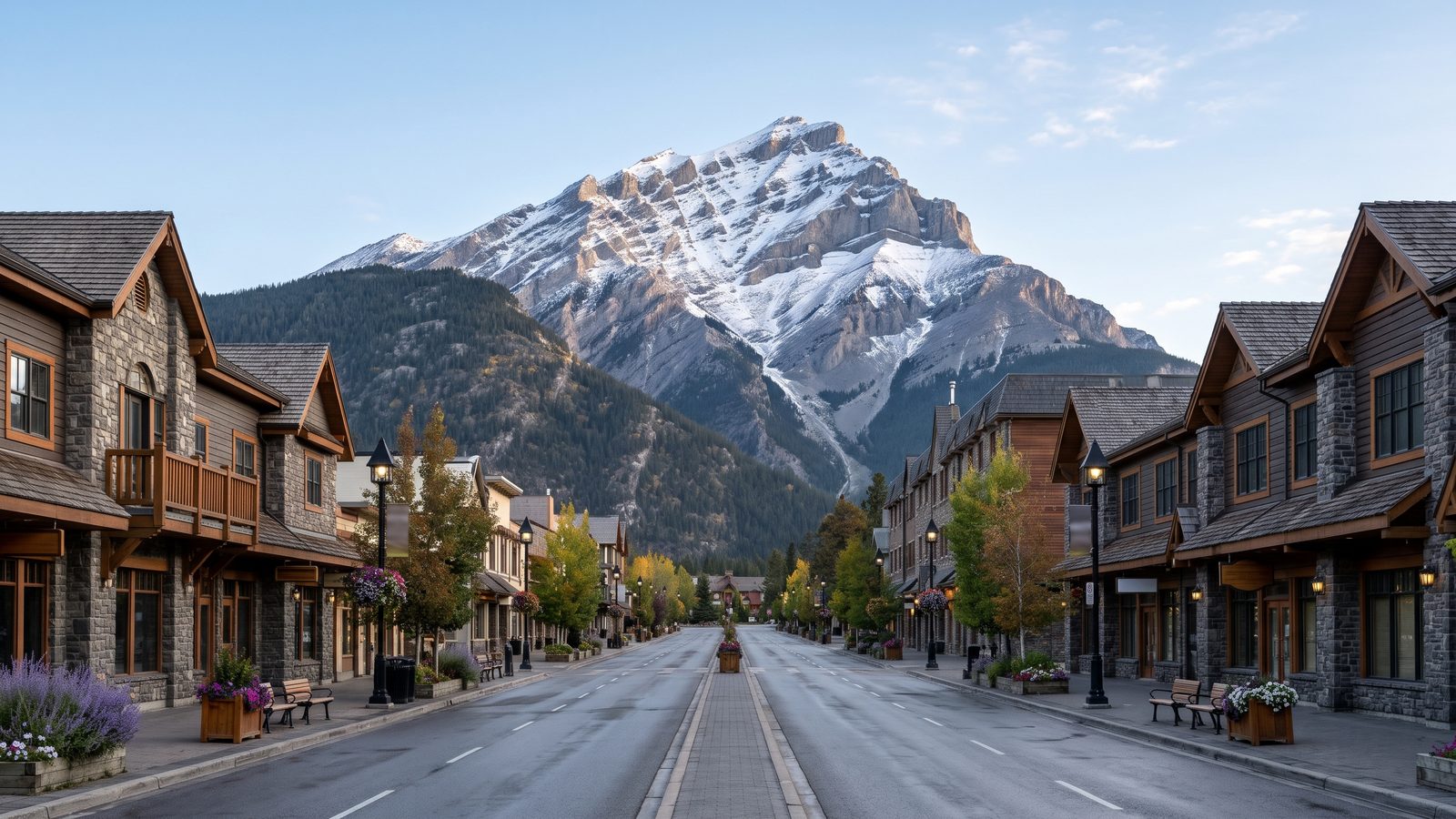
Welcome to Banff Avenue, the vibrant heart of Banff National Park in Alberta, Canada. Designed in the late nineteenth century to guide travelers from the train station toward majestic grand hotels, this historic thoroughfare frames unbelievable views of Cascade Mountain. As you stroll along the avenue, you walk through a landscape shaped by glacial ice, rich railway history, and a deep commitment to preserving wild Canadian wilderness.
From rustic Swiss Chalet architecture to bustling local boutiques and native wildlife roaming near the Bow River, this audio tour highlights the culture and natural majesty surrounding you. Prepare to look up at ancient peaks, absorb rich local stories, and capture iconic views at every step.
What you'll hear on this tour
Stop 1. Framing the Alpine Sentinel
As you step onto Banff Avenue, you stand in one of the most iconic photographic vantage points in the Canadian Rockies. Notice how the avenue creates a perfect leading line, drawing your eye straight toward the sheer face of Cascade Mountain. Early pioneer photographers once lugged heavy equipment across these slopes to capture these exact views on black-and-white plates. As you walk, watch how shifting daylight transforms the rugged textures of the mountain rock and deepens the blue sky above. Look around at the historic wood and stone buildings framing your shot, or head down toward the Bow River, where calm waters reflect the grand peaks, doubling the dramatic visual impact for your camera.
Stop 2. The Railway's Grand Entrance
You are standing on a street born from the golden age of Canadian train travel. In 1883, railway surveyors discovered natural hot springs near Sulphur Mountain, sparking intense interest in building a mountain resort. By 1885, Canada established Banff National Park—initially covering just 26 square kilometers—as its very first national park. Banff Avenue was designed as a grand central artery to lead elite nineteenth-century travelers straight from the CPR railway station to the grand Banff Springs Hotel, which opened in 1888. As you walk this avenue today, you follow the footsteps of those early wealthy visitors who entered a wild, untamed wilderness protected by expanding park conservation efforts over generations.
Stop 3. Rustic Swiss Chalet Design
Look closely at the buildings lining the street and notice how their design echoes the surrounding mountain peaks. Many older structures, including the historic Banff Park Museum, feature a charming Swiss Chalet style specifically chosen to harmonize with the alpine wilderness. You can see steeply pitched roofs and prominent overhanging eaves designed to shed heavy winter snow, creating a classic picturesque aesthetic. Pay attention to the exposed timber framing and delicate woodwork around the balconies and windows. These handcrafted details reflect the early craftsmanship of the park. Even newer structures continue this heritage by incorporating natural stone and wood, keeping Banff’s built environment tied directly to the surrounding forest.
Stop 4. Giants of the Valley
Gaze upward at the colossal mountains that cradle Banff Avenue on all sides. To your right, Mount Rundle displays its dramatic saw-tooth ridge, carved out by ancient glaciers that once filled this entire valley. Directly ahead, Cascade Mountain reveals distinct layers of sedimentary rock across its sheer face, recording millions of years of Earth's history from primeval seas to ancient forests. Long before railways arrived, Indigenous peoples navigated these valleys, revering these majestic peaks as sacred protectors and sources of life. As you take a deep breath of the crisp mountain air cooled by these giant rock sentinels, you feel the enduring power and sheer scale of the Rockies.
Stop 5. Wilderness at Your Doorstep
Take a breath of the mountain air and feel the immediate presence of the surrounding wilderness. The turquoise meltwater of the Bow River flows through the valley floor, nourishing rich ecosystems and diverse wildlife. As you stroll near the town's edge and surrounding meadows, keep your eyes open for elk grazing peacefully among the grass. If you look up toward the higher rocky slopes, you might spot agile bighorn sheep effortlessly navigating the steep terrain. These jagged peaks and pristine waters remind you that despite the bustling street, you are standing in the heart of a vast, protected ecosystem where natural forces and native wildlife still reign supreme.
Stop 6. Mountain Goods and Alpine Crafts
As you browse the vibrant shops along Banff Avenue, you find an inviting mix of mountain culture and local artistry. Cozy boutiques offer hand-knitted wool sweaters to keep you warm on alpine adventures, alongside unique handcrafted jewelry inspired by the Rocky Mountain landscape. Specialized outdoor outfitters line the avenue, providing gear designed for exploring the surrounding wilderness trails. You can also explore galleries displaying Indigenous art and traditional crafts, offering a meaningful connection to the rich cultural heritage of the region. Whether you seek outdoor equipment or a unique handmade memento, these local shops offer an authentic taste of life in the Canadian Rockies.
Planning your visit
- Best time to go
- Early morning or late afternoon for soft light on Cascade Mountain and fewer crowds.
- Approximate duration
- About 1 to 1.5 hours
- Where to start
- North end of Banff Avenue near Wolf Street or the Banff Railway Station.
Access and conditions change seasonally — check the official site before you go.
Frequently asked questions
Is Banff Avenue worth visiting?
Yes, Banff Avenue is the central heart of Banff townsite, offering iconic postcard views of Cascade Mountain, historic Swiss Chalet architecture, local boutiques, and easy access to nearby mountain trails.
How long do you need at Banff Avenue?
Most visitors spend between 1 and 2 hours walking Banff Avenue, photographing Cascade Mountain, visiting local shops, and exploring historic sites like the Banff Park Museum.
Why was Banff Avenue built?
Banff Avenue was built following the 1883 discovery of hot springs and the 1885 creation of Banff National Park to direct visitors arriving at the CPR train station toward the Banff Springs Hotel.
Keep exploring
Header image is an AI-generated illustration of Banff Avenue. AllTours.ai is an AI audio tour guide — point your camera at any landmark and hear its story.